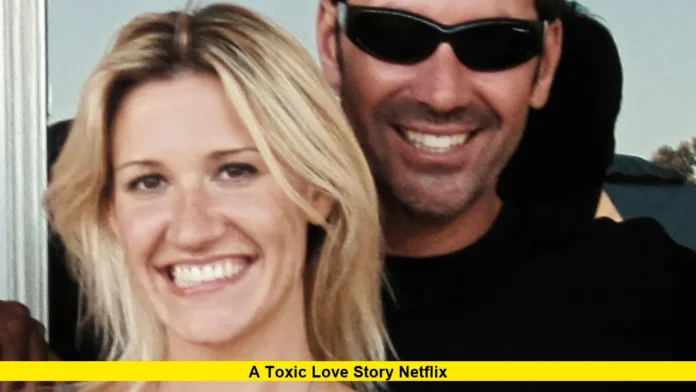

Netflix continues to expand its lineup of gripping true crime documentaries, and a toxic love story netflix has quickly become one of the platform’s most talked-about releases. Premiering in July 2026, the feature-length documentary explores a disturbing real-life case involving deception, cyberstalking, manipulation, and a wrongful criminal prosecution that stunned investigators and the public alike.
Rather than presenting a straightforward crime story, the documentary gradually uncovers layers of betrayal, exposing how appearances can be deeply misleading. Through interviews, archival footage, police recordings, and courtroom details, the film reconstructs a complex case that raises difficult questions about trust, digital evidence, and the consequences of false accusations.
What Is A Toxic Love Story on Netflix?
A Toxic Love Story is a Netflix original true crime documentary directed by Alexandra Lacey. Running approximately 91 minutes, the film examines a criminal conspiracy centered around former Deputy U.S. Marshal Ian Diaz, his wife Angela Connell, and Diaz’s former fiancée, Michelle Hadley.
At first glance, the story appears to follow a familiar pattern. Angela begins receiving threatening emails from an anonymous individual calling themselves “Lilithistruth.” Investigators initially believe Michelle Hadley is responsible, leading to her arrest on multiple felony charges.
However, as investigators continue examining digital evidence, the case takes an unexpected direction. New findings ultimately reveal that the original narrative was far more complicated than anyone first believed.
The documentary carefully follows this progression, allowing viewers to see how assumptions gradually unraveled as additional evidence emerged.
The Real-Life Case Behind the Documentary
The events portrayed in A Toxic Love Story are based on an actual criminal investigation that attracted widespread attention in Southern California.
Michelle Hadley had previously been engaged to Ian Diaz before their relationship ended. After Diaz married Angela Connell, the newlyweds reported receiving threatening communications and disturbing online harassment.
Authorities soon focused their investigation on Hadley.
The accusations became increasingly serious, including allegations involving fake online identities, violent threats, and Craigslist advertisements connected to an assault fantasy.
Based on the available evidence at the time, Hadley was arrested and spent nearly three months in jail while facing multiple felony charges.
As the investigation continued, forensic analysis uncovered inconsistencies that significantly altered the direction of the case.
Instead of supporting the original allegations, additional evidence suggested that the harassment campaign had been orchestrated by different individuals altogether.
How the Investigation Changed Direction
One of the documentary’s strongest elements is its careful explanation of how digital forensic evidence transformed the investigation.
Rather than relying solely on witness statements or assumptions, investigators examined:
- Email records
- IP address information
- Computer activity
- Digital communication patterns
- Online account histories
These findings gradually contradicted the original accusations against Michelle Hadley.
Investigators eventually concluded that the evidence pointed toward a coordinated effort to frame her rather than prove her guilt.
The documentary illustrates how modern criminal investigations increasingly depend on digital evidence and why thorough forensic analysis can dramatically alter a case.
Ian Diaz and Angela Connell
The film devotes considerable attention to the backgrounds of Ian Diaz and Angela Connell.
Ian Diaz served as a Deputy U.S. Marshal, giving him a position associated with public trust and law enforcement.
Angela Connell presented herself publicly as the victim of an ongoing harassment campaign.
As investigators looked deeper into the evidence, prosecutors alleged that the couple had worked together to create false online identities, fabricate threatening communications, and manipulate digital evidence.
The documentary presents interviews, investigative material, and legal records to explain how prosecutors built their cases.
Rather than portraying events as simple or one-dimensional, the documentary demonstrates how deception unfolded over an extended period.
Michelle Hadley’s Experience
Perhaps the documentary’s emotional center is Michelle Hadley’s account.
After being arrested on serious criminal charges, she spent 88 days in jail while maintaining her innocence.
The experience had profound personal consequences, including damage to her reputation, emotional trauma, financial hardship, and disruption to nearly every aspect of her life.
The film explores how wrongful accusations can affect someone long after criminal charges are dismissed.
Through interviews and previously unseen footage, Hadley explains how difficult it was to rebuild her life following the investigation.
Her story has become one of the documentary’s most discussed elements among viewers because it highlights the human cost of false allegations.
Court Cases and Criminal Convictions
The legal proceedings extended well beyond the original investigation.
Angela Connell eventually pleaded guilty to multiple criminal offenses connected to the conspiracy.
She served time in prison before later being released.
Ian Diaz also faced federal prosecution.
Following additional investigations, prosecutors charged him with multiple crimes that included conspiracy, cyberstalking, perjury, and obstruction-related offenses.
He was convicted and received a prison sentence exceeding ten years.
The documentary explains these legal developments in chronological order, helping viewers understand how the investigation evolved over several years.
Why the Documentary Has Attracted So Much Attention
Netflix has released numerous successful true crime documentaries over the past decade, but A Toxic Love Story stands out for several reasons.
First, the story contains multiple dramatic reversals that fundamentally change viewers’ understanding of what happened.
Second, it explores issues that feel especially relevant in today’s digital world, including:
- Online impersonation
- Cyber harassment
- Digital manipulation
- False accusations
- Electronic evidence
- Social media influence
- Identity deception
The documentary also raises broader questions about investigative procedures and how authorities evaluate electronic evidence during criminal investigations.
Rather than relying solely on dramatic reenactments, the film incorporates interviews, legal documents, police footage, and digital forensic analysis to reconstruct events.
The Documentary’s Style and Storytelling
Director Alexandra Lacey structures the documentary so that viewers experience many of the same assumptions investigators initially made.
Instead of immediately revealing the full story, the narrative unfolds gradually.
This storytelling approach creates suspense without sacrificing factual accuracy.
The documentary balances:
- Real interview footage
- Police body-camera recordings
- Court documents
- News coverage
- Expert analysis
- Investigative timelines
The result is a documentary that functions both as a crime investigation and as a broader examination of manipulation and psychological control.
Public Reaction Following the Release
Following its release on Netflix, A Toxic Love Story quickly generated significant discussion across social media and entertainment communities.
Many viewers praised:
- The documentary’s pacing
- The gradual unfolding of evidence
- The careful reconstruction of events
- The emotional interviews
- The focus on digital forensics
Some audiences also commented on how the story continually challenged their initial assumptions.
Without revealing every major twist, many viewers described the documentary as one of Netflix’s most surprising true crime releases in recent years.
Its relatively concise runtime has also been viewed positively, with many appreciating that the filmmakers condensed a complicated legal case into a single feature-length documentary rather than stretching it into a multi-part series.
Themes Beyond Crime
Although the documentary focuses on a criminal investigation, it also explores several broader issues.
Digital Evidence
The case demonstrates how electronic records can either support or completely undermine criminal accusations.
Manipulation
The documentary examines how individuals may exploit trust, relationships, and technology to manipulate others.
Wrongful Accusations
Michelle Hadley’s experience highlights the serious consequences that can arise when someone is falsely accused of major crimes.
Public Perception
The film also shows how public opinion may form quickly before all available evidence has been examined.
These themes help explain why the documentary has resonated with audiences beyond traditional true crime fans.
Career Background of the Filmmakers
Director Alexandra Lacey has developed a reputation for producing documentary projects that examine complex real-world events through careful investigative storytelling.
For A Toxic Love Story, the production team spent considerable time gathering interviews, reviewing legal materials, and assembling previously unseen footage to provide a detailed account of the case.
Rather than relying primarily on dramatization, the filmmakers emphasize firsthand testimony and documented evidence throughout the film.
Latest Updates
A Toxic Love Story premiered on Netflix in July 2026 as a feature-length original documentary.
The film is available to stream globally for Netflix subscribers and has quickly become one of the platform’s most discussed new true crime releases.
The documentary revisits a criminal case whose major legal proceedings have already concluded, meaning it primarily serves as a retrospective examination rather than covering an ongoing investigation.
As of today, there has been no official confirmation from Netflix regarding any follow-up documentary, sequel, or companion series connected to A Toxic Love Story. If future projects are announced, they may be revealed through Netflix’s official programming updates.
Final Thoughts
A Toxic Love Story demonstrates how real-life events can become more astonishing than fiction. What begins as an apparent cyberstalking investigation gradually transforms into a deeply unsettling examination of deception, digital manipulation, and the importance of careful investigative work.
By combining compelling storytelling with documented evidence, the documentary offers more than suspense. It also encourages viewers to think critically about online identities, electronic evidence, and how quickly assumptions can shape public perception before all the facts are known.
For fans of investigative documentaries, legal cases, and true crime stories grounded in documented events, A Toxic Love Story provides a memorable viewing experience that remains thought-provoking long after the credits roll.
Have you watched A Toxic Love Story on Netflix? Share your thoughts in the comments and stay tuned for more updates on the latest true crime documentaries.