
Skin cancer is one of the most commonly diagnosed cancers worldwide, and early detection greatly improves treatment outcomes. If you notice a suspicious mole, an unusual skin growth, or changes in an existing spot, consulting experienced skin cancer specialists is one of the most important steps you can take.
This guide explains who skin cancer specialists are, what conditions they treat, the latest treatment options available in 2026, and how to choose the right expert for your skin health.
Key Points Summary
╔════════════════════════════════════════════════════════════════════╗
║ – Skin cancer specialists diagnose, treat, and monitor all major forms of skin cancer. ║
║ – Early detection significantly improves treatment success and recovery. ║
║ – Dermatologists, Mohs surgeons, surgical oncologists, and medical oncologists may all be involved in care. ║
║ – Modern treatments include Mohs surgery, immunotherapy, targeted therapy, and minimally invasive procedures. ║
║ – Regular skin checks and sun protection remain the best defense against skin cancer. ║
╚════════════════════════════════════════════════════════════════════╝
Who Are Skin Cancer Specialists?
Skin cancer specialists are medical professionals with expertise in diagnosing and treating cancerous and precancerous skin conditions. Depending on the type and stage of skin cancer, treatment may involve a team of specialists working together.
Common skin cancer specialists include:
- Dermatologists
- Mohs micrographic surgeons
- Surgical oncologists
- Medical oncologists
- Radiation oncologists
- Dermatopathologists
For advanced or complex cases, patients often receive coordinated care from multiple experts to achieve the best possible outcome.
Types of Skin Cancer They Treat
Basal Cell Carcinoma
Basal cell carcinoma is the most common form of skin cancer. It typically grows slowly and is highly treatable when diagnosed early.
Squamous Cell Carcinoma
Squamous cell carcinoma can develop on areas frequently exposed to sunlight. While many cases are cured with treatment, some can spread if left untreated.
Melanoma
Melanoma is the most serious type of skin cancer because it has a greater likelihood of spreading to other parts of the body. Early diagnosis dramatically improves the chances of successful treatment.
Rare Skin Cancers
Skin cancer specialists also manage less common conditions such as:
- Merkel cell carcinoma
- Cutaneous lymphoma
- Sebaceous carcinoma
- Dermatofibrosarcoma protuberans
- Other rare skin tumors
Signs That You Should See a Skin Cancer Specialist
You should schedule an evaluation if you notice:
- A mole changing in size, shape, or color
- A new dark or irregular skin spot
- A sore that does not heal
- Persistent bleeding or crusting skin lesions
- A rapidly growing lump
- Itching, tenderness, or pain in a mole
- A spot that looks noticeably different from other moles
A useful way to identify suspicious moles is the ABCDE rule:
- A – Asymmetry
- B – Border irregularity
- C – Color variation
- D – Diameter larger than 6 mm
- E – Evolving or changing appearance
Who Is Most at Risk?
Several factors increase the risk of developing skin cancer, including:
- Frequent exposure to ultraviolet (UV) radiation
- Fair skin that burns easily
- Light-colored eyes and hair
- A history of severe sunburns
- Use of indoor tanning beds
- A family history of skin cancer
- Previous skin cancer
- A weakened immune system
- Having numerous or atypical moles
Individuals with these risk factors should consider regular skin examinations by a qualified specialist.
How Skin Cancer Is Diagnosed
Skin cancer specialists use several methods to diagnose suspicious lesions, including:
- Complete skin examinations
- Dermoscopy with magnification
- Digital mole mapping
- Skin biopsies
- Laboratory analysis of tissue samples
- Imaging tests when advanced disease is suspected
A biopsy remains the most reliable method for confirming a skin cancer diagnosis.
Treatment Options
Treatment depends on the type, size, location, and stage of the cancer.
Mohs Micrographic Surgery
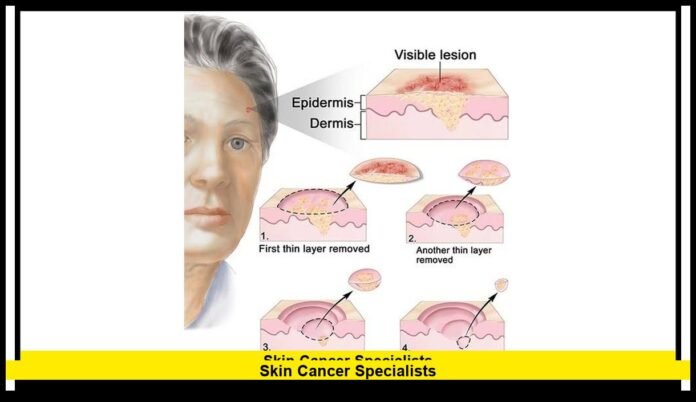
Mohs surgery is one of the most effective treatments for many basal and squamous cell skin cancers, especially those on the face or other sensitive areas.
Surgical Excision
Many skin cancers are successfully treated by surgically removing the cancer along with a small margin of healthy tissue.
Cryotherapy
Freezing abnormal cells with liquid nitrogen may be suitable for selected superficial skin cancers and precancerous lesions.
Topical Prescription Treatments
Certain early-stage skin cancers can be treated using medicated creams that destroy abnormal cells or stimulate the body’s immune response.
Radiation Therapy
Radiation therapy is sometimes recommended when surgery is not the best option or after surgery for certain high-risk cancers.
Immunotherapy
Modern immunotherapy treatments help the immune system recognize and attack cancer cells and have significantly improved outcomes for many patients with advanced melanoma.
Targeted Therapy
Targeted medications are available for certain skin cancers with specific genetic changes, offering a more personalized treatment approach.
How to Choose the Right Skin Cancer Specialist
When selecting a specialist, consider:
- Professional certifications
- Experience treating your type of skin cancer
- Access to advanced treatment options
- Availability of multidisciplinary care
- Modern diagnostic technology
- Patient reviews and recommendations
- Clear communication and personalized treatment planning
Seeking care from experienced specialists can improve both treatment outcomes and overall patient experience.
Preparing for Your Appointment
To make the most of your visit:
- Write down your symptoms.
- Note when you first noticed changes.
- Bring previous biopsy or medical records.
- Prepare a list of medications.
- Record your family history of skin cancer.
- Write down questions for your doctor.
If possible, bring photographs showing changes in the affected area over time.
Tips to Help Prevent Skin Cancer
While not every case can be prevented, these habits can reduce your risk:
- Wear broad-spectrum sunscreen with SPF 30 or higher.
- Avoid excessive sun exposure during peak UV hours.
- Wear protective clothing, sunglasses, and wide-brimmed hats.
- Never use tanning beds.
- Perform monthly skin self-examinations.
- Schedule regular professional skin screenings if you are at increased risk.
Advances in Skin Cancer Care
Skin cancer care continues to improve through advances in:
- AI-assisted skin examinations
- High-resolution imaging
- Personalized treatment plans
- Improved immunotherapy medications
- Targeted therapies
- Minimally invasive surgical techniques
- Better long-term monitoring of high-risk patients
These innovations are helping specialists diagnose skin cancer earlier and provide more effective treatment than ever before.
Why Early Detection Matters
Skin cancer is often highly treatable when diagnosed early. Delaying medical evaluation may allow the disease to progress, making treatment more challenging.
Regular skin examinations, prompt evaluation of suspicious changes, and ongoing follow-up with experienced skin cancer specialists can help protect your health and improve long-term outcomes.
FAQs
Q1. What do skin cancer specialists treat?
Answer: They diagnose and treat all major types of skin cancer, including melanoma, basal cell carcinoma, squamous cell carcinoma, and several rare skin cancers.
Q2. When should I see a skin cancer specialist?
Answer: You should seek medical evaluation if you notice a changing mole, a non-healing sore, unexplained skin growth, or any suspicious skin lesion.
Q3. Is skin cancer curable?
Answer: Many skin cancers are highly curable when detected and treated in their early stages.
Q4. What is Mohs surgery?
Answer: Mohs surgery is a specialized technique that removes skin cancer layer by layer while preserving as much healthy skin as possible.
Q5. Can younger adults develop skin cancer?
Answer: Yes. Although the risk increases with age, skin cancer can occur in younger adults, especially those with significant UV exposure or genetic risk factors.
Q6. How often should I have a skin examination?
Answer: People at higher risk may benefit from annual or more frequent skin examinations, while others should discuss screening intervals with their healthcare provider.
Q7. Does sunscreen completely prevent skin cancer?
Answer: Sunscreen significantly reduces the risk but should be combined with protective clothing, shade, and regular skin checks.
Q8. Can skin cancer return after treatment?
Answer: Yes. Some skin cancers can recur, which is why regular follow-up appointments and skin examinations are important.
Your skin health matters. If you found this guide helpful, leave a comment below and stay connected for more expert health tips and the latest medical updates.