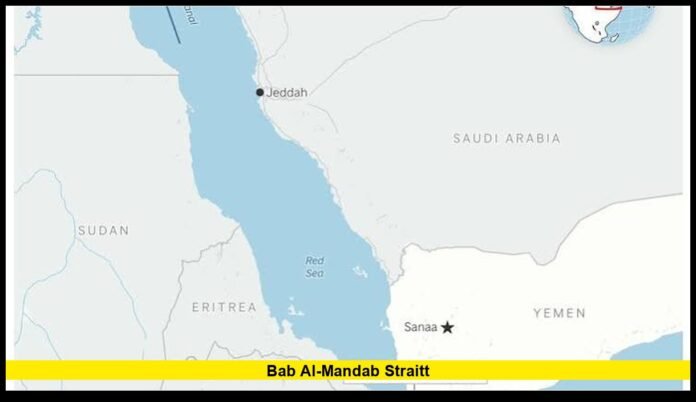

The Bab al-Mandab Strait continues to command global attention in 2026 as one of the world’s most strategically important maritime corridors. Stretching between Yemen on the Arabian Peninsula and the African nations of Djibouti and Eritrea, this narrow waterway forms the southern entrance to the Red Sea and serves as an indispensable link between Europe, Asia, and the Middle East. Recent security developments in the region have renewed concerns among governments, shipping companies, energy producers, and financial markets, highlighting how events in a relatively small stretch of water can influence international trade, oil prices, and supply chains across the globe.
A Narrow Passage With Global Significance
Geography has made this waterway one of the most valuable maritime assets in the world. Every vessel traveling between the Indian Ocean and the Mediterranean through the Suez Canal must first navigate this southern gateway. Without it, ships are forced to take much longer journeys around the southern tip of Africa, adding thousands of miles to their voyages.
Although relatively narrow compared to many major shipping routes, the strait handles an enormous amount of international maritime traffic each year. Massive container ships, oil tankers, liquefied natural gas carriers, and bulk cargo vessels rely on this passage to move goods between continents.
Its location makes it more than just a shipping lane. It functions as a bridge connecting global manufacturing centers, consumer markets, and major energy producers.
Where Is It Located?
The waterway lies at the southern end of the Red Sea.
It separates:
- Yemen on the Arabian Peninsula
- Djibouti on Africa’s eastern coast
- Eritrea further north along the African shoreline
This positioning creates one of the busiest international shipping corridors anywhere in the world.
Why It Matters to Global Trade
International commerce depends heavily on efficient transportation routes. Shipping remains the cheapest and most practical way to move large quantities of goods between continents, making maritime chokepoints incredibly valuable.
Every day, commercial vessels transport products such as:
- Consumer electronics
- Vehicles
- Machinery
- Agricultural products
- Medical supplies
- Construction materials
- Clothing
- Industrial equipment
Any disruption along the route can slow deliveries across multiple industries.
Manufacturers depend on predictable shipping schedules to receive raw materials, while retailers rely on timely imports to keep products available for consumers. Even relatively short delays can create bottlenecks throughout international supply chains.
An Essential Route for Energy Markets
Energy transportation is another reason the corridor receives constant international attention.
Large volumes of crude oil and refined petroleum products move through the Red Sea each year before reaching European and other international markets.
Liquefied natural gas shipments also travel this route, making it important not only for oil exporters but also for countries seeking diversified energy supplies.
Whenever security concerns increase, investors and commodity markets immediately begin evaluating whether transportation costs could rise or deliveries might be delayed.
Even if energy production remains unchanged, transportation risks alone can influence market prices.
Security Concerns Continue in 2026
During 2026, the Red Sea has remained an area of heightened security concern.
Regional conflict involving Yemen has continued to affect maritime operations, with commercial shipping companies closely monitoring official advisories before allowing vessels to enter the area.
The possibility of missile attacks, drone activity, or other threats has encouraged shipping operators to adopt increasingly cautious operating procedures.
Rather than treating every voyage as routine, many companies now conduct extensive security assessments before entering the region.
This heightened level of caution reflects the strategic importance of the route rather than any single incident.
Shipping Companies Adjust Their Operations
Commercial shipping rarely stops completely, even during periods of increased geopolitical tension.
Instead, companies adapt by introducing additional safeguards designed to reduce operational risks.
Common measures include:
- Delaying departures
- Adjusting sailing schedules
- Changing vessel speeds
- Increasing onboard security procedures
- Monitoring military advisories
- Coordinating with naval authorities
Some operators temporarily pause voyages while evaluating updated intelligence before continuing through the Red Sea.
These operational adjustments allow many companies to continue serving customers while reducing exposure to evolving security conditions.
The Cost of Taking a Different Route
If commercial vessels avoid the Red Sea altogether, they generally travel around the Cape of Good Hope at the southern tip of Africa.
While this alternative remains fully navigable, it comes with substantial disadvantages.
Longer voyages require:
- Additional fuel
- Larger operating budgets
- More crew time
- Higher maintenance expenses
- Increased insurance costs
Transit times can increase by several weeks depending on the vessel’s destination.
For companies transporting time-sensitive goods, these delays may affect manufacturing schedules, seasonal inventories, and retail supply chains.
Insurance Costs Can Rise Quickly
Maritime insurance plays a major role in international shipping economics.
When risks increase in strategically important waterways, insurers often reassess premiums based on the latest security assessments.
Higher insurance expenses ultimately become part of overall transportation costs.
Importers, exporters, manufacturers, and retailers may all experience the financial impact as freight prices adjust to reflect changing operating conditions.
Although consumers rarely notice these individual cost increases immediately, prolonged disruptions can eventually contribute to higher prices for imported products.
International Naval Presence
Maintaining freedom of navigation remains a priority for many nations.
Several countries continue deploying naval assets throughout the Red Sea, Gulf of Aden, and surrounding waters.
Their responsibilities include:
- Monitoring maritime activity
- Protecting commercial vessels
- Sharing intelligence
- Responding to emergencies
- Supporting safe international navigation
These operations help reduce risks while providing reassurance to shipping companies operating in the region.
International cooperation has become increasingly important as maritime security challenges evolve.
The Relationship With the Suez Canal
The southern gateway and the Suez Canal function as two connected sections of the same trade corridor.
Ships cannot reach the canal from the Indian Ocean without first passing through the southern entrance to the Red Sea.
As a result, disruptions affecting one section often influence traffic throughout the entire route.
Reduced shipping activity in the southern Red Sea can eventually affect overall canal transit volumes.
Because the canal remains one of the world’s busiest waterways, any changes receive immediate attention from economists, governments, and financial analysts.
A History Shaped by Trade
For centuries, merchants recognized the importance of this maritime corridor.
Ancient trade networks connected Africa, Arabia, India, and Europe through these waters long before modern cargo ships existed.
The arrival of steamships, container vessels, and globalized commerce only increased its importance.
Today, advanced navigation systems and enormous commercial fleets operate along routes that have supported international trade for generations.
Despite technological advances, geography remains unchanged.
The waterway continues serving the same essential purpose it has fulfilled throughout history: connecting major trading regions through the shortest practical maritime route.
Why Businesses Around the World Pay Attention
Companies far removed from the Middle East often monitor developments closely because supply chains have become highly interconnected.
Industries that depend on imported materials include:
- Automotive manufacturing
- Consumer electronics
- Pharmaceutical production
- Food distribution
- Construction
- Retail
- Fashion
- Heavy industry
Shipping delays can influence inventory planning, manufacturing schedules, and product availability across multiple continents.
Global logistics networks depend on predictability as much as speed.
Oil Markets React Quickly
Energy markets are especially sensitive to developments affecting transportation routes.
Even when production remains stable, uncertainty regarding shipping can influence market sentiment.
Traders monitor:
- Shipping activity
- Tanker movements
- Freight costs
- Insurance rates
- Regional security developments
This explains why headlines involving maritime security frequently receive attention from investors around the world.
Technology Supports Modern Navigation
Commercial vessels today rely on sophisticated navigation equipment that was unavailable only a few decades ago.
Modern ships utilize:
- Satellite navigation
- Electronic charts
- Automatic identification systems
- Real-time weather forecasting
- Secure communications
- Advanced radar technology
These systems improve navigational safety while allowing operators to receive updated information throughout each voyage.
Technology cannot eliminate geopolitical risks, but it enables faster decision-making when conditions change.
Environmental Considerations
Heavy maritime traffic also creates environmental responsibilities.
Governments, shipping companies, and international organizations continue working to reduce pollution while improving sustainability throughout global shipping.
Modern vessels increasingly focus on:
- Lower emissions
- Fuel efficiency
- Cleaner marine fuels
- Improved waste management
- Enhanced environmental compliance
Protecting marine ecosystems remains an important consideration alongside maintaining uninterrupted international commerce.
What Could Influence Developments Ahead
Several factors will continue shaping maritime activity during the remainder of 2026.
These include regional diplomatic efforts, military developments, commercial shipping decisions, insurance market assessments, and broader economic conditions.
Shipping companies are expected to remain flexible, adjusting operations whenever new information becomes available.
Energy producers will continue monitoring transportation routes closely, while governments maintain efforts to support safe navigation through one of the world’s busiest maritime corridors.
Looking Ahead
The Bab al-Mandab Strait remains indispensable to international commerce because geography offers few alternatives that match its efficiency. Despite ongoing regional security challenges, commercial shipping continues through the area with heightened precautions, demonstrating the resilience of global trade networks.
As governments, naval forces, and shipping companies adapt to changing conditions, this narrow passage will continue serving as one of the most influential maritime gateways in the world. Its importance extends well beyond the surrounding region, affecting energy markets, global logistics, international manufacturing, and economic stability across multiple continents.
For businesses, policymakers, and consumers alike, developments in this strategic waterway will remain closely watched throughout 2026 and beyond.
What are your thoughts on the evolving role of this vital maritime route? Share your views in the comments and stay connected for more updates on global trade and international affairs.