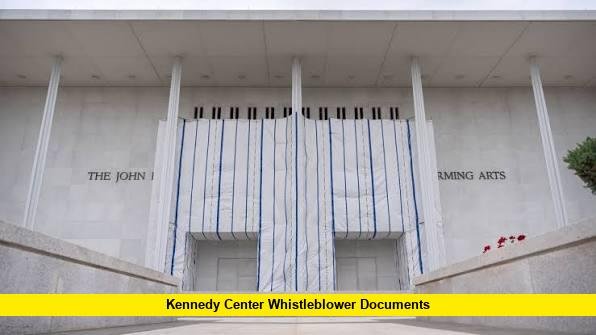

A fresh round of scrutiny has landed on the John F. Kennedy Center for the Performing Arts after newly surfaced Kennedy Center whistleblower documents alleged widespread mismanagement during a rushed renovation campaign. The disclosures, released through a sitting U.S. senator, describe a pattern of corner-cutting, no-bid contracting, and construction shortcuts that whistleblowers say were driven largely by aesthetic preferences rather than sound engineering or fiscal responsibility. The revelations add yet another chapter to the ongoing turmoil surrounding the historic Washington, D.C. arts institution, which has spent much of the past year and a half at the center of a political and legal battle over its leadership, branding, and artistic direction.
Background on the Kennedy Center Controversy
The John F. Kennedy Center for the Performing Arts has long stood as the nation’s official memorial to President John F. Kennedy and one of Washington’s most prominent cultural institutions, hosting theater, opera, ballet, and orchestral performances for decades. That status changed dramatically at the start of President Donald Trump’s second term, when Trump moved to seize control of the arts and culture venue, ousting the center’s prior leadership and installing a new Board of Trustees that named him chairman. The board subsequently added Trump’s name to the building itself, a move that triggered immediate backlash from artists, performers, and members of Congress who viewed the center’s independence as central to its mission.
The rebranding did not go unchallenged. Democrats filed suit to remove Trump’s name from the building, and a federal judge ultimately ruled that it had to come off the venue, which had already been rocked by boycotts from artists during the leadership upheaval. Separately, Trump attempted to close the center for a period of roughly two years, but a court ordered it to remain open, ruling that only Congress had the authority to change the institution’s name. By mid-2026, tarps were still covering the center’s signage as the legal and political fallout continued to play out in public view.
It is against this backdrop that the newest set of Kennedy Center whistleblower documents emerged, shifting attention away from naming disputes and toward the physical condition of the building itself.
What the Whistleblower Documents Allege
The latest disclosures came from Senator Sheldon Whitehouse of Rhode Island, who announced that he had received a formal whistleblower disclosure from the Government Accountability Project, a nonprofit organization dedicated to protecting whistleblowers. According to Whitehouse, the whistleblower report included firsthand accounts from multiple former Center project managers, supported by contemporaneous documents and photographs, along with an 83-page appendix containing internal center documents, emails, and photos depicting apparently shoddy construction work.
At the heart of the allegations is a claim that renovation work was rushed without proper authorization. The whistleblowers allege the center pushed forward with construction before it was authorized by Congress, largely because officials wanted the work finished in time for Trump to accept the FIFA Peace Prize, an award given to him by soccer’s international governing body. In pursuing that timeline, the disclosure claims the center bypassed standard contracting procedures. The letter further alleges that required contracting guidelines were not followed and that no-bid contracts were awarded, including one example where money was spent replacing a bathroom simply because the president disliked its color.
According to Whitehouse’s public statement, the whistleblower disclosure describes the center rushing a series of renovations driven by the president’s aesthetic preferences and his desire to star in a series of televised events scheduled for December. The senator did not mince words in characterizing the fallout, stating that the center’s subservience to the president’s desires and its corner-cutting contracting practices had resulted in steel columns rusting through fresh paint, a reflecting pool that may need to be entirely torn out and rebuilt, and a newly installed bathroom floor that was removed because of an unwanted tile color. Whitehouse argued that this pattern amounts to waste, describing it as treating a national memorial to President Kennedy like a private renovation project rather than a publicly accountable institution.
Documented Construction Problems
The trove of materials tied to the Kennedy Center whistleblower documents goes beyond written testimony, including photographic evidence of the alleged defects. Among the specific issues detailed in the appendix:
- Painted steel columns showing visible rust bleeding through fresh coats of paint, raising concerns about long-term structural maintenance.
- The East Plaza Reflecting Pool, where cosmetic improvement work was reportedly left incomplete, with whistleblowers stating the pool may ultimately need to be fully demolished and rebuilt due to the severity of the outstanding problems.
- A bathroom renovation that was redone specifically because the tile color did not match personal preferences, rather than any functional necessity.
- An estimated $8 million no-bid contract awarded to a firm reportedly lacking prior experience in concert hall construction, according to allegations relayed by Whitehouse.
The documents reportedly indicate that oversight of these decisions extended well beyond the Kennedy Center’s own management. According to the materials released alongside the whistleblower letter, top-level administration officials, including the director of the Office of Management and Budget, were kept informed of the renovation work as it progressed, suggesting the level of scrutiny and coordination reached well into the executive branch.
Response and Next Steps
Following the release of the Kennedy Center whistleblower documents, Whitehouse sent a formal letter to the center’s executive director, Matt Floca, demanding a detailed response to the allegations by July 23. The letter frames the situation as a matter of accountability for the use of public and donor funds at a federally chartered cultural institution, rather than a purely political dispute. As of the most recent reporting, the Kennedy Center has not issued a public response to requests for comment regarding the specific claims outlined in the documents.
It remains unclear what formal investigative or legislative steps, if any, will follow the release of the whistleblower materials. Congressional oversight committees have not yet announced hearings specifically tied to these allegations, and there is no official confirmation of any independent audit of the renovation projects at this time. Readers should treat any claims about future investigations, penalties, or additional disclosures as unconfirmed until verified through official channels.
Public Interest and Reaction
The release of these documents has reignited public interest in the Kennedy Center’s governance following more than a year of controversy. For many observers, the construction allegations reinforce broader concerns first raised when Trump took control of the board and renamed the institution, concerns centered on whether decisions at the center were being driven by artistic and civic priorities or by personal preference at the top. The imagery included in the whistleblower appendix, particularly the photographs of rusting columns and the partially demolished reflecting pool, has circulated widely as visual evidence supporting the allegations.
Arts advocates and government watchdog groups have pointed to the disclosure as an example of why whistleblower protections matter for institutions that rely on both public funding and private donations. The Government Accountability Project, which facilitated the disclosure, has a long history of working with federal employees and contractors to bring forward evidence of mismanagement without exposing them to retaliation. Its involvement lends additional institutional weight to the claims, even as the center itself has yet to respond publicly.
Meanwhile, the broader legal fight over the Kennedy Center’s identity continues in parallel. Courts had already ordered Trump’s name removed from the building, and appellate efforts to reverse that decision have so far been unsuccessful. The combination of the naming dispute and the newly surfaced whistleblower allegations has kept the institution in the national spotlight throughout the summer of 2026.
Final Thoughts
The emergence of the Kennedy Center whistleblower documents marks a significant escalation in the scrutiny facing one of the nation’s most storied cultural institutions. What began as a fight over naming rights and board control has now expanded into detailed allegations of financial waste, bypassed contracting rules, and physical damage to the building itself. With a formal deadline set for the center’s leadership to respond, and no official confirmation yet of any broader investigation, the situation remains fluid. Anyone following the story should rely on verified statements from Senator Whitehouse’s office, the Government Accountability Project, and the Kennedy Center itself as the most authoritative sources going forward, rather than assuming unconfirmed details as fact.
Stay tuned for further developments on this story, and feel free to share your thoughts in the comments below.