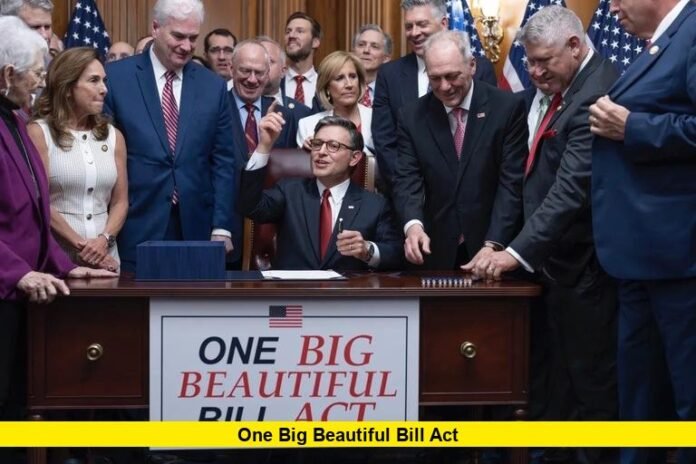

A year after becoming law, the one big beautiful bill act continues to influence tax policy, government spending, healthcare administration, immigration enforcement, and business planning across the United States. While many of its provisions are already in effect, others are being phased in over time, making 2026 a significant year for implementation as federal agencies, states, employers, and taxpayers adapt to the changes.
A sweeping legislative package
Signed into law on July 4, 2025, the legislation combined multiple Republican policy priorities into a single measure passed through the budget reconciliation process. Instead of addressing tax policy, border security, defense, and spending through separate bills, lawmakers packaged them together into one of the largest domestic policy laws enacted in recent years.
Its broad scope means the law affects millions of Americans directly or indirectly, from wage earners and retirees to business owners, students, healthcare providers, and state governments.
Although political debate surrounding the legislation remains active, implementation has shifted from Capitol Hill to federal agencies responsible for carrying out its provisions.
Tax provisions remain a central focus
One of the law’s most significant objectives was extending and modifying major federal tax policies.
Many taxpayers continue to benefit from lower individual tax rates that were scheduled to expire under prior law. Businesses have also gained greater certainty regarding investment incentives and depreciation rules, allowing companies to make longer-term financial decisions with fewer concerns about temporary tax provisions.
Estate and gift tax exemptions remain elevated under the new framework, while several deductions and business incentives continue under updated rules.
Because individual tax situations differ widely, the exact financial impact depends on income, filing status, deductions, and other personal circumstances.
Implementation continues across federal agencies
Although the legislation has been in effect for roughly a year, implementation remains ongoing.
Federal departments have spent much of 2025 and 2026 issuing regulations, administrative guidance, and updated procedures necessary to carry out the law.
Some provisions became effective immediately after enactment, while others follow phased implementation schedules extending into future tax years.
This gradual rollout has required state governments, financial institutions, employers, and public agencies to update their policies and administrative systems.
Healthcare changes draw continued attention
Among the most closely watched portions of the legislation are changes affecting Medicaid and related public assistance programs.
The law introduces revised eligibility requirements and administrative standards intended to reduce federal spending while encouraging workforce participation among certain groups of beneficiaries.
Because Medicaid operates jointly through federal and state governments, implementation varies depending on state administration and local policy decisions.
Healthcare organizations continue monitoring how these changes affect enrollment, eligibility verification, and access to services.
Business investment receives additional support
The legislation places significant emphasis on encouraging private-sector investment.
Updated tax treatment for capital expenditures, manufacturing activity, and business expansion aims to strengthen domestic economic growth and improve competitiveness.
Supporters argue these provisions provide businesses with greater confidence to invest in equipment, facilities, and workforce development.
Many companies have already incorporated the updated tax rules into their financial planning, particularly in manufacturing, energy, and industrial sectors.
Border security funding expands
A substantial portion of the law directs additional federal resources toward border security and immigration enforcement.
Funding supports expanded personnel, upgraded technology, additional infrastructure, detention capacity, and operational improvements for agencies responsible for enforcing immigration laws.
Federal officials have described these investments as part of a broader strategy to strengthen national security and improve border operations.
Immigration policy continues to be one of the legislation’s most politically debated areas.
Defense priorities receive increased investment
National defense also received major funding increases through the legislation.
The law authorizes additional spending for military readiness, equipment modernization, procurement programs, research initiatives, and strategic defense capabilities.
Defense planners view the additional funding as part of broader efforts to address evolving international security challenges while maintaining military preparedness.
Several long-term procurement programs are expected to continue benefiting from the increased appropriations authorized under the law.
Energy policy shifts
Energy remains another area significantly affected by the legislation.
The law encourages expanded domestic energy production while modifying several existing tax incentives affecting different segments of the energy industry.
Supporters argue these policies strengthen energy independence, encourage infrastructure investment, and improve long-term supply security.
Environmental advocates have continued expressing concerns regarding portions of the law that alter previous clean energy incentives and regulatory priorities.
Economic outlook remains under discussion
Economists continue evaluating the law’s long-term fiscal effects.
Supporters believe extending tax relief and encouraging investment can stimulate economic activity, increase employment, and expand the nation’s productive capacity.
Critics remain concerned about projected federal deficits and long-term debt levels, arguing that reduced tax revenue combined with increased spending could place additional pressure on future budgets.
Because many provisions extend over multiple years, economists say a complete assessment will require continued analysis as additional economic data becomes available.
What Americans are experiencing in 2026
For many households, the effects are most noticeable during tax planning and financial decision-making.
Businesses have adjusted investment strategies based on updated tax rules, while state governments continue implementing healthcare and administrative changes required under federal law.
Financial professionals, employers, and public agencies have also revised guidance and procedures to reflect the legislation’s phased implementation.
As a result, many practical effects continue unfolding rather than appearing all at once.
Political divisions remain strong
The legislation continues to divide opinion across Washington.
Republican leaders frequently point to tax certainty, business investment, border security, and defense funding as evidence that the law strengthens the country’s economic and national security priorities.
Democratic lawmakers continue criticizing provisions involving healthcare, public assistance programs, and long-term fiscal projections, arguing that certain policy choices could disproportionately affect lower-income Americans.
Those competing views ensure the law remains a major issue in congressional debate and future legislative discussions.
Looking ahead
With implementation continuing through 2026 and beyond, additional administrative guidance is expected as agencies finalize remaining regulations.
Congress also retains the authority to amend individual provisions through future legislation if lawmakers determine adjustments are necessary.
For taxpayers, businesses, and state governments, the focus has shifted from whether the legislation would become law to understanding how its various provisions apply in practice.
As agencies complete implementation and more economic data becomes available, policymakers will gain a clearer picture of the law’s long-term effects on growth, government finances, healthcare administration, and federal priorities.
The one big beautiful bill act is likely to remain one of the defining federal policy measures of the decade, with its influence extending well beyond its first year in force.