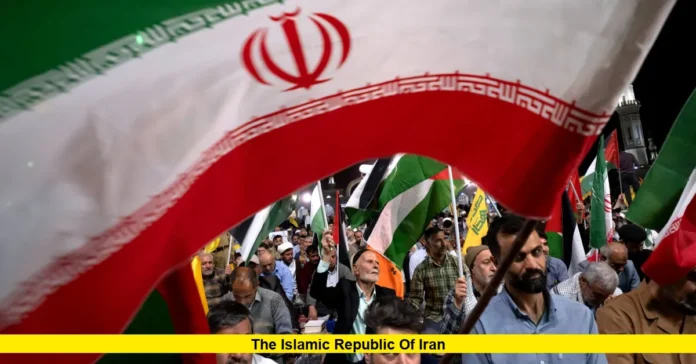

The Islamic Republic of Iran stands at one of the most consequential turning points in its 47-year history. Formed after the 1979 revolution that toppled the Pahlavi monarchy, the Islamic Republic of Iran has spent nearly five decades governed under a unique system that blends clerical religious authority with elected institutions. In 2026, the country is navigating a leadership transition, an active military conflict with the United States and Israel, and mounting economic pressure, making it one of the most closely watched nations in global affairs today.
This article examines the origins, structure, and current state of the Islamic Republic of Iran, including the dramatic events of the past several months that have reshaped its leadership and its standing on the world stage.
Background and Founding of the Islamic Republic
The Islamic Republic of Iran was established in 1979 following the Iranian Revolution, which ended more than two thousand years of monarchical rule and removed Shah Mohammad Reza Pahlavi from power. The revolution was led by Ayatollah Ruhollah Khomeini, a Shia cleric who had spent years in exile criticizing the Shah’s government before returning to Iran to found a new political order rooted in Islamic governance.
Khomeini introduced the doctrine of velayat-e faqih, or “Guardianship of the Islamic Jurist,” which holds that a qualified religious scholar should serve as the ultimate authority over the state. This principle became the constitutional foundation of the Islamic Republic and remains the core organizing idea behind Iran’s system of government to this day. Khomeini served as the first Supreme Leader until his death in 1989, at which point Ali Khamenei, then serving as Iran’s president, was elevated to the role.
Government Structure of the Islamic Republic of Iran
The political system of the Islamic Republic of Iran combines theocratic oversight with elements of representative democracy, though ultimate power rests with unelected religious institutions rather than with voters directly. Key components of the system include:
- The Supreme Leader, who serves as head of state, commander-in-chief of the armed forces, and the final authority on major policy, judicial appointments, and foreign affairs.
- The President, who is popularly elected and oversees the day-to-day executive branch, though significant authority remains subordinate to the Supreme Leader.
- The Assembly of Experts, a clerical body responsible for selecting and, in theory, supervising the Supreme Leader.
- The Guardian Council, which vets candidates for elected office and reviews legislation for compliance with Islamic law and the constitution.
- The Majlis, Iran’s parliament, which drafts and passes legislation subject to Guardian Council approval.
This layered structure means that while Iranians vote in presidential and parliamentary elections, the range of permissible candidates and policies is tightly controlled by clerical and security institutions, particularly the Islamic Revolutionary Guard Corps (IRGC), which has grown into one of the most powerful forces in the country’s political and economic life.
A Historic Leadership Transition
The most significant development in the recent history of the Islamic Republic of Iran is the death of Supreme Leader Ali Khamenei, who was killed on February 28, 2026, in a joint United States-Israeli airstrike on his compound in Tehran. Khamenei, who was 86 at the time of his death, had led the country since 1989, making his 37-year tenure the longest of any head of state in Iran’s modern history. His wife, Mansoureh Khojasteh Bagherzadeh, was also injured in the same attack and died days later from her injuries.
Following Khamenei’s death, Iran’s constitution called for a temporary leadership council, composed of the president, the head of the judiciary, and a senior cleric from the Guardian Council, to carry out the duties of the Supreme Leader until a permanent successor could be chosen. On March 8, 2026, the Assembly of Experts formally appointed Mojtaba Khamenei, the late leader’s son, as the new Supreme Leader of the Islamic Republic of Iran. Mojtaba, previously known mainly as a behind-the-scenes power broker with close ties to the IRGC, had reportedly been groomed for years as a possible successor, though his selection surprised many analysts given his lower clerical rank of hojjatoleslam rather than ayatollah.
Mojtaba Khamenei’s transition to power has been unusually opaque. He was reportedly injured, and possibly lost a leg, in the strike that killed his father, and he has not appeared publicly since assuming the role, even skipping his own father’s multi-day state funeral held in Tehran, Qom, Najaf, Karbala, and Mashhad between early March and July 2026. Ali Khamenei’s remains were finally laid to rest at the Imam Reza shrine in Mashhad, his birthplace, after the burial was postponed for months due to the ongoing conflict. Analysts and Iranian opposition groups have pointed to the delayed funeral and the new Supreme Leader’s continued absence from public view as signs of instability within the ruling establishment of the Islamic Republic of Iran.
Conflict With the United States and Israel
The killing of Ali Khamenei took place on the opening day of a broader war between Iran and the combined forces of the United States and Israel, which followed an earlier twelve-day conflict in mid-2025. Since February 2026, the Islamic Republic of Iran has experienced recurring rounds of strikes, ceasefires, and renewed hostilities. A truce reached in April 2026 and a subsequent memorandum of understanding in June 2026 had briefly opened space for negotiations, but tensions escalated sharply again in early July.
In the first week of July 2026, U.S. Central Command carried out a fresh wave of strikes, hitting more than 80 targets inside Iran after accusing Tehran of attacking commercial vessels in the Strait of Hormuz. The United States also reimposed sanctions on Iranian oil exports in response. Iranian officials, including senior negotiator Mohammad Bagher Ghalibaf, condemned the strikes and warned of a forceful response, while explosions were reported in southern port cities including Bandar Abbas and on Qeshm Island. Air raid sirens have also sounded in neighboring Gulf states such as Kuwait and Bahrain amid fears of Iranian retaliation, underscoring how the conflict continues to carry regional consequences well beyond Iran’s borders.
The economic toll on the Islamic Republic of Iran has been substantial. Oil exports, historically a critical source of state revenue, have declined sharply, with Chinese imports of Iranian crude reportedly dropping by more than half in June 2026 compared with the previous month. Domestically, inflation remains severe, with bread prices alone reported to have risen well over 100 percent year over year, while the official minimum wage continues to fall far short of the actual cost of living for most families.
Human Rights and Internal Dissent
Alongside the external conflict, the Islamic Republic of Iran continues to face significant internal unrest. Human rights organizations have documented a sharp rise in executions in 2026, including the execution of political prisoners and individuals detained during nationwide protests that erupted in January 2026. Rights monitors have reported that well over one hundred executions took place in June alone, with several prisoners sentenced on charges such as “moharebeh,” or waging war against God, a charge frequently used against political dissidents and protest participants.
Opposition and exile groups, including the National Council of Resistance of Iran, have organized demonstrations in cities across Europe throughout 2026, calling for an end to capital punishment in Iran and for international scrutiny of the judiciary. Inside the country, underground resistance activity has also been reported in multiple cities, reflecting a broader climate of unrest that has persisted despite the state’s continued use of security forces to suppress dissent. There is no official confirmation from independent international bodies regarding the precise scale of the January 2026 uprising’s casualties or the total number of detainees still held, and figures continue to vary across different sources.
Iran’s Role in the Region and the World
Historically, the Islamic Republic of Iran has positioned itself as a leader of what it terms the “Axis of Resistance,” supporting allied militias and political movements across Lebanon, Syria, Iraq, and Yemen while maintaining a firmly adversarial stance toward Israel and, at times, the United States. That regional network has been considerably weakened following successive military setbacks in 2024 and 2025, and the loss of its top leadership in 2026 has further strained Iran’s ability to project influence abroad.
Diplomatically, Iran has continued to rely on a small number of allies for support, with countries such as Pakistan playing a mediating role in ceasefire negotiations. Representatives from more than 100 countries were reported to have attended Khamenei’s funeral proceedings, illustrating that despite years of sanctions and isolation, the Islamic Republic of Iran retains diplomatic relationships across much of the developing world, even as its ties with Western nations remain deeply strained.
Economy and Daily Life
Sanctions, war-related disruption, and currency depreciation have combined to place enormous pressure on ordinary citizens of the Islamic Republic of Iran. State-affiliated media have reported that the 2026 minimum monthly wage sits at a fraction of what is needed to cover basic living costs, forcing many families to rely on a narrow range of staple foods. Unemployment, housing insecurity, and reduced purchasing power have all been cited as ongoing sources of public frustration, compounding the political tensions already present following the January 2026 protests.
Oil remains central to the country’s economic fortunes, and the loss of sanctions waivers in mid-2026 has further limited Iran’s ability to sell crude on international markets. This economic strain has, in turn, fed into the broader instability now facing the country’s leadership as it works to project continuity following such a turbulent year.
Final Thoughts
Few periods in the history of the Islamic Republic of Iran have been as consequential as the first half of 2026. The killing of longtime Supreme Leader Ali Khamenei, the rapid and still not fully transparent rise of his son Mojtaba to the country’s highest office, an active and unpredictable conflict with the United States and Israel, and a deepening economic and human rights crisis at home have combined to place the Islamic Republic of Iran under unprecedented strain. Whether the current leadership can stabilize the country, reach a durable settlement with the United States, or manage renewed domestic unrest remains uncertain, and much will depend on developments in the weeks and months ahead. As events continue to unfold rapidly, official confirmation on several key questions, including the full extent of Mojtaba Khamenei’s health and his long-term role, remains unavailable.
Stay informed as this developing story continues to evolve, and share your thoughts in the comments below.