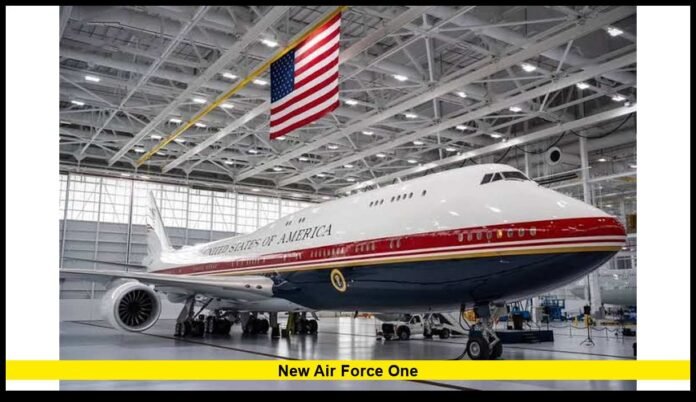

New Air Force One has become one of the biggest topics in U.S. aviation and government news after officially entering presidential service in 2026. The aircraft now carries President Donald Trump on official trips while the United States continues work on the long-awaited permanent presidential fleet replacement. The arrival of this modern Boeing 747-8 represents a significant milestone for presidential transportation, bringing updated technology, enhanced communications, modern interiors, and improved operational capabilities to support the office of the President of the United States.
For decades, Air Force One has symbolized American leadership across the world. Although “Air Force One” is technically the radio call sign used whenever the president is aboard a U.S. Air Force aircraft, the public associates the name with the specially equipped presidential airplanes that transport America’s commander in chief.
The introduction of the newest aircraft marks the beginning of a new chapter in presidential aviation. While the existing presidential aircraft remain available for service, the newer Boeing 747-8 now plays a central role in official travel, offering improved performance and a modern platform designed to meet today’s operational requirements.
A Major Milestone for Presidential Aviation
Presidential aircraft are among the most recognizable airplanes anywhere in the world. Every official overseas visit, domestic tour, emergency response, or diplomatic mission relies on an aircraft capable of operating as much more than simple transportation.
The aircraft must function as a flying White House, allowing the president to remain connected with military leaders, cabinet officials, intelligence agencies, and world leaders throughout every flight.
Introducing a new presidential aircraft is therefore much more significant than replacing a commercial airplane. Every system onboard is carefully designed to support national leadership under a wide range of circumstances.
The newest Air Force One reflects years of engineering, testing, certification, and security preparation before it was approved for presidential use.
Why the United States Needed a New Presidential Aircraft
The aircraft previously used for presidential travel entered service in 1990.
Although they have served multiple administrations exceptionally well, decades of continuous operation have naturally increased maintenance requirements. Modern aviation technology has also advanced significantly during that time.
New navigation equipment, more efficient engines, upgraded communication systems, stronger cybersecurity protections, and improved aircraft management systems have changed how modern aircraft operate.
Rather than continuing to rely only on aircraft built more than three decades ago, the U.S. Air Force introduced a newer Boeing 747-8 to strengthen presidential transportation while work continues on the permanent replacement fleet.
This approach allows presidential travel to continue on a newer platform without waiting for the completion of the entire long-term modernization program.
President Donald Trump Has Begun Flying on the Aircraft
The aircraft officially entered presidential operations during the summer of 2026.
President Donald Trump became the first president to regularly travel aboard this Boeing 747-8 after months of preparation by the U.S. Air Force and supporting agencies.
Before receiving operational approval, the aircraft completed numerous evaluations covering flight performance, communications, maintenance readiness, and security systems.
Pilots and flight crews also completed specialized training before presidential missions began.
Since entering service, the aircraft has supported official presidential travel while remaining available alongside the existing presidential fleet whenever required.
The Aircraft Is Based on the Boeing 747-8
The newest presidential aircraft is built on Boeing’s 747-8 Intercontinental platform.
The 747 family has long been recognized as one of the most successful large passenger aircraft ever produced. The 747-8 represents the newest generation of that famous aircraft family, incorporating significant improvements over earlier versions.
Compared with older presidential aircraft, the Boeing 747-8 offers several advantages.
These include:
- A longer fuselage
- Modern flight management systems
- Improved fuel efficiency
- Updated flight deck technology
- Greater operational reliability
- Increased cabin flexibility
- Newer aircraft systems
These improvements make the aircraft well suited for long-distance presidential travel while supporting demanding operational missions.
More Than Just a Passenger Airplane
Although its exterior resembles a commercial Boeing 747-8, the presidential aircraft differs dramatically from a standard passenger jet.
Inside, the airplane contains specialized systems that transform it into one of the most secure aircraft in the world.
Its mission extends far beyond carrying passengers.
The aircraft serves as a secure government workplace where the president can continue conducting official business during flights.
Meeting spaces, secure communications equipment, workstations, and specialized operational areas allow government functions to continue while traveling anywhere in the world.
Many of the aircraft’s security features remain classified to protect national security.
Advanced Communication Systems
Modern presidents remain connected throughout every trip.
The aircraft includes secure communications equipment that supports voice, video, and data transmission while flying across the United States or internationally.
These systems allow the president to communicate with military commanders, federal agencies, senior advisers, and foreign leaders whenever necessary.
Reliable communication remains one of the most important capabilities aboard the aircraft.
Even during extended overseas missions, the president must have uninterrupted access to government operations.
Security Is the Highest Priority
Every presidential aircraft undergoes extensive security preparation before entering service.
Unlike ordinary commercial aircraft, Air Force One must continue operating under a wide variety of challenging conditions.
Protective measures include sophisticated communications security, defensive technologies, specialized electronic equipment, and numerous classified systems designed to protect both the aircraft and its occupants.
Only a limited amount of information regarding these capabilities is publicly available.
That level of secrecy is intentional and helps preserve operational security.
Read Also – TSA Carry-On Size Limits: Latest Rules, Airline Policies, and Travel Tips for 2026
A Fresh Exterior Design
One of the most noticeable differences is the aircraft’s appearance.
The newer design replaces the traditional light blue presidential color scheme with a bolder combination of white, dark blue, red, and gold accents.
The large American flag displayed on the tail remains a defining feature.
Supporters describe the redesign as a modern patriotic look that reflects contemporary American styling while maintaining the aircraft’s unmistakable identity.
The updated paint scheme also makes the aircraft immediately recognizable during official arrivals around the world.
Comfort and Functionality Work Together
Every part of the aircraft has been planned to balance functionality with comfort.
Long presidential trips often involve many hours in the air before official meetings begin.
The aircraft therefore includes spaces that support both work and rest.
Although many interior details remain confidential, publicly known areas include offices, conference rooms, staff seating, communications workspaces, and accommodations for members of the traveling press.
Medical facilities and food preparation areas are also essential components of presidential operations.
Supporting Domestic and International Travel
The president travels frequently throughout the United States and overseas.
Whether attending international summits, visiting military installations, meeting governors, responding to natural disasters, or participating in diplomatic events, dependable transportation is essential.
The Boeing 747-8 platform offers excellent long-range capability, allowing nonstop flights across great distances while carrying personnel, communications equipment, and mission support resources.
This flexibility supports the demanding schedule required of the nation’s highest office.
Highly Trained Flight Crews
Operating a presidential aircraft requires extraordinary preparation.
Pilots selected for these missions complete rigorous military flight training before receiving qualification for presidential operations.
Maintenance personnel, engineers, communications specialists, security professionals, and mission planners also undergo extensive preparation.
Every flight involves careful coordination long before the aircraft leaves the runway.
Weather, security planning, flight routing, logistics, and international coordination all contribute to a successful presidential mission.
Why the Existing Aircraft Remain in Service
Although the newer aircraft has entered presidential operations, the earlier VC-25A aircraft continue serving the presidential fleet.
Maintaining multiple aircraft provides operational flexibility and ensures transportation remains available whenever needed.
Backup aircraft are important for security, scheduling, maintenance planning, and emergency preparedness.
The older airplanes continue supporting presidential travel until the next generation of permanently configured presidential aircraft becomes fully operational.
The Long-Term Modernization Program Continues
The introduction of the Boeing 747-8 does not mark the end of presidential fleet modernization.
The U.S. Air Force continues work on permanently configured presidential aircraft that will eventually replace the aging VC-25A fleet.
These future aircraft will include purpose-built systems specifically engineered for presidential missions from the beginning of production.
Until they are ready, the newer Boeing 747-8 provides an important bridge that strengthens presidential transportation capabilities.
Why Air Force One Matters Beyond Transportation
Air Force One represents far more than a way to travel.
Around the world, the aircraft symbolizes American leadership, stability, and the continuity of government.
Every arrival at an international airport attracts worldwide attention.
The aircraft often becomes one of the most photographed symbols of an official presidential visit.
Its appearance alone signals the presence of the President of the United States and the beginning of important diplomatic meetings.
Because of that symbolic role, every detail—from maintenance standards to security procedures—is held to exceptionally high standards.
Economic and Engineering Significance
The development and preparation of the aircraft also demonstrate the complexity of modern aerospace engineering.
Transforming a commercial airliner into a presidential aircraft requires extensive structural modifications, secure communications integration, specialized electrical systems, mission equipment, and comprehensive testing.
Thousands of hours of engineering, inspections, software validation, and operational evaluations are completed before presidential approval is granted.
This process reflects the high expectations placed on aircraft responsible for transporting the nation’s commander in chief.
Public Interest Continues to Grow
Interest in the new aircraft remains high among aviation enthusiasts, government observers, and the general public.
Images of presidential arrivals, aircraft tours, and official travel continue generating significant attention because Air Force One occupies a unique place in American history.
Each presidential administration adds another chapter to that history, and the newest Boeing 747-8 represents the latest evolution of presidential air travel.
As additional missions take place throughout 2026, Americans will continue seeing the aircraft during official events across the country and around the world.
Looking Ahead
The arrival of the new presidential aircraft marks an important step in modernizing one of the world’s most recognizable government fleets.
By combining a proven Boeing 747-8 platform with specialized military systems, secure communications, updated technology, and modern operational capabilities, the aircraft strengthens the ability of the President of the United States to travel safely while remaining fully connected to government operations.
Although additional modernization efforts will continue in the coming years, the aircraft now serving presidential missions represents a significant advancement over older platforms. It ensures that presidential transportation keeps pace with modern aviation standards while preserving the reliability, security, and global presence expected of Air Force One.
What do you think about the arrival of the new Air Force One? Share your thoughts in the comments and return for more verified updates on U.S. presidential aviation.