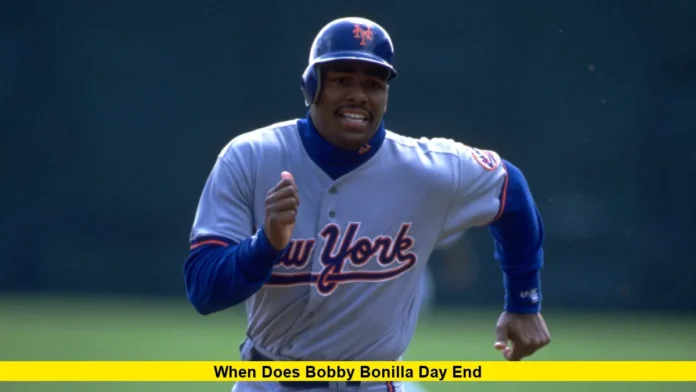

Every July 1, baseball fans across the country ask the same question: when does Bobby Bonilla Day end? The unofficial holiday has become one of the most famous quirks in Major League Baseball, and with each passing year, curiosity grows about exactly how much longer the New York Mets will keep cutting checks to a player who last suited up in 2001. The short answer is that Bobby Bonilla Day will continue through 2035, but the full story behind the deal, and what happens once the payments finally stop, is far more interesting than a single date on a calendar.
What Is Bobby Bonilla Day?
Bobby Bonilla Day refers to July 1, the date on which the Mets send Bonilla an annual payment of $1,193,248.20. The tradition traces back to a contract restructuring completed in 2000, after the Mets decided to release the aging outfielder rather than keep him on the roster. At the time, the team still owed Bonilla roughly $5.9 million on his existing deal. Instead of paying that amount as a lump sum, the Mets and Bonilla’s representatives agreed to defer the money, add 8 percent annual interest, and spread the payout across 25 years. That arrangement is why fans now mark July 1 as an unofficial holiday, and it is also why the question of when Bobby Bonilla Day ends comes up so often this time of year.
Background: How the Deal Came Together
Bonilla’s path to this contract began with a strong, if turbulent, career. He broke into the majors with the Pittsburgh Pirates in 1986 and quickly developed into one of the National League’s most feared hitters. Between 1988 and 1991, he posted excellent numbers, made multiple All-Star teams, and finished high in Most Valuable Player voting. His success led to a lucrative free agent deal with the Mets ahead of the 1992 season, though that original contract is not the one connected to Bobby Bonilla Day.
After stints with the Baltimore Orioles and a World Series championship with the Florida Marlins in 1997, Bonilla was traded back to the Mets for the 1999 season. That final Mets tenure did not go well; he struggled at the plate and fell out of favor with the organization. When the team decided to move on, it still had $5.9 million left to pay him. Rather than issue that money immediately, then-owner Fred Wilpon agreed to defer it, largely because he believed his investments with financier Bernie Madoff would generate returns well above the 8 percent interest owed to Bonilla. That bet turned out to be one of the costliest miscalculations in franchise history, since Madoff’s fund was later exposed as a massive Ponzi scheme.
The Terms of the Bobby Bonilla Contract
Under the restructured agreement, the Mets committed to paying Bonilla $1,193,248.20 every July 1, starting in 2011 and continuing through 2035. By the time the final payment is issued, the total payout will reach approximately $29.8 million, nearly five times the original $5.9 million balance. Several key details help explain why this deal became so famous:
- Payments began in 2011, eleven years after the original agreement was signed, giving the deferred amount time to accrue interest.
- The 8 percent annual interest rate was considered generous even by the standards of that era, and such terms are rarely offered to players today.
- Bonilla will be 72 years old when he collects his final Mets check in 2035, more than three decades after his last game with the team.
- The deal is separate from another deferred contract Bonilla holds with the Orioles, which pays him $500,000 annually through 2028.
So while Bobby Bonilla Day is the more famous of his two ongoing payment streams, it is not the only one. Bonilla also continues to receive smaller annual payments from Baltimore, a reminder that deferred compensation was part of more than one chapter in his post-playing career.
Career Highlights Beyond the Contract
It is easy to reduce Bobby Bonilla’s legacy to a punchline about deferred payments, but his on-field résumé was genuinely impressive. Over 16 major league seasons, he batted .279 with a .358 on-base percentage and a .472 slugging percentage, numbers that translated to a 124 OPS+, meaning he was roughly 24 percent better than the league-average hitter during his career. He earned four All-Star selections, won three Silver Slugger Awards, and was a serious MVP contender during his peak years with the Pirates. He also played a key role in helping the Marlins capture the 1997 World Series title, giving him a championship ring to go along with his financial windfall. Bonilla played primarily as a third baseman and outfielder and was known for his power at the plate, particularly during a stretch from 1988 through 1991 when he hit 98 home runs in four seasons.
Public Interest and the Rise of an Unofficial Holiday
For years after the payments began in 2011, Bobby Bonilla Day existed mostly as an inside joke among frustrated Mets fans, a symbol of an era marked by ownership missteps and financial turmoil tied to the Madoff scandal. That tone shifted considerably after Steve Cohen purchased the team in 2020. Cohen, unlike previous ownership, has embraced the tradition publicly, referring to it in interviews as one of his favorite days of the year. The shift in attitude has helped transform Bobby Bonilla Day from a source of embarrassment into a celebrated piece of baseball folklore, complete with social media tributes, sports media retrospectives, and annual comparisons to current player salaries.
That last point has become a recurring theme each July 1. Because rookie-level salaries in MLB remain relatively low, several young players earn less in a full season than Bonilla receives in a single July payment. This comparison resurfaces every year and continues to fuel public fascination with the deal, reinforcing why so many fans search for updates on Bobby Bonilla Day even though the underlying terms of the contract have not changed since it was signed.
Bonilla’s Deal Compared to Other Deferred Contracts
Bobby Bonilla was not the only player to benefit from a deferred payment structure, though his deal remains the most widely discussed. Bret Saberhagen has a similar arrangement with the Mets that pays him $250,000 annually through 2028, and that deal actually helped inspire Bonilla’s own negotiation. Other notable examples include Max Scherzer, who is still collecting deferred money from the Washington Nationals through 2028, and Chris Davis, whose deferred payments from the Baltimore Orioles stretch out through 2037. More recently, Shohei Ohtani’s record-setting contract with the Los Angeles Dodgers includes an unprecedented deferral structure, with the bulk of his $700 million deal not paid out until 2034 through 2043. These comparisons show that while deferred compensation has become more common across the league, Bonilla’s contract remains the benchmark that every other deal gets measured against.
When Does Bobby Bonilla Day End?
To directly answer the central question, Bobby Bonilla Day is scheduled to end in 2035. That year will mark the 25th and final annual payment under the terms negotiated back in 2000, closing out a contract that began generating payments in 2011. Once the final check is issued, Bonilla will have collected roughly $29.8 million total from the Mets under this specific agreement. It is worth noting that his separate deal with the Orioles concludes earlier, in 2028, meaning his overall deferred income from both franchises will wind down in stages rather than all at once.
There is no indication that either agreement has been altered, accelerated, or paid off early, and no official confirmation exists suggesting the timeline has changed. Barring any future announcement from the Mets organization, fans should expect the tradition to continue exactly as scheduled for nearly another decade.
Final Thoughts
Bobby Bonilla Day has evolved from an awkward reminder of a franchise’s financial missteps into one of baseball’s most beloved annual traditions. The answer to when Bobby Bonilla Day ends is clear: the Mets will make their final scheduled payment in 2035, closing the book on a deal that has captivated fans for well over a decade. Until then, every July 1 will continue to bring renewed attention to Bonilla’s contract, fresh comparisons to current player salaries, and no shortage of good-natured humor from the Mets fan base. Whether viewed as a cautionary tale or a stroke of financial genius on Bonilla’s part, the annual payday shows no signs of losing its cultural relevance anytime soon.
Have thoughts on Bobby Bonilla Day or want to stay updated on the latest Mets news? Drop a comment below and check back for more updates.