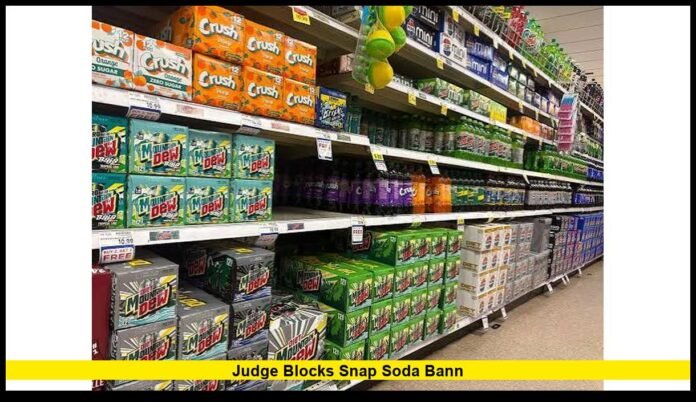

A federal court ruling has placed a significant obstacle in front of efforts to limit what Americans can buy through the Supplemental Nutrition Assistance Program, commonly known as SNAP. The decision came after a judge blocks SNAP soda ban measures that sought to prevent recipients from using benefits to purchase soda, candy, and certain other sugary products. The ruling has sparked nationwide discussion about nutrition policy, government authority, and the future of one of the country’s largest food assistance programs.
The case arrives at a time when policymakers across the United States continue debating how SNAP should balance access to food with public health goals. While supporters of restrictions argue that taxpayer-funded benefits should encourage healthier eating habits, critics say the program’s primary purpose is fighting hunger and food insecurity rather than regulating personal food choices.
The court’s decision has immediate implications for states that had planned to implement purchase restrictions and could influence future efforts to reshape SNAP policies at both the federal and state levels.
Why SNAP Purchase Restrictions Became a National Issue
SNAP serves millions of Americans every month and remains one of the most important anti-hunger programs in the country. Eligible households receive monthly benefits that can be used to purchase food at approved retailers.
For decades, federal law has broadly defined what foods qualify under the program. Participants can generally purchase most grocery items intended for home consumption, while products such as alcohol, tobacco, and certain prepared foods remain excluded.
The recent controversy emerged when federal officials approved requests from several states seeking permission to restrict purchases of soda, candy, and other products considered to have little nutritional value.
Supporters viewed the initiative as a way to promote healthier diets among benefit recipients and reduce consumption of products linked to obesity, diabetes, and other health concerns.
Opponents argued that the restrictions unfairly targeted low-income households and created additional barriers for families already struggling with food costs.
The Court’s Central Finding
The lawsuit focused less on whether soda and candy are healthy and more on whether federal agencies possess the legal authority to make such changes.
In reviewing the case, the court examined the powers granted to the U.S. Department of Agriculture, which oversees SNAP. The judge ultimately determined that the agency lacked sufficient authority under existing law to approve the challenged restrictions.
The ruling emphasized that major changes to eligible food categories require clear authorization from Congress. While federal officials may pursue nutrition-related goals, the court found that administrative action alone cannot rewrite core eligibility rules established by federal statute.
As a result, the restrictions were halted before broader implementation could continue.
How the Proposed Restrictions Would Have Worked
Under the proposed policy framework, SNAP recipients in participating states would have faced new limits on certain purchases.
Products targeted by the restrictions included:
- Regular soda
- Sweetened soft drinks
- Many candy products
- Certain high-sugar beverages
- Other items identified by state proposals
Retailers would have been required to update payment systems to distinguish between eligible and restricted products during checkout.
Supporters believed these changes could steer purchasing habits toward healthier alternatives such as fruits, vegetables, milk, whole grains, and other nutritious foods.
However, critics warned that implementation could create confusion for consumers and store operators alike.
Many grocery industry representatives expressed concerns about the complexity of enforcing new eligibility standards across thousands of products.
A Long-Running Debate Over SNAP and Nutrition
The legal battle reflects a larger policy debate that has existed for years.
Public health advocates have frequently questioned whether government nutrition assistance programs should cover products with high levels of added sugar. Some experts argue that allowing benefits to be spent on soda undermines efforts to improve public health outcomes.
Supporters of restrictions often point to rising healthcare costs associated with obesity-related illnesses. They argue that nutrition assistance programs should encourage healthier choices and reduce taxpayer spending on preventable health conditions.
On the other side, anti-hunger organizations contend that SNAP already helps families make difficult food-budget decisions each month. They argue that restricting purchases could increase stigma while doing little to address the root causes of poor nutrition.
Many advocacy groups also note that dietary habits are influenced by a wide range of factors including food prices, access to grocery stores, education, transportation, and household circumstances.
What SNAP Recipients Are Saying
Many SNAP participants have expressed mixed reactions to the debate.
Some recipients support efforts to encourage healthier eating and believe government programs should promote nutritious choices.
Others argue that restrictions ignore the realities facing many low-income families. Budget constraints, limited transportation options, work schedules, and food availability often influence purchasing decisions.
Parents participating in public discussions surrounding the case have frequently emphasized the importance of maintaining flexibility when shopping for household needs.
For many families, SNAP benefits supplement rather than fully cover monthly grocery expenses. As a result, recipients often combine benefits with personal income to stretch food budgets as far as possible.
The court’s ruling ensures that existing purchasing rules remain in place for now.
Impact on State Governments
Several states had invested significant time and resources in developing proposals aimed at restricting sugary products within SNAP.
State officials supporting the initiative argued that local governments should have flexibility to test innovative approaches to nutrition policy.
The court’s decision creates uncertainty for those efforts.
States that planned future implementation may now need to suspend preparations while evaluating legal options. Others could explore alternative strategies that encourage healthy eating without imposing direct purchase bans.
Some policymakers have already indicated that legislative action at the federal level may be necessary if similar restrictions are pursued again.
The ruling therefore shifts much of the debate from administrative agencies back toward Congress.
The Economic Dimension of the Debate
Beyond nutrition concerns, the case also carries economic implications.
SNAP generates billions of dollars in grocery spending each year. Food retailers, beverage manufacturers, and consumer goods companies closely monitor any policy changes affecting eligible purchases.
Restrictions on certain products could alter consumer spending patterns and impact sales across multiple categories.
Industry groups have historically opposed efforts to exclude specific food items from SNAP, arguing that such decisions create administrative burdens and uncertainty for retailers.
Supporters of restrictions counter that public health benefits outweigh potential business concerns.
The court’s decision leaves the existing marketplace unchanged for now, but discussions about SNAP purchasing rules are likely to continue.
Understanding SNAP’s Role in Fighting Food Insecurity
SNAP remains a cornerstone of the nation’s food assistance system.
The program provides support to households facing financial hardship and helps reduce hunger across urban, suburban, and rural communities.
Research has consistently shown that SNAP benefits help families purchase groceries, maintain food security, and navigate periods of economic difficulty.
Because the program reaches millions of Americans, even relatively small policy adjustments can have widespread effects.
That reality helps explain why debates over eligible purchases often generate strong reactions from policymakers, advocacy organizations, health experts, and benefit recipients.
Changes affecting SNAP frequently extend beyond nutrition policy and touch broader questions about poverty, public assistance, and government priorities.
Arguments From Public Health Advocates
Supporters of restricting soda purchases through SNAP believe nutrition assistance programs should better align with federal dietary recommendations.
They argue that reducing access to sugary beverages could encourage healthier consumption habits and potentially lower rates of diet-related disease over time.
Some public health experts compare restrictions to existing rules that prohibit SNAP purchases of alcohol and tobacco.
From their perspective, government-funded nutrition assistance should focus on foods and beverages that contribute positively to health outcomes.
Advocates also point to growing public awareness regarding sugar consumption and its connection to chronic disease.
They view SNAP reform as one component of a broader effort to improve national health.
Arguments From Anti-Hunger Groups
Organizations opposing restrictions emphasize food access and consumer choice.
Many argue that SNAP participants should not face purchasing rules that differ dramatically from those applied to other consumers.
Critics also question whether restricting specific products would significantly improve dietary habits.
They suggest that nutrition education, incentives for healthy foods, and improved access to fresh groceries may produce stronger results than bans.
Another concern involves stigma.
Some advocates worry that checkout restrictions could draw unwanted attention to SNAP recipients and create additional challenges during grocery transactions.
These concerns became a central part of the broader debate leading up to the court’s decision.
What Happens Next?
Although the ruling represents a major legal development, the broader policy discussion remains far from over.
Federal officials and state governments still have several options available, including pursuing appeals, seeking legislative changes, or developing alternative approaches to nutrition policy.
Congress could eventually consider proposals that directly address eligible food categories within SNAP.
Lawmakers from both parties have periodically introduced measures related to nutrition standards, healthy food incentives, and benefit usage requirements.
Whether such proposals gain momentum remains uncertain, but the court’s decision has undoubtedly renewed national attention on the issue.
Why This Case Matters Nationwide
The reason this case attracted such widespread interest is simple: SNAP affects millions of households across the United States.
When policymakers debate what foods qualify for purchase, they are discussing decisions that influence daily grocery shopping for a significant portion of the population.
The ruling that a judge blocks SNAP soda ban efforts does more than halt a specific policy. It also raises broader questions about how federal agencies exercise authority, how states pursue public health goals, and how lawmakers define the purpose of nutrition assistance programs.
Those questions are likely to remain at the center of future discussions surrounding food policy and government assistance.
The Bigger Picture for Food Policy
The intersection of nutrition, healthcare, and food assistance continues to evolve.
As concerns about chronic disease, food affordability, and access to healthy groceries grow, policymakers will likely continue searching for ways to improve outcomes while preserving program effectiveness.
The court’s ruling marks an important chapter in that ongoing conversation.
For now, SNAP participants can continue using benefits under existing federal guidelines, while government officials, advocacy groups, and lawmakers evaluate their next steps.
The debate over nutrition assistance is unlikely to disappear, but the latest court decision ensures that any significant changes will face close legal and political scrutiny moving forward.
What are your thoughts on the future of SNAP and food purchasing rules? Share your perspective and stay tuned for the latest developments on this important national issue.