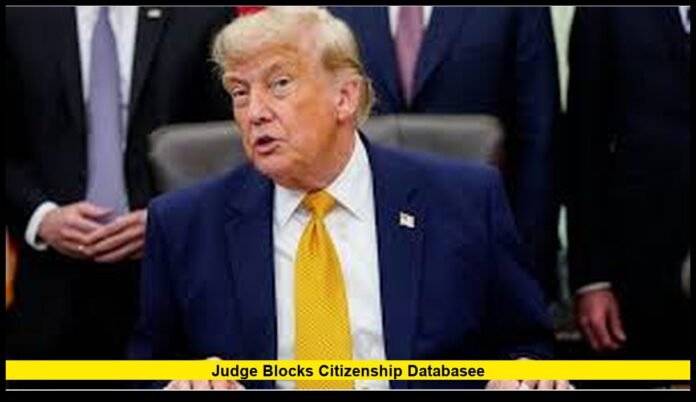

A major legal battle over election administration took a significant turn after a federal court ruling in a case where a judge blocks citizenship database access that had been made available to election officials for voter verification efforts. The decision has quickly become one of the most closely watched election-law developments of 2026, drawing attention from state governments, voting-rights advocates, privacy organizations, and election administrators across the United States.
The ruling temporarily stops federal agencies from using an expanded citizenship verification system that several states had begun incorporating into voter-registration review processes. The court determined that substantial legal questions remain regarding how personal information was collected, managed, and shared through the system.
The decision arrives at a time when election procedures, voter eligibility verification, and government data collection remain at the center of national discussions ahead of future federal and state elections.
Court Places Immediate Restrictions on Database Operations
Federal officials argued that the expanded system would help states identify potential discrepancies in voter rolls and improve administrative accuracy. The program allowed election offices to compare registration information with federal citizenship records through a streamlined process.
However, organizations challenging the program argued that the system exceeded legal boundaries and posed risks to eligible voters. They claimed the database relied on information that could contain delays, inconsistencies, or incomplete updates regarding citizenship status.
After reviewing the evidence presented by both sides, the court ordered an immediate halt to the expanded use of the system while the legal challenge continues.
The ruling prevents further implementation of the program under its current structure and requires federal officials to suspend the disputed verification activities.
The Dispute Centers on the SAVE Program
At the heart of the lawsuit is the Systematic Alien Verification for Entitlements program, commonly known as SAVE.
For many years, SAVE has been used by government agencies to verify immigration and citizenship information in specific administrative situations. The system historically served agencies responsible for determining eligibility for various government services and benefits.
More recently, federal officials introduced changes that made the database accessible for additional election-related verification purposes.
Supporters described the expansion as a modernization effort designed to improve efficiency and help election offices maintain accurate voter records.
Critics, however, argued that the new approach transformed the program beyond its original purpose and created legal concerns that required judicial review.
The court ultimately concluded that the challengers raised substantial questions regarding the legality of the expanded system.
Privacy Concerns Played a Central Role
One of the most significant issues addressed during the case involved privacy protections.
Opponents argued that the revised system brought together large amounts of personal information from multiple government databases. They claimed the collection and sharing of this information raised concerns under federal privacy laws that were enacted to limit the creation of extensive government data repositories.
The lawsuit emphasized that personal information stored in government systems must be handled carefully and within the limits established by federal law.
According to arguments presented during the case, expanding access to citizenship records for election-related purposes increased the risk of improper data use and could expose sensitive information belonging to millions of individuals.
The court found these concerns substantial enough to justify intervention while the legal challenge proceeds.
The decision reflects broader national debates over privacy rights in an era when government agencies increasingly rely on digital databases and large-scale information systems.
Questions Raised About Data Accuracy
Beyond privacy issues, data accuracy emerged as another major topic during the litigation.
Groups challenging the program argued that citizenship information may not always be updated instantly across every government system. They warned that timing differences between agencies could create situations in which legally eligible voters appear incorrectly in verification searches.
Naturalized citizens became a particular focus during court proceedings.
Advocates pointed out that individuals who recently completed the naturalization process may experience delays before all federal records reflect their updated citizenship status.
In those situations, election officials relying heavily on database results could potentially identify eligible citizens for further scrutiny despite their lawful voting status.
The court acknowledged these concerns and indicated that questions surrounding accuracy warranted additional examination before the program could continue operating in its expanded form.
States Face New Challenges Following the Ruling
The decision has immediate implications for states that had already begun integrating the federal system into election administration procedures.
Several election offices viewed the database as a useful tool for reviewing registration records and identifying information that might require further investigation.
With the court’s order now in place, those jurisdictions must reassess how they conduct certain verification activities.
Election officials may need to rely on existing state procedures or alternative verification methods while the legal dispute moves through the courts.
The ruling does not prohibit states from maintaining voter rolls or conducting routine reviews. Instead, it specifically limits the use of the expanded federal database system that became the subject of the lawsuit.
As a result, election administrators across the country are carefully evaluating the practical effects of the decision.
Election Integrity and Voting Access Remain Key Issues
The case highlights a long-running national debate about how election systems should balance security measures with voter accessibility.
Supporters of enhanced verification systems argue that election officials need reliable tools to ensure voter-registration records remain accurate and up to date.
They contend that public confidence in elections benefits when administrators have access to modern technology capable of identifying inconsistencies and preventing administrative errors.
On the other hand, voting-rights advocates argue that overly aggressive verification efforts can create unnecessary obstacles for lawful voters.
They maintain that election systems should prioritize accuracy while also ensuring eligible citizens are not mistakenly flagged or burdened by administrative complications.
The court’s ruling does not settle that broader debate. Instead, it addresses whether the specific federal database expansion complies with existing legal requirements.
Nevertheless, the decision is expected to influence future policy discussions involving voter eligibility verification nationwide.
Growing Importance of Technology in Election Administration
The lawsuit also illustrates how technology has become increasingly important in election management.
Modern election offices process enormous amounts of information, including voter registrations, address updates, absentee ballot requests, and other administrative records.
To handle these responsibilities efficiently, governments often turn to sophisticated digital systems capable of comparing information across multiple databases.
While these technologies can improve efficiency, they also raise important questions regarding privacy, transparency, and accountability.
Courts are increasingly being asked to evaluate whether emerging technologies comply with laws written before many of today’s data-management capabilities existed.
The citizenship database dispute reflects this broader challenge facing policymakers, administrators, and judges throughout the country.
As government agencies continue adopting advanced data systems, legal scrutiny surrounding those tools is likely to increase.
Federal Officials Continue Defending the Program
Government officials have consistently defended the expanded verification system throughout the litigation.
They argue that the program was intended to provide election administrators with better access to information needed for voter-registration reviews.
Supporters say the initiative represented an effort to streamline administrative processes while helping states address potential record discrepancies more efficiently.
Federal attorneys have maintained that the system operates within legal boundaries and serves a legitimate government purpose.
Because of those arguments, many observers expect the government to continue defending the program through additional court proceedings.
Future appeals could determine whether the ruling remains in place or whether some version of the database expansion eventually returns.
National Attention Focuses on Future Legal Proceedings
Legal experts expect the case to remain highly significant throughout 2026 and beyond.
The dispute involves multiple areas of law, including election administration, privacy protections, government data management, and federal authority.
As a result, the outcome could affect more than just one database program.
Future court decisions may establish important standards regarding how federal agencies collect, share, and utilize personal information in election-related contexts.
State governments, advocacy groups, and election officials are all closely monitoring developments because the eventual outcome may influence future policy decisions nationwide.
The legal questions raised by the case extend well beyond the immediate dispute and could shape government practices for years.
Why the Judge Blocks Citizenship Database Decision Matters
The reason the judge blocks citizenship database operations has attracted such widespread attention is that the ruling sits at the intersection of several major public policy issues.
Election administration remains a subject of intense interest across the political spectrum. At the same time, Americans continue to express concerns about privacy, data security, and the growing role of technology in government operations.
This case brings all of those topics together in a single legal challenge.
The court’s decision underscores the importance of ensuring that government programs operate within established legal frameworks while balancing competing priorities such as election oversight, administrative efficiency, and individual privacy rights.
Regardless of how future appeals unfold, the ruling has already become one of the most influential election-related court decisions of the year.
Looking Ahead
The litigation is far from over.
Additional hearings, legal filings, and possible appeals are expected in the months ahead as both sides continue presenting their arguments.
For now, the court’s order remains a significant development that affects federal election-related verification efforts and shapes ongoing conversations about voter registration oversight.
The case will continue drawing national attention because its outcome may help define how government agencies use large-scale data systems in election administration moving forward.
Lawmakers, election officials, advocacy organizations, and voters alike will be watching closely as the next chapter of this legal battle unfolds.
What are your thoughts on the court’s decision and its impact on election administration? Share your perspective and follow future developments as the case moves forward.