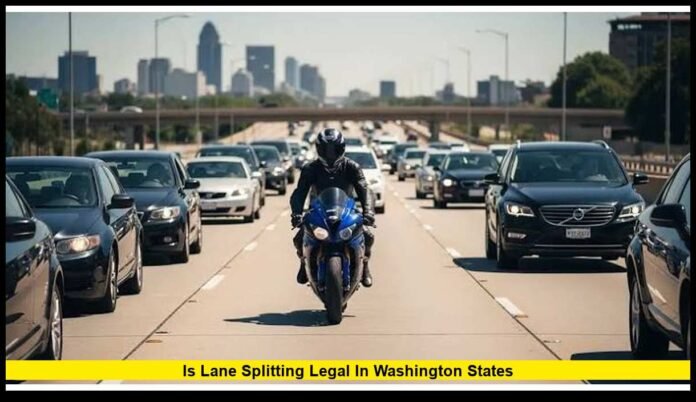

Motorcycle riders across the Pacific Northwest frequently ask, Is lane splitting legal in Washington State? The question continues to generate discussion among commuters, motorcycle enthusiasts, lawmakers, and road safety advocates. With traffic congestion increasing in major cities such as Seattle, Tacoma, Bellevue, and Spokane, many riders wonder whether they can legally move between lanes of slow-moving or stopped vehicles to save time and reduce exposure to rear-end collisions.
As of 2026, Washington maintains a clear position on the issue. Lane splitting remains prohibited under state law, meaning motorcyclists cannot legally ride between lanes of traffic or between adjacent rows of vehicles. While proposals aimed at changing the law have appeared over the years, the state’s rules governing motorcycle operation have not been modified to allow the practice.
For both residents and visitors riding through Washington, understanding the law is essential. Failing to follow motorcycle traffic regulations can result in citations, financial penalties, and legal complications if an accident occurs.
Understanding Lane Splitting
Lane splitting occurs when a motorcyclist rides between two lanes of vehicles traveling in the same direction. Riders often perform this maneuver during traffic jams, slow-moving highway congestion, or stop-and-go commuting periods.
The practice is common in some parts of the world and has attracted support from riders who believe it improves traffic flow and reduces certain crash risks. However, it remains controversial because many traffic safety experts argue that it introduces additional hazards for both riders and drivers.
In Washington, the law does not permit motorcyclists to use the space between lanes as a travel path.
What the Law Means for Washington Riders
Current motorcycle regulations require riders to remain within a designated traffic lane. A motorcycle must occupy a lane in the same manner as other motor vehicles rather than traveling between lanes of traffic.
This rule applies regardless of whether traffic is moving at highway speed, crawling through congestion, or completely stopped at an intersection.
Many riders assume that moving between stationary vehicles at a red light is treated differently, but Washington law does not provide an exception that allows such behavior.
Simply put, motorcyclists must remain in their assigned lane and wait with surrounding traffic.
Lane Splitting and Lane Filtering Are Not the Same
Lane Splitting
Lane splitting generally refers to riding between lanes while surrounding traffic is moving.
For example, a rider traveling between two lanes on a congested interstate would be lane splitting.
Lane Filtering
Lane filtering typically occurs when motorcycles move between stopped vehicles and position themselves at the front of traffic at an intersection.
The rider then proceeds ahead when the traffic signal changes.
Several states have considered lane filtering separately from lane splitting because it occurs at lower speeds. Nevertheless, Washington does not currently authorize either practice.
As a result, both maneuvers remain illegal throughout the state.
Why the Issue Continues to Draw Attention
Washington is home to thousands of motorcycle owners who regularly commute through urban traffic corridors.
Major metropolitan areas frequently experience congestion during peak travel periods. Riders often point to these conditions when discussing potential changes to motorcycle laws.
Supporters of lane splitting and lane filtering argue that motorcycles occupy less space than passenger vehicles and can move more efficiently through crowded roadways. Some also believe that allowing riders to move ahead of stopped traffic could reduce the risk of rear-end crashes involving motorcycles.
On the other side of the debate, opponents raise concerns about driver expectations, roadway safety, enforcement challenges, and crash risks associated with motorcycles traveling between vehicles.
These differing viewpoints have fueled ongoing discussions for years.
Legislative Efforts Over the Years
Lawmakers have periodically considered proposals related to lane splitting and lane filtering.
Some bills sought to permit limited filtering at low speeds. Others explored allowing lane splitting under tightly controlled conditions.
Various proposals included restrictions such as:
- Speed limitations
- Traffic congestion requirements
- Specific roadway conditions
- Safety-based operating rules
- Restrictions on where the maneuver could occur
Despite receiving attention from riders and transportation groups, these measures ultimately did not become law.
Because none of the proposed changes were enacted, the legal status of lane splitting remains unchanged.
Safety Concerns Frequently Raised by Officials
Road safety remains the central factor behind Washington’s position on lane splitting.
Several concerns are commonly cited when evaluating the practice.
Driver Awareness
Motorcycles are smaller and less visible than passenger vehicles.
Many drivers focus their attention on vehicles directly ahead and beside them. A motorcycle traveling between lanes may appear unexpectedly, increasing the likelihood of conflicts.
Sudden Lane Changes
Even careful drivers sometimes change lanes quickly to avoid hazards, merge into traffic, or prepare for exits.
When a motorcycle occupies the space between lanes, a sudden maneuver by a nearby vehicle can create a dangerous situation.
Limited Escape Routes
Motorcyclists generally rely on open space to avoid collisions.
When riding between vehicles, available escape routes become limited because cars surround the motorcycle on both sides.
Road Conditions
Washington’s climate can produce wet pavement, reduced visibility, and slippery road surfaces.
Rain, standing water, and changing weather conditions can make precise motorcycle control more challenging, especially in tight spaces between vehicles.
Driver Expectations
Many safety experts emphasize that predictable traffic patterns help reduce crashes.
Because lane splitting is prohibited in Washington, drivers may not expect motorcycles to approach between lanes, potentially increasing risk.
Consequences of Lane Splitting in Washington
Motorcyclists who engage in lane splitting may face legal consequences.
Traffic citations can result in monetary fines and additional penalties depending on the circumstances.
Potential consequences include:
- Traffic violations on driving records
- Financial penalties
- Insurance rate increases
- Greater scrutiny following accidents
- Possible allegations of unsafe riding behavior
The consequences can become even more significant if a collision occurs while the rider is traveling between lanes.
Accident Liability and Insurance Considerations
Motorcycle accidents often involve complex investigations.
When determining responsibility, investigators review multiple factors, including vehicle positions, roadway conditions, traffic patterns, witness statements, and driver behavior.
If a rider was lane splitting at the time of a crash, that fact may influence how fault is evaluated.
Insurance companies frequently examine whether any traffic laws were violated before the collision occurred.
Because Washington follows a comparative fault system, responsibility may be divided among multiple parties depending on the circumstances. Even so, engaging in an illegal maneuver can complicate claims and potentially affect compensation outcomes.
This is one reason many motorcycle safety advocates encourage riders to strictly follow state traffic laws.
Is lane splitting legal in Washington State? Common Misunderstandings Explained
Despite the clarity of the law, misconceptions continue to circulate among riders and motorists.
Myth: It Is Legal When Traffic Stops
Some people believe lane splitting becomes legal when vehicles are stopped.
This is incorrect.
The prohibition applies regardless of whether traffic is moving or stationary.
Myth: It Is Allowed During Rush Hour
Heavy congestion does not create an exception under Washington law.
Motorcycles must remain within their designated lane even during severe traffic backups.
Myth: It Is Legal on Certain Roads
Washington does not provide special lane-splitting permissions based on specific highways or city streets.
The restriction applies statewide.
Myth: Proposed Bills Changed the Law
Legislative proposals alone do not alter traffic regulations.
Unless a bill becomes law through the legislative process, existing rules remain in effect.
Motorcycle Lane Sharing: What Is Actually Allowed?
One area of confusion involves lane sharing among motorcycles.
Washington permits two motorcycles to ride side by side within the same lane under certain circumstances.
This practice differs significantly from lane splitting.
When two motorcycles share a lane, both remain entirely within the boundaries of a single designated lane.
Lane splitting, by contrast, involves traveling between separate lanes of vehicle traffic.
Understanding this distinction can help riders avoid accidental violations.
Comparing Washington With Other States
Motorcycle regulations vary widely throughout the United States.
Some states maintain strict prohibitions similar to Washington’s approach.
Others allow limited lane filtering under controlled circumstances.
A small number have adopted policies that permit certain forms of lane splitting.
Because regulations differ so significantly, riders traveling between states should review local traffic laws before crossing state lines.
What may be permissible in one jurisdiction could result in a citation elsewhere.
Tips for Riding Safely in Congested Traffic
Traffic congestion presents challenges for every motorcyclist, regardless of legal rules surrounding lane splitting.
Riders can improve safety by following several proven practices.
Maintain Visibility
Use headlights when appropriate and wear gear that helps drivers notice your presence.
Leave Extra Following Distance
Additional space provides more time to react to sudden traffic changes.
Monitor Blind Spots
Many motorcycle crashes occur because drivers fail to see riders during lane changes.
Stay Alert at Intersections
Intersections remain among the most common locations for motorcycle collisions.
Avoid Aggressive Riding
Rapid lane changes, excessive speed, and unpredictable maneuvers increase risk.
Adjust for Weather
Rain and wet roads can significantly affect braking and handling performance.
Anticipate Driver Behavior
Expect that other motorists may make unexpected moves and position yourself accordingly.
The Future of Lane Splitting in Washington
The conversation surrounding lane splitting is unlikely to disappear anytime soon.
Motorcycle advocacy organizations continue to discuss potential benefits, while safety experts and policymakers evaluate concerns related to roadway operations and public safety.
Any future change would require legislative action and implementation through the state’s legal process.
Until such changes occur, riders should continue following existing regulations and avoid assuming that proposed reforms have taken effect.
Final Thoughts
Washington’s motorcycle laws leave little room for confusion. Riders are not permitted to travel between lanes of traffic, whether vehicles are moving slowly, stopped at a signal, or experiencing heavy congestion. While discussions about possible reforms continue, the state’s current rules require motorcycles to remain within designated traffic lanes just like other vehicles.
For riders, understanding these regulations is more than a legal requirement. It is an important part of reducing risk, avoiding citations, protecting insurance interests, and promoting safer roadways for everyone. Staying informed about motorcycle laws can help riders make smarter decisions and enjoy the freedom of the road with greater confidence.
Motorcycling offers an unmatched sense of independence, but responsible riding starts with knowing the rules that apply wherever the journey takes you.