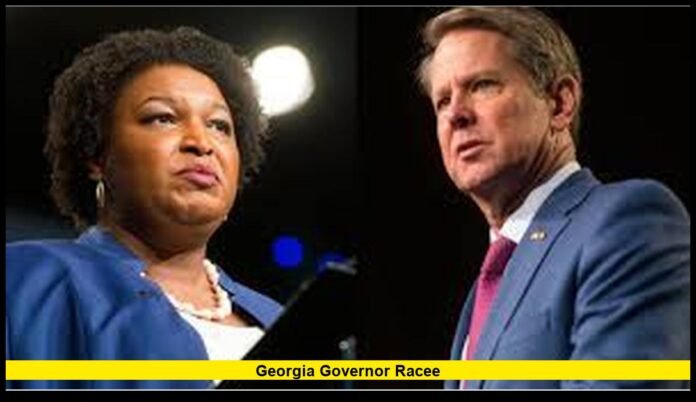

Georgia voters are preparing for one of the most important statewide contests of 2026 as the georgia governor race moves into a new phase following the completion of the Republican primary runoff. With term limits preventing current Gov. Brian Kemp from seeking another term, the open governor’s seat has created a highly competitive political environment that is drawing attention from voters, campaign organizations, and political observers nationwide.
The election comes at a significant moment for Georgia. The state continues to experience rapid economic growth, population increases, and shifting political dynamics. Those factors have elevated the importance of statewide races and increased interest in who will ultimately become the state’s next chief executive.
As the campaign enters the general election stage, voters are expected to hear extensive debate about economic development, education, healthcare, transportation, public safety, and the future direction of one of the fastest-growing states in America.
An Open Governor’s Seat Creates a Rare Opportunity
Open-seat gubernatorial elections often become some of the most closely watched political contests because no incumbent appears on the ballot. That situation now exists in Georgia for the first time in years.
Governor Brian Kemp’s departure at the end of his second term has opened the door for a new generation of leadership. Both major political parties viewed the opportunity as critical, leading to months of campaigning, fundraising, advertising, and voter outreach.
Without an incumbent seeking reelection, candidates had the chance to present fresh visions for the future of Georgia. The result has been an election cycle filled with competitive races, intense campaigning, and significant voter interest.
Political analysts have long considered Georgia one of the nation’s premier battleground states. Recent statewide elections have often been decided by relatively narrow margins, making every major race highly competitive.
The governor’s election is expected to follow that pattern.
Republican Voters Deliver a Surprising Outcome
Jackson emerged victorious in the Republican runoff election, defeating Lt. Gov. Burt Jones in a contest that attracted statewide attention. The outcome surprised many political observers because Jones entered the race with substantial political experience and support from influential figures within the Republican Party.
Throughout the campaign, Jackson presented himself as an outsider candidate focused on business principles, economic growth, and government efficiency. His message resonated with enough Republican voters to secure the nomination despite facing opponents with longer political résumés.
The victory highlighted an important trend often seen in modern elections: voters sometimes favor candidates who position themselves outside traditional political structures.
For Republicans, the runoff result concluded a competitive nomination battle and shifted attention toward the broader general election campaign.
Party leaders are now focused on unifying supporters and building momentum heading into November.
Rick Jackson’s Path to the Nomination
Jackson’s campaign centered heavily on his background in business and healthcare management.
Rather than emphasizing political experience, he highlighted leadership in the private sector and argued that those skills could help address challenges facing state government.
His campaign message focused on economic competitiveness, attracting investment, supporting job creation, and maintaining Georgia’s reputation as a business-friendly state.
Throughout the primary season, Jackson worked to increase his statewide visibility and connect with voters in both metropolitan and rural communities.
By the time voters headed to the runoff election, his campaign had developed significant momentum.
The victory now places Jackson at the center of one of the most watched governor’s races in the country.
His next challenge involves expanding support beyond the Republican base while maintaining enthusiasm among conservative voters.
Democrats Unite Behind Keisha Lance Bottoms
Bottoms became widely known during her tenure as mayor of Atlanta, one of the South’s largest cities. Her leadership experience and statewide visibility helped establish her as one of the Democratic Party’s leading figures in Georgia.
Since becoming the Democratic nominee, Bottoms has focused on presenting a vision centered on economic opportunity, education, healthcare access, infrastructure improvements, and community development.
Democrats believe Georgia’s changing demographics and growing metropolitan population create opportunities for statewide victories.
The party hopes to build on recent electoral successes while expanding support among suburban, urban, and younger voters.
Bottoms enters the general election campaign with a significant political network and extensive experience in public service.
Those factors are expected to play a major role as the campaign intensifies.
Why Georgia Remains a National Political Battleground
Few states have undergone as much political transformation over the past decade as Georgia.
Population growth, economic expansion, and demographic changes have contributed to increasingly competitive elections across the state.
Metro Atlanta has become one of the nation’s fastest-growing metropolitan regions, attracting new residents from across the country. At the same time, many rural areas continue to serve as strongholds for Republican candidates.
These competing political forces have created a landscape where statewide elections can be highly unpredictable.
Because of Georgia’s importance in national politics, major campaigns often attract substantial attention from political organizations throughout the country.
The governor’s race is expected to be no exception.
National political groups are likely to invest significant resources in advertising, voter outreach efforts, and campaign operations before Election Day.
That attention reflects Georgia’s growing influence in shaping broader political trends.
Economic Issues Expected to Dominate the Campaign
Economic concerns remain among the most important issues for Georgia voters.
The state has experienced considerable business growth and investment in recent years. Manufacturing projects, logistics operations, technology development, and other industries have contributed to economic expansion across multiple regions.
Candidates are expected to discuss how best to sustain that momentum while addressing challenges facing workers and businesses.
Topics likely to receive significant attention include:
- Job creation
- Workforce development
- Small business support
- Tax policy
- Inflation concerns
- Housing affordability
- Economic competitiveness
Both campaigns understand that economic performance often ranks among the most influential factors affecting voter decisions.
As a result, economic messaging will likely remain a central focus throughout the election season.
Education Continues to Be a Top Voter Concern
Education is expected to become another major issue in the campaign.
Georgia families consistently rank education among their highest priorities, making school-related policies important topics during statewide elections.
Candidates are expected to discuss teacher recruitment, school funding, classroom resources, student achievement, workforce preparation, and educational opportunities.
The governor plays a significant role in shaping education policy and budget priorities, giving voters a strong incentive to evaluate each candidate’s plans carefully.
As campaign events continue across the state, education will likely remain near the top of policy discussions.
Public Safety and Criminal Justice Issues
Public safety remains a key issue for many Georgia voters.
Campaigns are expected to present differing approaches to supporting law enforcement agencies, reducing crime, and improving community safety.
Discussions may include law enforcement resources, crime prevention strategies, judicial policies, and broader public safety initiatives.
Because public safety affects communities across urban, suburban, and rural areas, candidates are likely to devote substantial attention to these topics.
Voters will have opportunities throughout the campaign to compare each candidate’s priorities and proposed solutions.
Transportation and Infrastructure Challenges
Georgia’s rapid growth has increased demand for transportation improvements and infrastructure investment.
Population increases have placed pressure on highways, local roads, transit systems, and public services.
As governor, the successful candidate will help oversee infrastructure planning and investment decisions that could influence the state’s development for years.
Campaign discussions are expected to address:
- Highway expansion projects
- Traffic congestion
- Transit improvements
- Freight transportation
- Rural infrastructure needs
- Long-term growth planning
Infrastructure policy often receives bipartisan attention because of its direct impact on businesses, commuters, and local communities.
Healthcare Likely to Remain a Key Election Topic
Healthcare remains an important issue throughout Georgia.
Voters continue to express concerns about access to medical services, healthcare costs, hospital resources, and provider availability.
Candidates are expected to outline differing strategies for addressing healthcare challenges while improving outcomes for residents.
Healthcare discussions may be particularly important in rural areas where medical access remains a major concern.
As the campaign progresses, voters will likely hear extensive debate regarding healthcare priorities and policy approaches.
The Role of Independent and Suburban Voters
One of the most significant factors in the upcoming election may be the behavior of independent and suburban voters.
Georgia’s political landscape has evolved considerably over the last decade, with suburban communities becoming increasingly influential in statewide elections.
Both campaigns recognize the importance of appealing to voters beyond their traditional political bases.
Winning support among independents could prove decisive in a closely contested race.
Campaign messaging, policy proposals, and voter outreach strategies are therefore being designed with a broad audience in mind.
The candidate who successfully builds a coalition across multiple regions and demographic groups may gain a critical advantage.
Fundraising and Advertising Set to Intensify
The general election campaign is expected to feature substantial fundraising and advertising efforts.
Competitive statewide races often require significant financial resources to communicate with voters across Georgia’s diverse media markets.
Television advertisements, digital campaigns, direct mail programs, radio outreach, and grassroots organizing efforts are all expected to increase in the coming months.
Fundraising totals frequently serve as indicators of campaign strength and organizational capacity.
Both major candidates are expected to continue aggressively raising money as Election Day approaches.
The resources generated will help support voter contact operations, advertising campaigns, and statewide travel schedules.
What Voters Can Expect in the Months Ahead
The campaign now enters a critical period.
Both nominees will spend the coming months traveling throughout Georgia, participating in public events, engaging with voters, and promoting their policy agendas.
Candidate forums, interviews, town halls, and debates could become important opportunities for voters to compare competing visions for the state’s future.
The election will ultimately determine who succeeds Brian Kemp and becomes Georgia’s next governor.
That individual will inherit responsibility for leading a state that continues to grow economically, attract new residents, and expand its national influence.
With so much at stake, voter engagement is expected to remain high through Election Day.
Looking Ahead to November
The coming months will test each campaign’s ability to persuade voters, build coalitions, and maintain momentum.
Georgia’s reputation as a political battleground ensures that the governor’s contest will remain under intense scrutiny until ballots are counted.
The georgia governor race has already produced major developments, and the general election now promises to be one of the most consequential statewide contests of 2026.
As candidates sharpen their messages and voters evaluate their choices, the battle for Georgia’s highest office is entering its most important stage yet.
What issues matter most to you in this election? Share your thoughts and stay tuned for more developments as the campaign continues across Georgia.