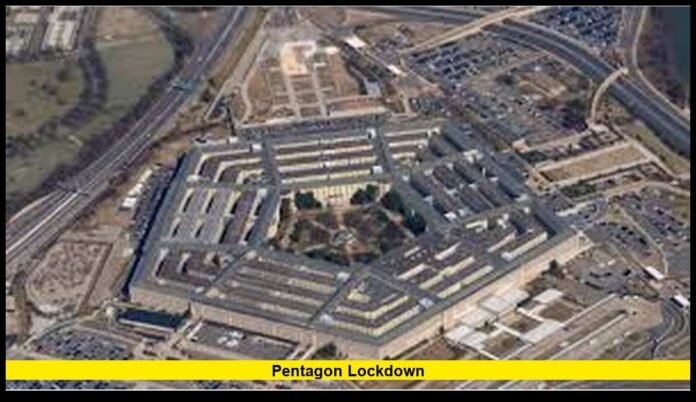

The pentagon lockdown drew national attention on June 11, 2026, after emergency officials evacuated multiple floors inside the Pentagon following a hazardous materials incident. Security teams, emergency responders, and hazardous materials specialists quickly moved into action as authorities worked to identify the source of an air-quality concern detected within the Department of Defense headquarters in Arlington, Virginia.
The incident prompted immediate safety measures inside one of the most secure government buildings in the United States. Employees in affected areas were directed to leave designated sections of the facility while emergency crews conducted inspections and testing. The response remained focused on protecting personnel and ensuring that operations could continue safely while investigators assessed conditions.
Hazardous Materials Response Leads to Emergency Measures
The Pentagon maintains extensive safety systems designed to detect environmental issues. On Thursday, those systems identified conditions that required an immediate response.
Officials initiated emergency procedures shortly after the concern was detected. Several floors were evacuated while response teams moved through affected areas to evaluate air quality and determine whether any dangerous substance was present.
Security personnel restricted access to impacted sections of the building. Emergency crews established control zones while specialists began collecting information and conducting assessments.
The response reflected the Pentagon’s standard approach to potential environmental threats. Even when the exact cause of an alert remains unknown, authorities act quickly to reduce risk and protect building occupants.
What Happened Inside the Pentagon?
The Pentagon serves as the operational headquarters of the U.S. Department of Defense and houses thousands of military personnel, civilian employees, and contractors each day.
When monitoring systems detected an air-quality issue, emergency protocols automatically came into focus. Officials treated the situation as a possible hazardous materials event until testing could determine the nature of the concern.
Employees on multiple floors received instructions to follow emergency procedures. Some areas were evacuated, while access to other sections became restricted as safety teams carried out inspections.
The building’s emergency management structure allows officials to respond rapidly to incidents involving environmental hazards, suspicious substances, or other potential risks.
Emergency Teams Arrive on Scene
The response involved a coordinated effort among multiple emergency and security organizations.
Teams focused on several priorities:
- Protecting employees and visitors
- Securing affected areas
- Conducting environmental testing
- Monitoring air-quality conditions
- Determining the source of the alert
- Maintaining building security
Specialized hazardous materials units possess equipment capable of detecting a wide range of substances. These teams routinely respond to situations involving unusual environmental readings, suspicious odors, chemical concerns, and other incidents that require expert evaluation.
The Pentagon’s internal response teams worked alongside local emergency personnel throughout the operation.
Why Air-Quality Alerts Are Taken Seriously
Modern federal facilities use advanced monitoring systems to identify unusual environmental conditions.
These systems continuously measure factors such as:
| Monitoring Area | Purpose |
|---|---|
| Air Quality | Detect contaminants and unusual particles |
| Ventilation Systems | Ensure safe airflow throughout the facility |
| Environmental Conditions | Identify abnormal readings |
| Building Safety Systems | Support emergency response efforts |
| Hazard Detection Equipment | Provide early warning of potential threats |
An alert does not automatically mean a dangerous substance is present. However, authorities generally respond immediately until they can verify conditions.
This approach minimizes potential exposure and allows specialists to investigate before a situation can worsen.
The Importance of the Pentagon
Any emergency inside the Pentagon receives widespread attention because of the facility’s role in national defense.
Located in Arlington, Virginia, the Pentagon is one of the world’s largest office buildings and serves as the central headquarters of the Department of Defense.
Military leaders, civilian officials, defense personnel, and support staff work inside the building every day. The facility operates around the clock and supports critical functions related to national security.
Because of its importance, even a localized incident can quickly become a major national story.
Read More – United States Department of Veterans Affairs
How Pentagon Emergency Procedures Work
The Pentagon regularly conducts emergency preparedness planning.
When a potential hazard emerges, officials can quickly activate a series of coordinated safety measures.
These procedures may include:
Area Restrictions
Security personnel limit access to affected sections of the building.
Targeted Evacuations
Employees are directed away from areas that may be impacted.
Environmental Testing
Specialists evaluate air quality and other conditions.
Communication Systems
Officials provide instructions to building occupants.
Continuous Monitoring
Response teams track conditions as the situation develops.
These steps help maintain order while allowing investigators to gather accurate information.
No Immediate Threat Reported Beyond Affected Areas
As emergency crews worked inside the Pentagon, officials focused their efforts on the sections where the alert originated.
At the time of the response, there was no indication that nearby communities faced a broader safety concern.
The incident remained concentrated within the Pentagon complex while specialists carried out their assessments.
This distinction is important because hazardous materials investigations often begin before responders know exactly what triggered an alert. Restricting access and conducting testing helps authorities identify the issue while minimizing disruption outside the affected area.
Understanding Hazardous Materials Incidents
A hazardous materials incident can involve any substance capable of posing risks to people, property, or the environment.
Such incidents may include:
- Chemical exposure concerns
- Airborne contaminants
- Industrial materials
- Hazardous vapors
- Unknown substances requiring analysis
Not every response results in the discovery of a dangerous material. Emergency teams frequently investigate alerts that turn out to be equipment issues, environmental irregularities, or other non-threatening conditions.
Nevertheless, authorities follow the same rigorous safety procedures until they can confidently determine what occurred.
Impact on Pentagon Employees
Thousands of people work inside the Pentagon on a typical day.
When emergency procedures begin, employees receive instructions through established communication channels. Workers are trained to follow evacuation routes, shelter guidance, and safety protocols depending on the nature of the incident.
The orderly response demonstrated the effectiveness of those preparations.
Personnel in affected areas followed directions while emergency teams continued their work.
Federal agencies regularly conduct preparedness exercises to ensure employees know how to respond during unexpected situations.
Defense Operations Continue During Emergencies
One of the Pentagon’s key strengths is its ability to maintain mission-critical functions during emergencies.
The Department of Defense has extensive continuity plans designed to keep essential operations running even if parts of a facility become temporarily inaccessible.
As a result, localized evacuations do not necessarily interrupt broader defense activities.
Emergency managers coordinate closely with leadership teams to ensure that critical responsibilities continue while safety personnel address the incident.
This capability allows the Pentagon to respond to emergencies without compromising essential functions.
Technology Plays a Key Role
Modern detection systems played a central role in identifying the issue that led to the response.
Federal facilities increasingly rely on advanced technology to monitor conditions throughout large buildings.
These systems can identify unusual readings long before employees notice any visible signs of a problem.
Benefits include:
- Faster incident detection
- Earlier emergency response
- Improved employee safety
- Better situational awareness
- More effective investigations
The Pentagon’s ability to respond quickly reflects years of investment in safety and security infrastructure.
Security Remains a Top Priority
Although the incident centered on environmental concerns, security personnel remained heavily involved throughout the response.
Protecting a facility as important as the Pentagon requires close coordination between emergency management teams and security forces.
During situations like this, officials must balance several priorities at the same time:
- Safety of personnel
- Protection of classified areas
- Preservation of normal operations
- Investigation of the triggering event
- Communication with affected employees
This coordinated approach helps ensure that emergency responses remain effective and organized.
Investigation Continues Into the Cause
Specialists continued examining the conditions that triggered the alert.
Investigators typically review a variety of factors during incidents of this nature, including:
- Environmental monitoring data
- Air sampling results
- Building system performance
- Ventilation equipment status
- Conditions within affected areas
Testing and analysis help determine whether a hazardous substance was present or whether another factor triggered the response.
Officials generally wait until evaluations are complete before releasing final conclusions.
Timeline of Key Events
| Event | Description |
| Alert Detected | Monitoring systems identified an air-quality concern |
| Emergency Protocols Activated | Officials initiated protective measures |
| Evacuations Ordered | Multiple floors were cleared |
| Hazmat Teams Responded | Specialists arrived to investigate |
| Restricted Access Established | Security controlled affected areas |
| Testing and Evaluation | Air-quality assessments continued |
| Investigation Ongoing | Authorities worked to identify the cause |
Why the Incident Became National News
The Pentagon occupies a unique place in American government and national security.
Any event involving evacuations, emergency responses, or hazardous materials at the facility naturally attracts significant public attention.
The June 11 incident stood out because it involved:
- Multiple floor evacuations
- A hazardous materials response
- Emergency safety procedures
- Air-quality concerns
- Activity at one of the nation’s most important government facilities
While authorities worked to determine the exact cause, the response highlighted the extensive preparedness systems in place at the Pentagon.
Current Status of the Pentagon Lockdown
As of the latest confirmed information available on June 11, 2026, emergency teams continued evaluating the circumstances surrounding the incident.
Officials maintained safety-focused measures while specialists conducted testing and gathered additional data.
The response demonstrated how quickly federal agencies can react when environmental monitoring systems identify potential concerns. From the initial alert to the deployment of hazardous materials teams, every stage of the operation focused on protecting employees and ensuring the safety of one of the country’s most critical facilities.
The investigation remains an important step in determining exactly what triggered the air-quality issue and whether any further action is necessary.
What do you think about the rapid response during the Pentagon lockdown? Share your thoughts and check back for the latest developments as new information becomes available.