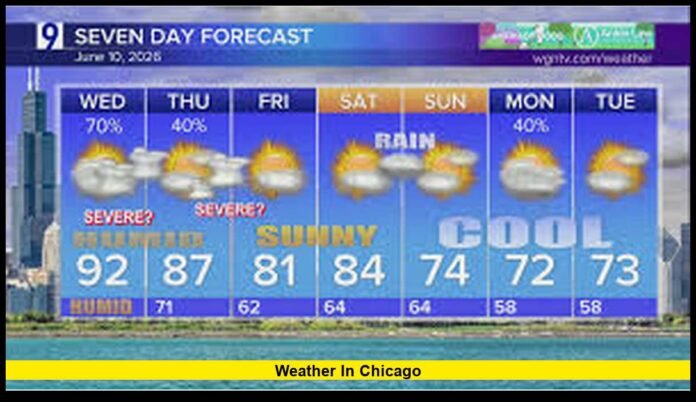

Weather in Chicago continues to draw attention across Illinois as warm temperatures, increasing humidity, and periodic thunderstorm chances shape conditions throughout the region. As of June 2026, the city is experiencing a typical early-summer weather pattern marked by changing skies, occasional rainfall, and temperatures that often climb above seasonal averages. Residents, commuters, travelers, and businesses are closely monitoring daily forecasts as weather systems move across the Midwest.
Chicago’s location along Lake Michigan creates one of the most unique weather environments in the United States. A single day can begin with cool lake breezes, transition into summer warmth by afternoon, and end with thunderstorms moving through the area during the evening. These rapid changes are part of what makes local forecasting both important and challenging.
Current Weather Pattern Across the Chicago Area
Northern Illinois has entered a period of active summer weather. Warm air moving northward from the central United States continues to influence temperatures throughout the Chicago metropolitan region. Combined with increasing moisture levels in the atmosphere, these conditions support the development of showers and thunderstorms.
Many neighborhoods have experienced pleasant mornings followed by warmer afternoons. Humidity levels have gradually increased, making temperatures feel higher than the actual air temperature at times.
Forecasters continue to monitor weather disturbances moving through the Midwest. These systems can trigger periods of rain, thunderstorms, gusty winds, and occasional severe weather concerns.
While sunshine remains a major part of the forecast, changing atmospheric conditions mean residents should remain aware of possible weather shifts throughout the week.
Why Chicago Weather Changes So Frequently
Chicago sits in a location where several major weather influences meet.
The city experiences the effects of:
- Air masses arriving from Canada.
- Warm air moving north from the Gulf region.
- Weather systems crossing the Great Plains.
- Lake Michigan’s cooling influence.
- Seasonal atmospheric transitions.
When these factors interact, weather conditions can change rapidly.
A forecast that begins with sunshine may include rain or thunderstorms just hours later. This variability is one reason Chicago remains one of America’s most closely watched weather markets.
The Influence of Lake Michigan
Lake Michigan plays a major role in shaping local temperatures and weather conditions.
Cooler Temperatures Near the Shore
Water temperatures remain cooler than surrounding land during much of the summer. As winds blow inland from the lake, shoreline communities often experience lower temperatures than neighborhoods farther west.
This effect becomes most noticeable during warm summer afternoons.
Residents near the lakefront may enjoy temperatures several degrees cooler than those recorded in inland suburbs.
Lake Breeze Boundaries
Meteorologists often monitor lake breeze boundaries because they can influence thunderstorm development.
As cooler lake air meets warmer inland air, atmospheric changes occur that may help storms form or alter their movement.
This phenomenon frequently creates noticeable differences in weather conditions across the Chicago metropolitan area.
Temperature Outlook for June 2026
June is often considered one of Chicago’s most comfortable months. Daytime temperatures typically support outdoor activities while avoiding the more intense heat often experienced later in summer.
Current patterns show temperatures regularly reaching:
| Period | Typical Temperature Range |
|---|---|
| Morning | Mid-60s to low 70s |
| Afternoon | Upper 70s to mid-80s |
| Evening | Upper 60s to mid-70s |
Some inland locations may experience even warmer conditions during extended periods of sunshine.
Humidity also becomes a more significant factor during June. Higher moisture levels in the atmosphere can make warm afternoons feel noticeably hotter.
Storm Chances Remain a Key Weather Story
Thunderstorms remain one of the most important weather concerns affecting the Chicago region during early summer.
Warm temperatures combined with increasing humidity create favorable conditions for storm development.
Storm activity can vary significantly from day to day.
Some storms produce only brief rainfall, while stronger systems may generate:
- Frequent lightning.
- Strong wind gusts.
- Heavy rainfall.
- Small hail.
- Localized flooding.
Most summer storms move through relatively quickly. However, repeated rounds of rainfall can create additional concerns for transportation and outdoor activities.
Severe Weather Awareness
Chicago residents are familiar with severe weather season, which typically peaks during the warmer months.
Meteorologists closely monitor atmospheric conditions that could support stronger storms.
Key severe weather hazards include:
Damaging Winds
Strong thunderstorm winds can bring down tree branches, damage power lines, and create hazardous travel conditions.
Wind remains one of the most common severe weather threats across northern Illinois.
Lightning
Every thunderstorm produces lightning.
Lightning can strike several miles away from rainfall and remains one of the leading weather-related dangers during summer.
Anyone hearing thunder should move indoors immediately.
Heavy Rainfall
Some thunderstorms produce intense rainfall over short periods.
Urban areas often face drainage challenges when heavy rain falls faster than storm systems can handle runoff.
Hail
Although not present in every storm, hail occasionally develops when strong updrafts carry moisture high into the atmosphere.
Hail can damage vehicles, roofs, windows, and outdoor property.
Rainfall Trends Across Northern Illinois
Rainfall remains an important part of the regional weather pattern.
Summer storms provide necessary moisture for vegetation, agriculture, and water resources. At the same time, excessive rainfall can create temporary problems.
Localized flooding remains possible whenever multiple storms affect the same area.
Common locations vulnerable to flooding include:
- Low-lying roads.
- Underpasses.
- Parking lots.
- Areas with poor drainage.
- Small streams and creeks.
Drivers should remain cautious during periods of heavy rainfall and avoid flooded roadways.
Read Also – AccuWeather Chicago Radar Shows Live Storm Tracking and Real-Time Weather Updates Across the City
Impact on Daily Commuters
Millions of people travel throughout the Chicago region every week.
Weather conditions can significantly influence transportation.
Road Conditions
Rain and thunderstorms often lead to:
- Reduced visibility.
- Slower traffic speeds.
- Increased travel times.
- Temporary lane flooding.
Commuters should allow additional travel time when storms appear in the forecast.
Public Transit Operations
Chicago’s extensive public transportation network generally operates efficiently during most weather conditions.
However, strong storms can occasionally create delays, especially when lightning or flooding affects infrastructure.
Air Travel Considerations
Chicago serves as one of the nation’s largest aviation hubs.
Thunderstorms can influence operations at major airports by causing:
- Delayed departures.
- Arrival adjustments.
- Temporary traffic management measures.
Travelers should monitor airline updates during active weather periods.
Outdoor Activities and Summer Events
Summer represents one of the busiest seasons for outdoor activities across Chicago.
The city hosts:
- Neighborhood festivals.
- Music events.
- Sporting competitions.
- Outdoor markets.
- Waterfront activities.
Warm temperatures generally support these events, but organizers continue monitoring weather conditions closely.
Attendees should prepare for changing forecasts by bringing:
- Water bottles.
- Sunscreen.
- Lightweight clothing.
- Rain protection.
- Mobile weather alerts.
These simple precautions help ensure a more comfortable experience during summer outings.
How Humidity Affects Comfort Levels
Temperature alone does not determine how warm conditions feel.
Humidity plays an equally important role.
As moisture levels rise, the body’s natural cooling process becomes less efficient.
This can make an afternoon temperature of 85 degrees feel significantly warmer.
During periods of elevated humidity, residents should:
- Stay hydrated.
- Take breaks in shaded areas.
- Limit strenuous outdoor activity during peak heat.
- Check on vulnerable family members and neighbors.
These steps become increasingly important as summer progresses.
Chicago’s Historical Summer Weather Pattern
Chicago experiences a wide range of weather conditions throughout the year.
Winter often brings snow, ice, and freezing temperatures.
Spring introduces rapid weather changes and increasing storm activity.
Summer typically delivers:
- Warm afternoons.
- Occasional heat waves.
- Frequent thunderstorms.
- Higher humidity.
- Longer daylight hours.
June marks the beginning of the city’s most active outdoor season.
Weather conditions during this month often set the tone for the remainder of summer.
Lakefront Versus Inland Conditions
One of the most interesting aspects of local forecasting involves temperature differences across the metropolitan area.
Lakefront Areas
Neighborhoods close to Lake Michigan frequently remain cooler.
Residents may notice stronger breezes and more moderate temperatures during summer afternoons.
Downtown Chicago
Downtown conditions often fall between lakefront and inland readings.
Urban structures can also contribute to slightly warmer temperatures through the urban heat island effect.
Western and Southern Suburbs
Communities farther from the lake generally experience the warmest conditions.
These locations often record temperatures several degrees higher than shoreline neighborhoods during sunny days.
Preparing for Summer Heat
Although Chicago does not experience extreme heat every day, periods of hotter weather become increasingly common during summer.
Preparation remains important.
Residents can reduce heat-related risks by:
- Drinking water regularly.
- Wearing lightweight clothing.
- Using air-conditioned spaces when needed.
- Avoiding prolonged sun exposure during peak afternoon hours.
- Monitoring weather forecasts daily.
Heat safety becomes especially important for older adults, young children, and people working outdoors.
Boating and Lake Michigan Conditions
Lake Michigan attracts boaters, anglers, and recreational visitors throughout the summer.
Weather conditions over the water can change quickly.
Thunderstorms remain the primary concern for boaters because they can produce:
- Sudden strong winds.
- Dangerous waves.
- Reduced visibility.
- Frequent lightning.
Checking marine forecasts before heading onto the water remains one of the most important safety practices.
Looking Ahead for Chicago Weather
Current weather patterns suggest continued opportunities for warm temperatures, occasional thunderstorms, and periods of higher humidity throughout the coming weeks.
While daily conditions will vary, summer weather has clearly established itself across the region.
Residents can expect a combination of sunshine, seasonal warmth, scattered rainfall opportunities, and the possibility of stronger storms from time to time. The interaction between regional weather systems and Lake Michigan will continue to shape local conditions as June progresses.
Weather remains one of the defining features of life in Chicago, and the weeks ahead will likely deliver the familiar mix of warmth, changing skies, and summer storm activity that residents know well.
How is the weather where you live in the Chicago area today? Share your observations and keep checking back for the latest local forecast updates throughout the summer season.