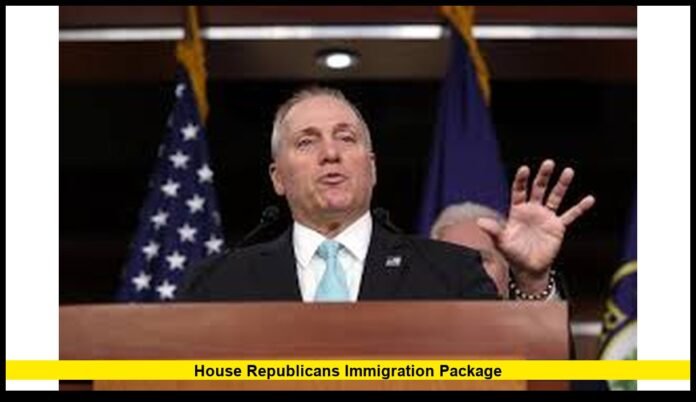

The house republicans immigration package has become one of the most significant immigration measures approved by Congress in 2026, delivering tens of billions of dollars in funding for border security, immigration enforcement, detention operations, and federal agencies responsible for carrying out U.S. immigration laws. After months of debate on Capitol Hill, lawmakers approved the legislation, marking a major victory for Republican leaders who argued that stronger enforcement resources are necessary to address ongoing immigration challenges and strengthen national security.
The legislation arrives at a time when immigration remains one of the most discussed issues in American politics. Border security, illegal immigration, asylum processing, detention capacity, and federal enforcement operations have all remained at the center of congressional discussions. Supporters of the bill describe it as a long-overdue investment in agencies that have faced increasing workloads in recent years. Opponents, meanwhile, continue to argue that Congress should focus on broader immigration reforms rather than concentrating primarily on enforcement.
Regardless of political viewpoints, the passage of the legislation represents a major development in federal immigration policy and could shape enforcement priorities for years to come.
Why Immigration Remains a Top Issue in Washington
Immigration has consistently ranked among the most important issues for voters across the United States. Lawmakers from both parties have spent years debating how to address border security, legal immigration pathways, asylum claims, and enforcement responsibilities.
The debate intensified as border encounters increased during previous years, placing additional pressure on federal agencies responsible for processing migrants and securing the southern border.
Republicans have generally advocated for stronger enforcement measures, expanded detention capacity, and increased resources for federal agencies. Democrats have often pushed for a broader approach that combines enforcement with immigration system reforms.
These differences have resulted in repeated legislative battles, making immigration one of the most difficult policy areas for Congress to address.
What Is Included in the House Republicans Immigration Package?
The legislation primarily focuses on providing long-term funding for federal immigration enforcement operations.
Several major agencies receive substantial financial support under the bill, including:
- Immigration and Customs Enforcement (ICE)
- Customs and Border Protection (CBP)
- U.S. Border Patrol
- Department of Homeland Security immigration programs
- Detention and transportation operations
- Border surveillance initiatives
- Technology modernization efforts
- Recruitment and staffing programs
Republican lawmakers designed the package to provide resources through the remainder of President Donald Trump’s current term.
Supporters argued that agencies need long-term financial certainty to plan staffing levels, equipment purchases, operational improvements, and enforcement activities.
Instead of relying entirely on annual appropriations battles, the legislation establishes funding that extends several years into the future.
A Narrow Vote Reflects Deep Political Divisions
The House approved the legislation by a very narrow margin.
The close vote demonstrated how sharply divided Congress remains on immigration policy.
Republican leaders spent weeks working to secure support from members who had concerns about specific provisions. Internal negotiations continued until shortly before the final vote.
Despite disagreements within the Republican conference, party leaders ultimately gathered enough votes to pass the measure.
Democrats largely opposed the legislation, arguing that Congress should pursue comprehensive immigration reforms rather than focusing primarily on enforcement funding.
The final vote highlighted the broader national debate over how immigration policy should evolve in the years ahead.
Senate Approval Set the Stage for Final Passage
Before reaching the House floor, the legislation successfully moved through the Senate.
Republicans relied on the budget reconciliation process to advance the bill. That procedure allowed the measure to pass with a simple majority vote rather than requiring sixty votes.
The Senate debate lasted for days and included numerous amendment proposals.
Lawmakers discussed spending levels, agency responsibilities, detention policies, and oversight measures before approving the final package.
Once the Senate completed its work, attention shifted to the House, where Republican leaders pushed for final passage.
The successful House vote represented the final major congressional hurdle.
Funding Levels Represent a Major Federal Investment
One reason the legislation attracted national attention involves the scale of the funding involved.
The package directs approximately $70 billion toward immigration enforcement and border security initiatives.
Major allocations include:
| Program or Agency | Funding Amount |
|---|---|
| Immigration and Customs Enforcement | Approximately $38.5 Billion |
| Customs and Border Protection | Approximately $26 Billion |
| Additional DHS Immigration Activities | Roughly $5 Billion |
| Border Security Technology | Included in agency funding |
| Staffing and Recruitment Programs | Included in agency funding |
The funding levels exceed many previous immigration enforcement appropriations and represent one of the largest investments in border security operations in recent years.
Supporters say these resources are necessary to meet operational demands.
Critics argue that Congress should balance enforcement funding with broader immigration policy reforms.
ICE Receives the Largest Share
Immigration and Customs Enforcement receives the largest allocation under the legislation.
ICE plays a central role in enforcing immigration laws within the United States.
The agency handles:
- Immigration detention operations
- Removal proceedings
- Criminal investigations
- Fugitive operations
- Transportation and logistics
- Enforcement support activities
Republicans argued that ICE requires additional resources because of increasing workloads and enforcement responsibilities.
The funding is expected to support personnel expansion, facility operations, transportation capabilities, and technological improvements.
Because ICE often sits at the center of national immigration debates, its funding levels became one of the most discussed aspects of the bill.
CBP and Border Patrol Gain Significant Resources
Customs and Border Protection also receives substantial funding under the legislation.
CBP oversees border security operations and manages ports of entry across the country.
The agency’s responsibilities include:
- Border enforcement
- Inspection operations
- Trade and travel processing
- Security screening
- Intelligence gathering
- Technology deployment
The bill includes resources intended to strengthen staffing levels and improve operational capabilities.
Supporters say these investments will help agencies respond more effectively to border challenges while improving long-term planning.
Additional funding is also expected to support equipment upgrades and surveillance technologies.
Read More – Senate Reconciliation Bill Immigration Funding Moves to Center of Congressional Debate in 2026
Technology Plays a Major Role
Modern border security relies heavily on technology.
The legislation includes funding for technological improvements designed to enhance enforcement capabilities.
Areas expected to benefit include:
- Surveillance systems
- Detection equipment
- Communications networks
- Data management systems
- Monitoring technologies
- Infrastructure modernization
Supporters argue that technology can improve efficiency while helping agencies better allocate personnel and resources.
Federal officials have increasingly emphasized technological solutions as an important component of border management strategies.
As a result, modernization efforts became a significant element of the legislation.
Detention Capacity Remains a Key Focus
Another major component involves immigration detention operations.
Federal agencies have faced challenges related to detention space during periods of increased migration activity.
The legislation provides funding intended to support:
- Detention facilities
- Operational staffing
- Transportation services
- Facility maintenance
- Contract management
Republican lawmakers argued that adequate detention capacity remains necessary for enforcing immigration laws and managing immigration cases.
Detention funding became one of the most debated portions of the package throughout congressional discussions.
Republicans Frame the Bill as a Border Security Measure
Republican leaders repeatedly described the legislation as a border security initiative.
Supporters argued that stronger enforcement resources will help agencies fulfill their responsibilities more effectively.
Several key arguments emerged during the debate:
- Border security remains a national priority.
- Enforcement agencies need additional resources.
- Staffing shortages must be addressed.
- Long-term funding improves operational planning.
- Federal agencies require modern equipment and technology.
Republicans also emphasized that many voters continue to rank immigration among their top concerns.
The legislation therefore became a central part of the party’s policy agenda.
Democrats Raise Concerns About Oversight and Reform
Democratic lawmakers opposed many aspects of the legislation.
Several concerns emerged repeatedly during congressional debates.
Opponents argued that:
- Congress should prioritize comprehensive immigration reform.
- Enforcement funding should include stronger oversight provisions.
- Long-term appropriations reduce congressional flexibility.
- Immigration policy requires broader solutions.
Democrats proposed amendments intended to increase accountability measures and alter funding priorities.
Most of those proposals did not become part of the final legislation.
The disagreement reflected long-standing differences between the parties regarding immigration policy.
Months of Negotiations Led to the Final Bill
The legislation did not move through Congress quickly.
Lawmakers spent months negotiating the contents of the package.
Several versions underwent revisions before reaching the final vote.
Republican leaders worked to address concerns from members who questioned certain provisions.
Some proposals included in earlier drafts were removed or modified during negotiations.
Those changes helped secure support from lawmakers whose votes proved critical for passage.
The lengthy process demonstrated the complexity of advancing major immigration legislation through Congress.
The Role of Budget Reconciliation
One of the most important procedural elements involved budget reconciliation.
This process allows certain budget-related legislation to pass the Senate with a simple majority vote.
Republicans used reconciliation to overcome procedural barriers that often prevent controversial legislation from advancing.
The strategy has become increasingly important in modern congressional politics.
Without reconciliation, supporters would likely have faced much greater difficulty securing final approval.
The successful use of this process played a major role in the bill’s passage.
How the Funding Could Influence Federal Operations
The legislation is expected to affect federal immigration operations in several ways.
Agencies receiving additional funding may be able to:
- Expand staffing levels
- Increase operational capacity
- Modernize equipment
- Improve detention infrastructure
- Upgrade technology systems
- Strengthen enforcement capabilities
Supporters believe these improvements will enhance overall effectiveness.
Federal agencies will now begin developing plans for implementing the resources provided by Congress.
Implementation efforts will continue over the coming years.
What Happens After Congressional Approval?
Following approval by both chambers of Congress, the legislation moves to President Donald Trump for final action.
The administration strongly supported the measure throughout the legislative process.
Once signed into law, federal agencies can begin accessing the funding authorized under the legislation.
Implementation will occur over multiple years.
Congressional committees will continue monitoring how agencies use the resources.
Future oversight hearings are expected to examine spending decisions, operational results, and enforcement outcomes.
The funding package therefore represents not only a legislative milestone but also the beginning of a new phase in federal immigration operations.
Why This Legislation Matters Nationally
The significance of the legislation extends beyond the immediate funding totals.
It represents one of the largest federal investments in immigration enforcement in recent history.
The measure also highlights several broader political realities:
- Immigration remains a defining national issue.
- Border security continues to shape congressional priorities.
- Partisan divisions on immigration remain significant.
- Enforcement funding remains a major focus for Republican lawmakers.
The legislation is likely to influence future debates regarding immigration policy, border management, and federal enforcement responsibilities.
As implementation begins, lawmakers, federal agencies, advocacy groups, and voters will closely watch how the funding affects immigration operations across the country.
The debate surrounding immigration is unlikely to disappear anytime soon. However, the approval of this legislation marks a major chapter in the ongoing effort to shape America’s immigration system and border security strategy.
The conversation surrounding immigration policy continues to evolve, and readers can expect this issue to remain at the center of national debate throughout 2026 and beyond.