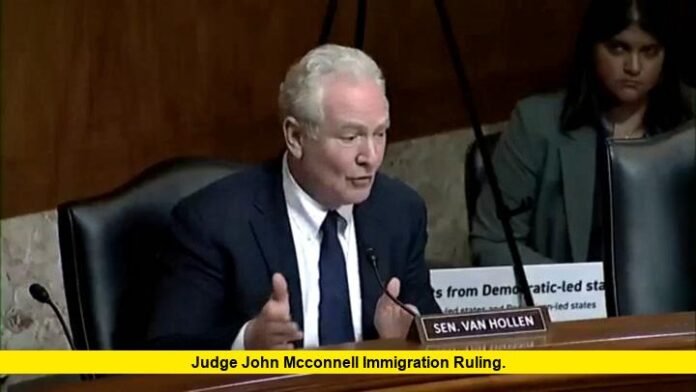

The judge John McConnell immigration ruling has become one of the most significant immigration court decisions of 2026, after a federal judge invalidated a series of Trump administration policies that affected immigrants from 39 countries. The ruling has drawn national attention from immigration advocates, legal experts, policymakers, and affected families who had been waiting months for decisions on asylum applications, work permits, green cards, and citizenship requests.
Chief U.S. District Judge John McConnell Jr. ruled that the policies adopted by U.S. Citizenship and Immigration Services (USCIS) were unlawful and left thousands of immigrants in prolonged legal uncertainty. The decision marks a major setback for the administration’s immigration enforcement agenda and could have wide-ranging implications for immigration processing across the United States.
What Is the Judge John McConnell Immigration Ruling?
The ruling centers on policies implemented by USCIS that effectively halted or delayed immigration benefit decisions for individuals from 39 countries located across Africa, Asia, Latin America, and the Middle East.
According to court findings, applicants who had followed established legal procedures were unable to receive timely decisions regarding:
- Asylum applications
- Employment authorization requests
- Green card applications
- Naturalization and citizenship petitions
Judge McConnell concluded that the agency lacked the legal authority to impose these broad restrictions and criticized the government for creating an indefinite waiting period for applicants who had complied with U.S. immigration laws.
Background Behind the Immigration Restrictions
The policies emerged as part of a broader immigration crackdown introduced by the Trump administration following a high-profile criminal case involving an Afghan immigrant in late 2025.
In response, the administration expanded travel and immigration restrictions affecting nationals from 39 countries. Officials argued the measures were necessary for enhanced vetting and national security concerns.
As the restrictions expanded, USCIS reportedly paused or slowed processing for many immigration-related applications involving individuals from the affected nations. Immigration advocacy groups, labor organizations, and legal organizations challenged the policies in federal court, arguing they violated federal immigration law and unfairly targeted people based on nationality.
Judge McConnell’s Key Findings
In his ruling, Judge John McConnell stated that USCIS had exceeded its legal authority and failed to follow the procedures required under federal law.
The court found that:
Applicants Were Left in Legal Limbo
Many immigrants had completed all required steps in the legal immigration process but remained stuck without decisions for extended periods.
The judge emphasized that delays were not caused by mistakes made by applicants but rather by government policies linked to their countries of origin.
USCIS Lacked Proper Authority
The ruling determined that the agency implemented the policies without sufficient statutory or regulatory authority.
Federal agencies must operate within powers granted by Congress, and the court concluded USCIS had gone beyond those limits.
National Origin Became a Deciding Factor
One of the most significant aspects of the decision was the court’s criticism of policies that appeared to treat nationality as a negative factor during immigration reviews.
Judge McConnell argued that immigration decisions must follow federal law rather than broad assumptions tied to an applicant’s birthplace.
Countries Affected by the Policies
The restrictions involved a large group of countries spanning multiple regions of the world.
Some of the nations reportedly affected by travel bans or immigration processing restrictions included:
- Afghanistan
- Iran
- Haiti
- Somalia
- Venezuela
- Syria
- Yemen
- Sudan
- Libya
- Cuba
Additional countries across Africa, Asia, and Latin America were also included under various levels of restriction.
The broad scope of the policy meant that thousands of immigrants already living in the United States faced uncertainty regarding their legal status and future immigration benefits.
Impact on Asylum Seekers
The decision could be especially important for asylum seekers.
Many applicants had filed asylum claims through legal channels and were waiting for USCIS decisions when processing delays began.
Without timely adjudication, asylum seekers often face significant challenges, including:
- Delayed work authorization
- Family separation concerns
- Financial hardship
- Uncertainty about long-term legal status
The court’s ruling may help restart processing for many cases that had remained stalled.
Effects on Green Card and Citizenship Applicants
The ruling also affects lawful immigrants seeking permanent residency or citizenship.
Green card applicants often depend on timely processing to secure employment opportunities, family reunification benefits, and long-term stability in the United States.
Similarly, citizenship applicants who meet all eligibility requirements can experience major disruptions when naturalization decisions are delayed.
By striking down the challenged policies, the court has opened the possibility for many pending applications to move forward.
Reaction From Immigration Advocates
Immigration advocacy organizations welcomed the ruling, describing it as a major victory for fairness and due process.
Supporters of the lawsuit argued that immigration agencies cannot arbitrarily halt legal pathways established by Congress.
Advocates say the decision reinforces a fundamental principle of U.S. immigration law: applicants should be evaluated based on individual circumstances rather than broad restrictions linked to nationality.
Many organizations also noted the emotional and financial toll the delays had placed on families across the country.
Potential Government Response
The ruling does not necessarily end the legal battle.
The federal government may choose to:
File an Appeal
An appeal could send the case to a higher federal court, potentially leading to additional legal review.
Revise Existing Policies
Officials could attempt to create new immigration procedures designed to address the court’s concerns while maintaining certain security objectives.
Resume Processing
USCIS may begin moving forward with previously delayed applications while determining its next legal steps.
Future developments will likely be closely monitored by immigration attorneys, advocacy groups, and affected applicants.
What the Decision Means for U.S. Immigration Policy
The judge John McConnell immigration ruling highlights the continuing legal debate over the balance between immigration enforcement and adherence to federal immigration law.
The case underscores several key issues:
- The limits of executive authority in immigration matters
- The role of federal courts in reviewing agency actions
- The importance of due process protections
- The impact of nationality-based restrictions
Legal experts suggest the decision could influence future immigration policy challenges and shape how federal agencies implement enforcement measures moving forward.
Broader Significance of the Ruling
Beyond the immediate impact on immigrants from the affected countries, the ruling sends a broader message about government accountability.
Federal agencies are required to follow laws enacted by Congress and cannot create policies that exceed their authority. The court’s decision reinforces judicial oversight and emphasizes that immigration rules must be administered consistently and lawfully.
For many immigrants whose applications have remained pending for months, the ruling represents renewed hope that their cases may finally receive decisions.
Final Thoughts
The judge John McConnell immigration ruling stands as one of the most consequential immigration decisions of 2026. By striking down Trump-era policies affecting immigrants from 39 countries, the court reaffirmed that immigration agencies must operate within legal boundaries and provide fair treatment to applicants regardless of national origin.
As the case continues to generate legal and political discussion, its effects are expected to be felt across the U.S. immigration system for months to come.
What do you think about the judge John McConnell immigration ruling? Share your thoughts and stay tuned for the latest immigration and legal updates.