
The landscape of U.S. immigration has shifted dramatically in the first half of 2026, with a series of sweeping USCIS immigration policy rulings reshaping how green cards, asylum applications, work permits, and citizenship requests are processed. From a landmark federal court decision striking down restrictions on immigrants from 39 countries to a controversial new policy memo redefining how adjustment of status applications are judged, these are among the most consequential immigration developments in recent memory. Here is everything you need to know.
What Is the USCIS Immigration Policy Ruling?
The term “USCIS immigration policy ruling“ covers a cluster of major policy changes and court decisions that have unfolded in rapid succession throughout May and June 2026. Rather than referring to a single action, the phrase encompasses several significant developments that are collectively reshaping the U.S. immigration landscape. These changes have attracted attention from immigration attorneys, advocacy organizations, employers, and applicants because of their potential impact on immigration benefits, green card processing, and legal protections for foreign nationals.
Two developments stand out above the rest. The first is a federal court ruling that vacated four USCIS policies that had been applied to immigrants from 39 countries. The court determined that these policies could not remain in effect, effectively removing barriers that had affected many applicants. Supporters of the ruling argue that it restores greater consistency and fairness to the immigration process, while also providing relief to individuals who may have faced additional scrutiny or procedural obstacles under the previous policies.
The second major development is USCIS Policy Memorandum PM-602-0199, which introduced a significant change in how the agency approaches adjustment of status applications. Adjustment of status is the process that allows eligible immigrants already living in the United States to apply for lawful permanent resident status without having to leave the country. Under the memorandum, USCIS characterized adjustment of status as an “extraordinary form of relief” rather than a routine immigration benefit. This policy shift has generated considerable debate because it could increase the level of discretion exercised by immigration officers when evaluating applications.
Together, these court actions and policy changes are reshaping immigration pathways for hundreds of thousands of applicants. As a result, many immigrants and legal professionals are closely monitoring further developments to understand how these changes may affect future immigration cases and long-term residency opportunities in the United States.
The June 5, 2026, Federal Court Ruling: Four USCIS Policies Struck Down
What the Court Decided
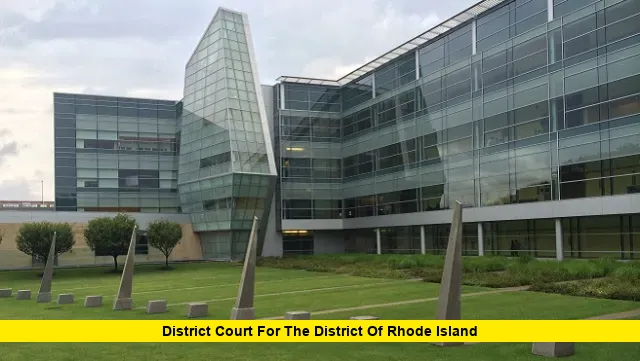
On June 5, 2026, Chief U.S. District Judge John McConnell Jr. of the U.S. District Court for the District of Rhode Island issued a landmark 135-page ruling in Dorcas International Institute of Rhode Island v. USCIS, case no. 1:26-cv-00132. In a sweeping decision, the court granted summary judgment for the plaintiffs and vacated four separate USCIS immigration policies as unlawful under the Administrative Procedure Act (APA).
The four policies struck down by the court were:
- The Global Asylum Hold Policy — a nationwide freeze on the processing of affirmative asylum applications
- The Benefits Hold Policy — a freeze on adjudications of work permits, green cards, and naturalization applications for nationals of 39 designated countries
- The Re-Review Policy — a directive allowing USCIS to reopen and re-examine previously approved immigration cases for applicants from those countries
- The Country-of-Origin Factor Policy — guidance requiring USCIS officers to treat an applicant’s nationality as a significant negative discretionary factor
How the Policy Came to Be
According to reporting by the Associated Press and multiple news outlets, the challenged policies were enacted by the Trump administration following the shooting of two National Guard members in late 2025. The administration used the incident as justification to impose what amounted to an indefinite freeze on immigration applications from 39 African, Asian, Latin American, and Middle Eastern countries, including nations such as Iran, Venezuela, Haiti, and Syria.
What the Judge Said
Judge McConnell was unsparing in his criticism. He wrote that the policies “threw the lives of countless immigrants living in the United States into indeterminate legal limbo,” and he accused USCIS of ignoring the law. In his ruling, he found that USCIS had claimed statutory and regulatory authority it did not possess, issued policies without the reasoned explanations required by law, failed to consider the reliance interests of applicants, and justified its actions through pretextual national security concerns that lacked sufficient legal grounding.
The court also noted that the immigrants affected had already paid required fees, submitted all necessary paperwork, attended in-person interviews, and been subject to fingerprinting and background checks before being categorically barred from receiving final decisions on their cases.
The Four Specific Vacated Policies and Their Impact
As per the ruling, affirmative asylum interviews and decisions are now required to resume nationwide. Adjustment of status, work permit, travel document, and naturalization cases that were paused under categorical country-based holds must return to ordinary case processing. Previously approved cases also cannot be reopened solely because of an applicant’s nationality or entry date tied to those policies.
According to immigration law analysis from the Global Immigration Blog, the court concluded that USCIS lacked statutory authority to implement the challenged policies. The government is expected to consider appellate options, but as of June 6, 2026, no appeal had been publicly announced.
Earlier Ruling: April 30, 2026, Boston Federal Court
The June 5 ruling was not the first federal pushback against USCIS’s immigration holds in 2026. On April 30, 2026, U.S. District Judge Julia Kobick in Boston issued a separate significant ruling in Case 1:25-cv-13946-JEK, finding that USCIS policies imposing a blanket, indefinite hold on immigration applications for nationals of certain countries were unlawful under the APA.
The April 30 preliminary injunction specifically blocked the government from maintaining adjudicative holds on approximately 200 plaintiffs from 20 countries. While that ruling was limited to the named plaintiffs, it set an important legal precedent and signaled that broader challenges were forthcoming — a prediction borne out by the June 5 nationwide vacatur.
The USCIS Adjustment of Status Policy Memo: May 21–22, 2026
What the Memo Changed
Separate from the court ruling, USCIS issued a major internal policy shift in May 2026. On May 21, 2026, USCIS released Policy Memorandum PM-602-0199, formally titled “Adjustment of Status is a Matter of Discretion and Administrative Grace, and an Extraordinary Relief that Permits Applicants to Dispense with the Ordinary Consular Visa Process.” A formal public announcement followed on May 22, 2026.
Under the directive, the agency clarified that Adjustment of Status (AOS) under INA §245 — the process by which a foreign national already inside the United States applies for a green card without having to leave the country — is no longer to be treated as a standard entitlement. Instead, it is framed as an “extraordinary form of relief” that should not supersede the regular consular processing of immigrant visas through the Department of State.
What This Means for Green Card Applicants
In practical terms, the memo directs USCIS officers to evaluate each AOS application on a case-by-case basis, applying heightened discretion to determine whether an applicant truly warrants the “act of grace” of being permitted to complete their green card process from within the U.S. Foreign nationals on temporary visas — including students, tourists, and temporary workers — are now generally expected to depart the United States and complete their permanent residency applications through a U.S. consulate in their home country, except in tightly defined “extraordinary circumstances.”
According to analysis by the American Immigration Council, applicants at higher risk under the new memo include:
- Immediate relatives of U.S. citizens who have lived in the U.S. without current immigration status, since departing can trigger multi-year re-entry bars
- Nonimmigrants on single-intent visas such as tourists (B-1/B-2) or students (F-1) who cannot maintain their nonimmigrant status after filing for a green card
- Nationals of countries where consular processing is currently suspended, since the State Department has paused immigrant visa processing for nationals of 75 countries, making AOS their only realistic pathway
Who May Be Less Affected
Dual-intent visa holders — primarily H-1B and L-1 workers — are considered lower risk under the new memo. The agency also indicated that applicants providing “economic benefit” or serving the “national interest” may be permitted to remain on the AOS path. Legal experts have noted that these carve-outs appear most likely to benefit employment-based applicants.
What Has Not Changed
The memo does not ban advance parole travel or the adjudication of Form I-131 Advance Parole applications. USCIS has also not provided a clear definition of what constitutes “extraordinary circumstances,” leaving officers with a high degree of subjective discretion. Critically, the agency has not specified whether the policy applies to already-pending I-485 applications, although the absence of any grandfathering provision strongly suggests it does.
The Broader Immigration Policy Context in 2026
The recent USCIS rulings and policy changes are part of a much larger transformation taking place across the U.S. immigration system in 2026. While individual court decisions and agency memoranda have attracted significant attention, immigration experts note that these developments are occurring alongside several other policy shifts that are collectively creating a more challenging environment for immigrants, employers, and families seeking immigration benefits.
Several key developments are shaping the broader immigration landscape:
- A tighter public charge rule: The U.S. Department of State has placed increased emphasis on financial self-sufficiency during immigrant visa adjudications. Applicants may face closer scrutiny of their income, assets, employment history, education, and financial sponsorship arrangements. Consular officers are paying greater attention to whether an individual is likely to become dependent on public assistance after entering the United States.
- Expanded screening and vetting procedures: USCIS has broadened its review process by incorporating more extensive criminal history checks, enhanced identity verification measures, and additional background screening requirements across multiple immigration categories. While supporters view these measures as important security safeguards, critics argue that they may contribute to longer processing times and additional administrative hurdles.
- Suspension of immigrant visa processing for certain countries: The U.S. Department of State has paused immigrant visa processing for nationals of 75 countries. This has created a significant challenge for applicants who may be directed toward consular processing but are unable to complete their cases because visa services remain limited or suspended in their home countries. Immigration attorneys have warned that this situation could leave many eligible applicants facing prolonged uncertainty.
- No second H-1B lottery for FY2026: USCIS confirmed that the fiscal year 2026 H-1B cap was reached in July 2025 and announced that no second lottery would take place. This decision reduced opportunities for thousands of skilled foreign workers and increased competition among employers seeking to hire international talent through the H-1B program.
Why These Changes Matter
When viewed together, these developments reveal a broader shift in U.S. immigration policy. Applicants are now navigating a system characterized by:
- Increased scrutiny of financial qualifications.
- More extensive security and background checks.
- Reduced flexibility in certain immigration pathways.
- Delays caused by overseas visa processing restrictions.
- Greater competition for employment-based visas.
As a result, immigrants, employers, and legal professionals are closely monitoring policy updates and court decisions. The combination of stricter vetting standards, visa processing challenges, and evolving USCIS policies is making immigration planning more complex than in previous years, with potentially significant consequences for those seeking permanent residence or employment opportunities in the United States.
What Affected Applicants Should Do Now
Individuals whose immigration cases have been impacted by recent USCIS policy changes or processing delays should take proactive steps to protect their applications and remain informed about evolving requirements. Immigration attorneys emphasize that careful recordkeeping, timely responses, and regular monitoring of case status are more important than ever in the current immigration environment.
For Those Affected by the 39-Country Hold
Applicants whose cases may have been delayed or placed on hold due to policies affecting nationals from 39 countries should consider the following actions:
- Keep copies of all immigration documents, including:
- USCIS receipt notices
- Requests for Evidence (RFEs)
- Interview notices
- Approval notices
- Any correspondence received from USCIS
- Monitor your case status regularly through the official USCIS online case tracking system. Checking your status at least once a week can help you identify updates or requests that require immediate attention.
- Respond promptly to all USCIS notices. Missing a deadline for an RFE, interview appointment, or other request could negatively affect your application or lead to a denial.
- Update your address immediately if you move. USCIS requires applicants to maintain a current mailing address to ensure that important notices and decisions are received without delay.
- Consult with an experienced immigration attorney to determine whether proactive action may be appropriate. In some situations, legal counsel may recommend contacting USCIS to inquire about delayed processing or request movement on a pending case.
For Pending Adjustment of Status Applicants
Applicants currently seeking adjustment of status should be prepared for a more rigorous review process under the latest USCIS policies.
Key recommendations include:
- Expect increased scrutiny during interviews. Officers may ask additional questions regarding:
- Your immigration history
- Eligibility for adjustment of status
- Reasons for pursuing adjustment within the United States rather than completing consular processing abroad
- Discuss a potential RFE response strategy with an attorney. Given the heightened discretionary review standards, applicants may benefit from preparing additional documentation before a Request for Evidence is issued.
- Understand Child Status Protection Act (CSPA) implications. In some cases, children whose ages are protected under CSPA could lose that protection if an I-485 application is denied and the case is not renewed in removal proceedings. Families should carefully evaluate their options with legal counsel.
- Verify all filing fees before submitting documents. USCIS fee schedules can change, and incorrect fee payments may result in application rejections, delays, or requests for resubmission.
Staying Prepared in a Changing Environment
As immigration policies continue to evolve throughout 2026, applicants should remain vigilant and organized. Maintaining complete records, monitoring case updates, responding quickly to agency requests, and seeking qualified legal advice when necessary can help reduce risks and improve the likelihood of a smoother immigration process. In an environment marked by policy shifts and increased scrutiny, preparation and timely action remain the most effective tools available to applicants.
What’s Next: Will the Government Appeal?
The future of these immigration policy changes remains uncertain, as legal experts widely expect the Trump administration to challenge the June 5 court ruling through the appeals process. Because the decision struck down several immigration policies viewed as central to the administration’s broader enforcement strategy, many analysts believe government attorneys will seek to overturn or narrow the ruling in higher courts.
Why an Appeal Is Expected
Several factors suggest that an appeal is likely:
- The ruling represents a significant legal setback for the administration’s immigration agenda.
- The court reaffirmed limits on agency authority, emphasizing that federal agencies must operate within the boundaries established by Congress and existing immigration law.
- The decision could affect thousands of immigration cases, potentially influencing how USCIS handles future applications and policy initiatives.
- A successful appeal could restore some or all of the challenged policies, depending on how appellate courts interpret the underlying legal issues.
At the heart of the dispute is the question of how much discretion federal immigration agencies possess when implementing policy changes. The court’s ruling reinforces the principle that agencies cannot create broad new restrictions without proper legal authority or clear congressional authorization.
Could USCIS Issue New Policies Instead?
Even if the ruling remains in place, USCIS may attempt to revise and reissue certain policies in a modified form.
Possible next steps could include:
- Drafting narrower policy guidance designed to address the court’s concerns.
- Introducing revised procedures through formal rulemaking channels.
- Seeking additional statutory authority from Congress.
- Implementing alternative administrative measures that pursue similar policy objectives while complying with the court’s decision.
As a result, the litigation may not represent the final chapter in the dispute. Future agency actions could trigger additional legal challenges and further court review.
Legal Challenges to the AOS Policy Memo
The controversy surrounding Policy Memorandum PM-602-0199 is also expected to generate litigation. The memo’s characterization of adjustment of status (AOS) as an “extraordinary form of relief” has drawn criticism from immigration attorneys and advocacy organizations across the country.
Critics argue that the policy:
- Imposes a substantially higher standard than previous USCIS practice.
- Expands discretionary decision-making beyond traditional adjustment-of-status adjudications.
- Creates uncertainty for applicants who previously relied on adjustment of status as a routine pathway to permanent residence.
- May conflict with long-standing interpretations of immigration law and congressional intent.
Concerns for Vulnerable Applicants
Advocacy groups have expressed particular concern about the memo’s impact on applicants who cannot realistically pursue consular processing abroad.
These groups argue that the policy could disproportionately affect:
- Individuals facing long visa backlogs.
- Applicants from countries experiencing visa-processing disruptions.
- Families with children who may age out of immigration benefits.
- People with humanitarian concerns or unique personal circumstances.
- Foreign nationals who could face significant hardship if required to leave the United States.
According to critics, treating adjustment of status as an exceptional benefit rather than a commonly available immigration pathway could leave some applicants with few practical alternatives for obtaining permanent residency.
What to Watch Going Forward
Over the coming months, immigration stakeholders will be closely monitoring several developments:
- Whether the administration formally appeals the June 5 ruling.
- How appellate courts respond to the legal arguments presented by both sides.
- Whether USCIS issues revised guidance to replace vacated policies.
- The filing of lawsuits challenging Policy Memorandum PM-602-0199.
- Potential congressional involvement if lawmakers seek to clarify immigration statutes.
Until these questions are resolved, uncertainty is likely to remain a defining feature of the immigration landscape. Court decisions, agency actions, and possible legislative responses could collectively determine how these policies evolve and how future immigration applications are evaluated in the years ahead.
FAQs
Q: What countries were affected by the USCIS immigration hold struck down on June 5, 2026? A: The USCIS benefits hold and related policies applied to nationals of 39 countries, primarily from Africa, Asia, Latin America, and the Middle East, including nations such as Iran, Venezuela, Haiti, and Syria.
Q: Does the June 5 court ruling mean all immigration applications will be immediately processed? A: The ruling vacates the four unlawful policies and requires cases to return to standard adjudication. However, USCIS has not published a separate timetable for clearing the backlog of cases delayed by the vacated policies, and processing times will still vary by form, office, and case history.
Q: Can I still apply for adjustment of status inside the United States after the May 2026 memo? A: Yes, adjustment of status applications can still be filed. What has changed is that USCIS officers are now directed to apply greater scrutiny and treat AOS as extraordinary relief rather than a standard entitlement. Applicants should consult an immigration attorney to assess their individual situation.
Q: Does the new AOS memo apply to already-pending I-485 applications? A: The memo does not include a grandfathering provision, which legal experts widely interpret as meaning it applies to pending applications. Applicants with pending I-485 cases should prepare for possible RFEs or heightened questioning at interviews.
Q: Where can I check my USCIS case status? A: The official USCIS case status tool is available at uscis.gov. Processing time estimates are also listed by form type and service center at the USCIS processing times page.
If your immigration case has been affected by these major USCIS policy rulings, drop your questions in the comments below — and bookmark this page for the latest updates as the legal battles continue to unfold.