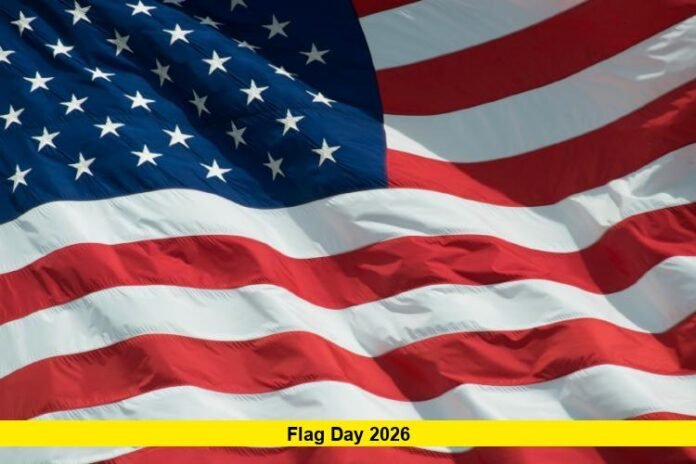

Flag Day 2026 falls on Sunday, June 14, 2026, making it one of the most accessible patriotic observances of the year — with no work or school to interrupt the celebration. This annual holiday honors one of America’s most enduring symbols: the Stars and Stripes. From its origins in a Revolutionary War-era resolution to its role in the nation’s landmark 250th anniversary year, Flag Day carries deep meaning for millions of Americans across the country.
What Is Flag Day?
Flag Day is observed every year on June 14 to commemorate the adoption of the official flag of the United States. The holiday honors the Stars and Stripes as a symbol of national freedom, unity, and identity. While it is not a federal public holiday, it is widely recognized across the country through ceremonies, parades, and community events.
Notably, Flag Day also coincides with the birthday of the United States Army, which was established by the Second Continental Congress on June 14, 1775 — two years before the flag itself was adopted. In 2026, the Army marks its 251st birthday on this date.
When Is Flag Day 2026?
Flag Day 2026 is observed on Sunday, June 14, 2026. Because it lands on a Sunday this year, Americans have a full, uninterrupted day to display their flags, attend local events, and reflect on what the flag represents. It also kicks off what many are calling a “patriotic marathon” leading into Independence Day on July 4, 2026 — itself the centerpiece of America’s 250th anniversary, the Semiquincentennial.
The History of Flag Day
The Flag Resolution of 1777
The history of Flag Day dates back to June 14, 1777, when the Second Continental Congress passed the Flag Resolution. The resolution declared that the flag of the United States would consist of thirteen stripes, alternating red and white, with a union of thirteen white stars in a field of blue — one stripe and one star for each of the original colonies. The official announcement of the new flag was not made public until September 3, 1777.
As new states joined the Union, the number of stars increased to reflect each addition. The number of stripes briefly expanded to 15 after Vermont and Kentucky achieved statehood, but was returned to 13 by 1818 — where it has remained ever since.
The Push for a National Observance
The campaign to formally recognize Flag Day began long before it became official. In June 1886, Bernard Cigrand made his first public proposal for an annual observance celebrating the flag’s birthday. His efforts — along with those of other patriotic advocates — eventually gained national attention.
On May 30, 1916, President Woodrow Wilson issued a proclamation calling for a nationwide observance of Flag Day on June 14. However, the holiday did not receive official status until August 1949, when President Harry Truman signed legislation formally proclaiming June 14 as National Flag Day. In 1966, Congress further requested that the President issue an annual proclamation designating the week of June 14 as National Flag Week.
Betsy Ross and the First Flag
One of the most enduring stories of American folklore involves Betsy Ross, who is widely credited with sewing the first American flag. While records confirm that Ross made ensigns and pennants for the Philadelphia Navy during the Revolutionary War, there is no definitive proof she designed the very first Stars and Stripes. Another claimant, Francis Hopkinson, also sought recognition for contributing to the flag’s design, though his request for compensation was denied. The true origin of the first flag remains one of history’s beloved unsolved mysteries.
Flag Day 2026 and the Semiquincentennial
This year’s Flag Day carries extraordinary weight. 2026 marks the 250th anniversary of the United States — known as the Semiquincentennial — with Independence Day on July 4 as the keystone date of the entire national celebration. Flag Day on June 14 serves as the opening act, the first major patriotic milestone of the summer.
Flying the flag on June 14, 2026 connects the original 13-star banner adopted in 1777 to the 50-star flag flying on front porches across the country today. It is a visible thread running through 249 years of American history — and this year, that act of display carries more symbolic weight than it has in decades.
What Does the American Flag Symbolize?
The colors and design of the American flag each carry significance rooted in the nation’s founding ideals:
The red stripes represent valor and hardiness. The white stripes signify purity and innocence. The blue field (or “union”) represents vigilance, perseverance, and justice. The stars represent the 50 states of the union — a constellation that has grown from 13 since 1777.
The U.S. flag has also traveled beyond Earth’s atmosphere. It was planted on the Moon during six Apollo missions — Apollo 11, 12, 14, 15, 16, and 17 — making it one of the most widely traveled symbols in human history.
How to Celebrate Flag Day 2026
Fly Your Flag All Day
The most meaningful way to observe Flag Day is simply to display the American flag at your home or business from sunrise to sunset. If leaving the flag up after dark, ensure it is properly illuminated per U.S. Flag Code guidelines. Flag Day is a full-staff day — unlike Memorial Day, which calls for half-staff from sunrise until noon.
Attend a Local Ceremony or Parade
Communities across the country host flag-raising ceremonies, parades, and patriotic observances on June 14. Waubeka, Wisconsin, is home to the nation’s longest-running Flag Day parade. Historical sites, veterans’ organizations, and civic groups typically organize events worth attending. Roosevelt’s Little White House Historic Site in Warm Springs, Georgia, for example, hosts a Flag Day program featuring displays of historical American flags, educational talks, and activities for children.
Learn the History and Etiquette
Flag Day is an ideal occasion to deepen your knowledge of U.S. flag history and proper display etiquette. The U.S. flag is folded into a precise triangular shape made of 13 folds, each carrying a distinct symbolic meaning. Most Americans unknowingly break at least one rule of the U.S. Flag Code — use June 14 as an opportunity to brush up on the correct way to fly, fold, and retire the flag.
Replace a Worn Flag
If your current flag is faded or frayed, Flag Day is the traditional time to retire it respectfully and fly a fresh one. The proper way to retire an American flag is through burning in a dignified ceremony — a practice many local VFW posts and American Legion chapters conduct around Flag Day.
Teach the Next Generation
Schools and families can use Flag Day to explore the flag’s history with younger generations. Walking kids through the Flag Resolution of 1777, the growth of the stars from 13 to 50, and the stories of those who fought beneath Old Glory provides a meaningful civics lesson tied to living history.
Flag Day vs. Independence Day: What’s the Difference?
A common question surrounds the distinction between Flag Day and the Fourth of July. Flag Day (June 14) commemorates the adoption of the American flag in 1777. Independence Day (July 4) celebrates the signing of the Declaration of Independence in 1776 — one year earlier. They are related milestones in American history but mark entirely different events. In 2026, both dates take on amplified significance within the broader Semiquincentennial observance.
Is Flag Day a Public Holiday?
Flag Day is not a federal public holiday. Most businesses follow their regular operating hours, and schools and government offices are typically open. Pennsylvania is the only U.S. state that recognizes Flag Day as a state holiday. Despite its non-holiday status, the observance is widely regarded as a meaningful patriotic occasion, particularly during a milestone year like 2026.
National Flag Week 2026
Flag Day falls within National Flag Week, which runs the entire week surrounding June 14. During this period, the President traditionally issues a proclamation calling on government officials to display the flag on all federal buildings and urging citizens to reflect on the foundations of American freedom. National Flag Week is a time for Americans to reaffirm their loyalty to the nation, celebrate its unity, and honor all those who have served beneath the Stars and Stripes.
How are you planning to honor the flag on June 14? Share your Flag Day 2026 traditions in the comments below, and don’t forget to bookmark this page for more patriotic coverage all summer long!