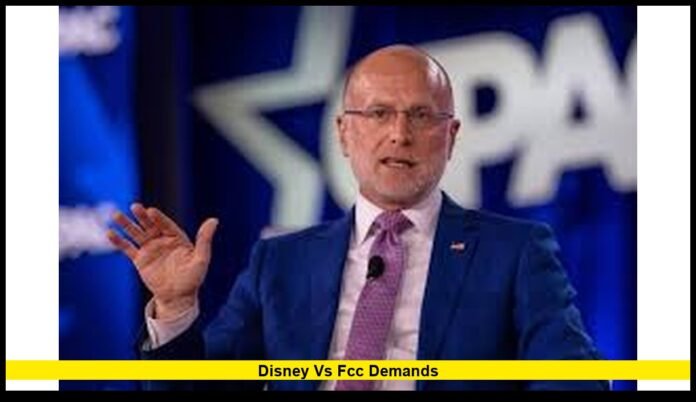

The disney vs fcc demands dispute remains one of the most closely watched media stories in the United States as regulators and The Walt Disney Company continue battling over broadcast licenses, employment policies, and the limits of federal oversight. The controversy has drawn national attention because it affects ABC television stations in some of America’s largest markets while raising significant questions about government authority and media independence.
The ongoing conflict has moved beyond a routine regulatory review. It now represents a major legal and political showdown involving one of the country’s largest entertainment companies and the federal agency responsible for overseeing broadcast communications.
As of June 2026, Disney continues challenging actions taken by the Federal Communications Commission, while FCC officials maintain that their investigation falls within the agency’s regulatory responsibilities. The outcome could have lasting effects on broadcasters, television networks, and future FCC enforcement efforts.
How the Dispute Began
The roots of the conflict trace back to a federal review of diversity, equity, and inclusion initiatives implemented by Disney.
Federal regulators launched inquiries into whether certain workplace programs complied with federal equal employment opportunity requirements. Because Disney owns ABC television stations licensed by the FCC, the company falls under regulatory frameworks that govern broadcasters operating on public airwaves.
Questions surrounding diversity programs have become increasingly prominent across corporate America during the past several years. Government agencies, businesses, universities, and nonprofit organizations have all faced increased scrutiny regarding hiring practices, recruitment initiatives, and workplace development programs.
Disney became one of several major corporations facing questions about how such programs were designed and implemented.
What initially appeared to be a regulatory review eventually evolved into a much broader conflict involving constitutional concerns, licensing authority, and public policy.
Why ABC’s Broadcast Licenses Became a Major Issue
Broadcast licenses serve as the foundation of traditional television operations in the United States.
Unlike cable networks or streaming platforms, local television stations rely on licenses granted by the FCC to use publicly owned airwaves. These licenses allow broadcasters to transmit programming to viewers throughout their coverage areas.
ABC owns and operates stations in several major metropolitan markets. These stations represent some of the most valuable broadcast properties in the country because they reach millions of households.
FCC regulations require broadcasters to renew licenses periodically. The process generally occurs on a scheduled timetable and often proceeds without significant controversy.
The current situation attracted attention because regulators ordered ABC-owned stations to begin portions of the renewal process earlier than expected.
Disney argued that the accelerated timetable was highly unusual and unnecessary.
The company complied with filing requirements while making clear that it disagreed with the FCC’s decision.
The Importance of ABC-Owned Stations
ABC’s owned-and-operated stations play a central role in the network’s national broadcasting strategy.
These stations serve major population centers and generate significant advertising revenue. They also distribute national news, entertainment programming, sports coverage, and local content.
Among the key markets involved are:
- New York
- Los Angeles
- Chicago
- Philadelphia
- Houston
- San Francisco
- Durham
- Fresno
Together, these markets represent a substantial portion of the American television audience.
Any regulatory action affecting these stations naturally attracts attention from advertisers, investors, media executives, and policymakers.
Because of their importance, even routine licensing matters can become major industry news.
Disney’s Position on the FCC Actions
Disney has strongly criticized the FCC’s handling of the matter.
The company argues that federal regulators are applying unusual pressure through the licensing process. Disney maintains that broadcasters should not face extraordinary scrutiny based on disagreements over corporate policies or editorial content.
Company filings have emphasized concerns about constitutional protections and the role of government in overseeing media organizations.
Disney also argues that it has cooperated with information requests and complied with applicable regulations during the review process.
Executives have repeatedly indicated that they believe the FCC’s approach exceeds traditional licensing procedures.
The company insists that any review should remain focused on established legal standards rather than broader political or ideological debates.
FCC Leadership Defends the Investigation
FCC officials have rejected claims that the agency is targeting Disney unfairly.
Regulators maintain that they possess clear authority to investigate issues involving licensed broadcasters.
Agency leadership argues that compliance reviews are part of the FCC’s responsibility to ensure broadcasters meet legal obligations attached to operating licenses.
Officials also contend that questions regarding employment practices deserve examination when concerns arise about potential violations of federal requirements.
The FCC has repeatedly stated that the investigation concerns regulatory compliance rather than editorial viewpoints.
Supporters of the agency’s actions argue that all license holders should face equal scrutiny when allegations warrant review.
They maintain that large corporations should not receive special treatment because of their size or influence.
Read More – Disney Princess Half Marathon 2026 Results
The Broader Debate Over DEI Programs
One reason the dispute has attracted national attention is its connection to broader debates surrounding diversity, equity, and inclusion policies.
Many organizations adopted DEI programs during the past decade to promote workplace diversity and expand opportunities for underrepresented groups.
Supporters argue that such initiatives help organizations attract talent, improve workplace culture, and address historical inequalities.
Critics contend that some programs may create legal concerns if they consider race, gender, or other protected characteristics in ways that conflict with federal law.
The Disney case sits at the center of this larger national discussion.
As regulators review corporate policies, businesses across multiple industries continue evaluating their own programs to ensure compliance with changing legal and regulatory expectations.
The outcome of the Disney matter could influence how other companies approach similar initiatives in the future.
Why the First Amendment Is Part of the Discussion
The dispute has generated extensive debate about free speech protections.
Media organizations often argue that government regulators must avoid actions that could influence editorial decision-making.
Disney has raised concerns that aggressive licensing reviews may create pressure on broadcasters whose content or viewpoints are unpopular with government officials.
The company believes that broadcasters should remain free to produce news coverage, commentary, and entertainment programming without fear of regulatory retaliation.
Constitutional scholars frequently note that media freedom remains a cornerstone of American democracy.
At the same time, courts have historically recognized that broadcasters operate under unique regulatory frameworks because they use public airwaves.
Balancing these principles has long been one of the most complex challenges in communications law.
The current conflict places those issues back in the national spotlight.
The Role of ABC Programming in Public Debate
Several ABC programs have become part of the public conversation surrounding the controversy.
Political discussions occurring on network programming have fueled arguments from both supporters and critics of the FCC’s actions.
Programs featuring commentary on national politics often generate strong reactions from audiences across the political spectrum.
Because ABC reaches millions of viewers each week, its content regularly becomes part of broader discussions about media influence and political messaging.
Disney argues that content choices should remain separate from regulatory decisions.
The company maintains that broadcasters must retain editorial independence regardless of which political viewpoints appear in their programming.
Regulators, meanwhile, continue emphasizing that their review concerns compliance issues rather than specific television shows or personalities.
How Rare Are Early License Reviews?
Industry experts note that most broadcast license renewals follow predictable schedules.
Television stations typically submit applications as expiration dates approach.
While the FCC possesses broad authority over licensing matters, early reviews involving multiple major-market stations remain relatively uncommon.
That unusual aspect has contributed significantly to the attention surrounding the case.
Media lawyers and communications specialists are watching closely because the outcome may establish important precedents.
Future administrations and future FCC leadership could potentially rely on lessons from this dispute when handling similar cases.
The television industry therefore views the matter as more than a disagreement involving a single company.
Many see it as a test of regulatory boundaries.
Potential Consequences for Broadcasters
The dispute carries implications far beyond Disney.
Television companies throughout the United States are paying close attention because regulatory decisions made today may influence future industry practices.
Several key issues remain under discussion:
Licensing Standards
Broadcasters want clarity regarding how employment policies and corporate governance issues may affect license reviews.
Regulatory Authority
Companies are evaluating how aggressively federal agencies may investigate matters beyond traditional broadcasting operations.
Corporate Compliance
Businesses are reassessing workplace policies to reduce regulatory risk.
Media Independence
News organizations continue examining how regulatory actions might affect editorial freedom.
The answers to these questions could shape the future relationship between broadcasters and federal regulators.
Political Reactions Continue to Grow
The dispute has sparked reactions from lawmakers, advocacy groups, legal analysts, and media commentators.
Supporters of stronger enforcement believe regulators should thoroughly investigate any potential compliance concerns involving licensed broadcasters.
Others argue that federal agencies should exercise caution when actions involve companies engaged in journalism and public commentary.
The debate reflects broader disagreements over government oversight, corporate responsibility, and constitutional protections.
Because Disney is one of the most recognizable brands in the world, developments in the case frequently generate national headlines.
The company operates across television, film, streaming, consumer products, and theme parks, making regulatory conflicts particularly visible.
What Happens Next?
Several developments remain possible as the review process continues.
The FCC could ultimately approve license renewals after completing its investigation.
Additional administrative proceedings could occur if regulators seek further information.
Legal challenges may continue if Disney believes agency actions violate constitutional protections or exceed statutory authority.
Regardless of the specific outcome, the process is likely to remain closely monitored by media organizations nationwide.
The case already ranks among the most significant broadcasting disputes in recent years.
Industry observers expect continued debate over the scope of FCC authority and the responsibilities of major media companies.
Why This Story Matters Across the United States
The conflict extends beyond corporate interests and regulatory procedures.
Millions of Americans receive news, sports, weather coverage, and entertainment through local broadcast stations every day.
Questions involving broadcast licensing therefore affect a communication system that remains central to public life.
The case also intersects with ongoing national discussions about workplace policies, government oversight, free expression, and the responsibilities of large corporations.
Whether viewed through a legal, political, business, or media lens, the dispute represents a significant moment for the American broadcasting industry.
As regulators continue their review and Disney continues its challenge, the controversy remains a major story with implications that reach well beyond a single company.
The final outcome may influence how future administrations, broadcasters, and communications regulators interact for years to come.
What are your thoughts on the Disney and FCC dispute? Share your perspective in the comments and check back for the latest developments on this evolving story.