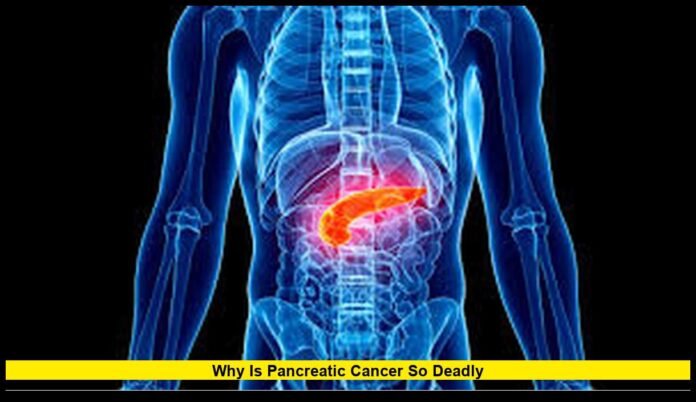

Why is pancreatic cancer so deadly? That question remains one of the most urgent topics in cancer research as pancreatic cancer continues to rank among the leading causes of cancer-related deaths in the United States. Despite advances in cancer treatment, the disease still carries a five-year survival rate of about 13%, making it one of the deadliest major cancers. New treatment breakthroughs reported in 2026 have created hope, but early detection remains a major challenge.
What Is Pancreatic Cancer?
Pancreatic cancer begins in the pancreas, an organ located behind the stomach that helps regulate blood sugar and produces digestive enzymes. The most common form is pancreatic ductal adenocarcinoma (PDAC), which accounts for more than 90% of pancreatic cancer cases.
The disease often develops silently. Many patients experience few or no symptoms during the early stages, allowing the cancer to grow and spread before it is discovered. This delayed diagnosis is one of the primary reasons for its high mortality rate.
Why Is Pancreatic Cancer So Deadly?
Several factors combine to make pancreatic cancer exceptionally difficult to treat.
1. It Is Usually Diagnosed Too Late
Unlike breast, colorectal, or prostate cancer, pancreatic cancer does not have a routine screening test for the general population.
Many patients do not realize they have the disease until it has spread beyond the pancreas. By the time symptoms become noticeable, the cancer is often at an advanced stage.
Early-stage pancreatic cancer can sometimes be treated successfully with surgery. However, only a small percentage of patients receive a diagnosis while the disease is still localized.
2. Symptoms Are Often Vague
Pancreatic cancer symptoms frequently resemble common digestive or metabolic problems.
Common warning signs include:
- Abdominal pain
- Back pain
- Unexplained weight loss
- Loss of appetite
- Jaundice
- Dark urine
- Fatigue
- Newly developed diabetes
- Worsening blood sugar control
These symptoms often appear after the disease has already progressed.
3. The Cancer Spreads Quickly
The pancreas sits near major blood vessels and vital organs. This location allows cancer cells to spread rapidly to nearby tissues and distant organs such as the liver and lungs.
Because pancreatic tumors can metastasize early, many patients are no longer candidates for curative surgery when diagnosed.
4. The Tumor Environment Protects Cancer Cells
Researchers have discovered that pancreatic tumors create a dense protective barrier around themselves.
This barrier makes it difficult for chemotherapy drugs and immune cells to reach cancer cells effectively. As a result, many treatments that work well against other cancers have shown limited success against pancreatic cancer.
5. Few Effective Treatments Have Historically Existed
For decades, treatment options remained limited.
While surgery, chemotherapy, and radiation therapy can improve survival, they rarely cure advanced disease. Progress has been slower than in many other major cancers.
Read More – Why Is Pancreatic Cancer So Deadly
Pancreatic Cancer Statistics in the United States for 2026
The latest estimates highlight the ongoing impact of the disease.
| Statistic | 2026 Estimate |
|---|---|
| New cases | 67,530 |
| Expected deaths | 52,740 |
| Five-year survival rate | 13% |
| Localized-stage survival | 44% |
| Distant-stage survival | 3% |
These figures demonstrate why pancreatic cancer remains a major public health concern.
Why Survival Rates Remain So Low
Survival rates depend heavily on when the cancer is found.
For patients whose cancer remains confined to the pancreas, outcomes are significantly better. Unfortunately, most diagnoses occur after the disease has spread.
Five-Year Relative Survival by Stage
| Stage | Five-Year Survival Rate |
|---|---|
| Localized | 44% |
| Regional | 17% |
| Distant | 3% |
| All Stages Combined | 13% |
This dramatic decline in survival after cancer spreads illustrates the importance of early detection.
Risk Factors Linked to Pancreatic Cancer
Researchers have identified several factors associated with increased risk.
Smoking
Smoking remains one of the strongest known risk factors and contributes to a significant portion of pancreatic cancer cases.
Age
Most patients receive a diagnosis after age 65, with the median age at diagnosis around 71 years.
Obesity
Excess body weight has been associated with a higher risk of developing pancreatic cancer.
Diabetes
Long-standing diabetes and new-onset diabetes can both be linked to pancreatic cancer. In some cases, diabetes may be an early warning sign.
Family History and Genetics
Inherited genetic mutations and a strong family history can increase risk significantly.
Can Pancreatic Cancer Be Detected Early?
Early detection remains one of the biggest challenges in cancer medicine.
Researchers continue developing blood tests, imaging technologies, genetic screening tools, and biomarker-based detection methods. However, there is still no standard screening program for the general population.
Scientists believe earlier diagnosis could dramatically improve survival rates because surgery is most effective before cancer spreads.
Major Pancreatic Cancer Breakthroughs in 2026
While survival rates remain low, 2026 has brought encouraging developments.
Daraxonrasib Shows Historic Results
One of the most significant breakthroughs announced this year involves an experimental drug called daraxonrasib.
The treatment targets KRAS-related pathways that drive tumor growth in many pancreatic cancer patients. In a major clinical trial involving patients with advanced disease:
- Median survival increased from 6.7 months to 13.2 months.
- Risk of death declined significantly.
- Many patients reported improved quality of life.
- Serious side effects were lower than with some standard treatments.
Cancer specialists have described the findings as one of the most promising advances in pancreatic cancer treatment in decades.
New Immunotherapy Research
Researchers are also exploring ways to overcome the protective shield surrounding pancreatic tumors.
Several experimental therapies aim to help immune cells recognize and attack cancer more effectively. Early studies have shown promising results, although additional clinical trials are still needed.
Targeted KRAS Therapies
For years, KRAS mutations were considered nearly impossible to target with drugs.
New generations of KRAS inhibitors are changing that outlook and could open the door to more personalized treatment approaches.
What Researchers Are Focusing on Next
Current pancreatic cancer research centers on several key goals:
- Earlier diagnosis through blood-based screening tests
- Improved imaging technologies
- Personalized treatments based on genetic mutations
- More effective immunotherapies
- Combination therapies that target tumors from multiple angles
Scientists believe these strategies could eventually improve survival rates beyond current levels.
Why Awareness Matters
Public awareness plays a critical role in improving outcomes.
Recognizing symptoms, understanding risk factors, and supporting research efforts may help more people receive earlier diagnoses. Increased attention to pancreatic cancer has also accelerated investment in clinical trials and new treatment development.
The Bottom Line
The answer to why is pancreatic cancer so deadly lies in a combination of factors: late diagnosis, lack of routine screening, aggressive tumor biology, rapid spread, and historically limited treatment options. Even though pancreatic cancer remains one of the most lethal cancers in America, 2026 has delivered encouraging signs of progress. New targeted therapies, promising clinical trial results, and ongoing early-detection research are giving physicians and patients more hope than they have seen in years.
What do you think about the latest pancreatic cancer breakthroughs? Share your thoughts and stay informed as researchers continue working toward earlier detection and better treatments.