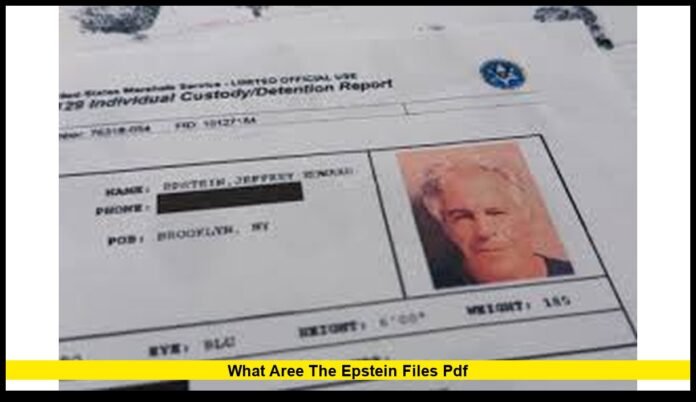

Public interest in what are the epstein files pdf remains exceptionally high as millions of pages of records tied to Jeffrey Epstein continue to be reviewed by journalists, legal experts, lawmakers, researchers, and members of the public. The release of these records has become one of the largest transparency efforts connected to a criminal investigation in modern American history, drawing attention from across the political spectrum and reigniting debates about accountability, privacy, and public access to government records.
Years after Epstein’s death in federal custody, questions surrounding his network, business dealings, travel activities, and legal history continue to generate widespread discussion. The publication of extensive investigative records has provided new insight into how authorities handled various aspects of the case while also raising fresh questions about the scope of information that remains under review.
Understanding the Epstein Files
The term “Epstein files” refers to a broad collection of government and court records connected to investigations involving Jeffrey Epstein and his longtime associate Ghislaine Maxwell. These records include court filings, witness interviews, investigative materials, emails, travel logs, financial records, evidence inventories, photographs, videos, communications, and other documents gathered during years of legal proceedings.
Unlike what many people assume, there is no single document that contains all information related to the case. Instead, the files consist of millions of pages spread across multiple categories and agencies. The records were created over many years and involve numerous investigations, lawsuits, prosecutions, and government reviews.
As a result, understanding the full scope of the material requires examining thousands of separate documents rather than one comprehensive report.
Why the Files Were Released
For years, advocacy groups, victims’ representatives, transparency organizations, and lawmakers pushed for greater public access to records related to Epstein.
Those efforts eventually led to legislation requiring federal agencies to review and release large quantities of documents connected to the investigations. Officials argued that greater transparency would help restore public confidence while allowing citizens to better understand how the investigations developed over time.
The review process involved sorting through enormous amounts of material. Authorities were required to identify records suitable for public release while ensuring compliance with privacy laws and legal protections for victims and witnesses.
Because of the scale of the project, the review process extended over many months before major releases became available.
A Historic Volume of Records
One reason the story continues to dominate headlines is the extraordinary size of the document collection.
Government officials disclosed millions of pages of records, along with large quantities of digital evidence. The release included investigative reports, correspondence, financial materials, photographs, video files, and supporting documentation accumulated during years of inquiries.
Legal analysts noted that few criminal investigations in American history have produced such a vast public archive.
The volume alone has made the records difficult to analyze. Even months after publication, experts continue reviewing newly available material and identifying details that previously received little public attention.
What Information Is Included?
Among the categories of information found within the files are:
- Investigative reports
- Court records
- Deposition transcripts
- Witness statements
- Travel records
- Financial documentation
- Property-related records
- Internal communications
- Contact information
- Evidence logs
- Legal motions
- Interview summaries
- Law-enforcement correspondence
- Case review materials
Together, these records create a detailed historical account of how authorities examined allegations against Epstein and how the legal process unfolded over time.
Researchers continue using the records to build timelines, identify patterns, and better understand the relationships documented throughout the investigations.
Why the Files Have Drawn Such Intense Attention
Several factors explain the continued public fascination with the Epstein files.
First, the underlying allegations involved serious crimes affecting numerous victims over many years. The severity of those allegations naturally generated significant public interest.
Second, Epstein maintained relationships with individuals from various sectors, including business, finance, politics, academia, and entertainment. Those connections have fueled ongoing curiosity about the extent of his social and professional network.
Third, many Americans remain interested in understanding how Epstein was able to maintain influence despite earlier criminal allegations and legal challenges.
Finally, the sheer size of the document release means that new details continue to emerge as researchers review the material.
These factors combine to keep the story in the national spotlight.
The Importance of Context
One of the most misunderstood aspects of the files involves the appearance of names within released documents.
Legal experts repeatedly emphasize that inclusion in a document does not automatically imply criminal conduct, wrongdoing, or participation in illegal activity.
Names can appear in records for many reasons, including:
- Business interactions
- Social events
- Travel records
- Witness interviews
- Investigative leads
- Email communications
- Contact databases
- Court proceedings
As a result, analysts caution against drawing conclusions based solely on a person’s presence within the records.
Investigative documents often contain references to individuals who were never accused of wrongdoing and who may have had no involvement in criminal conduct.
Understanding that distinction remains critical when evaluating information found within the files.
Ongoing Debate Over Redactions
While the release of records was welcomed by many transparency advocates, disagreements quickly emerged regarding redactions.
Government agencies removed portions of some documents before publication. Officials argued that these edits were necessary to protect victims, preserve personal privacy, comply with legal obligations, and prevent disclosure of sensitive information.
Supporters of the redactions contend that releasing certain details could expose survivors to additional harm or reveal information unrelated to public accountability.
Critics, however, argue that some redactions make it difficult to fully understand important portions of the records.
The debate continues as lawmakers and legal observers review the released material and evaluate whether additional disclosures should occur.
Protecting Victims Remains a Central Concern
Victims and their advocates have consistently emphasized that transparency must not come at the expense of survivor privacy.
Many survivors spent years seeking justice and accountability. For that reason, concerns remain regarding how personal information is handled during document releases.
Privacy experts note that large-scale disclosures require careful review because investigative records often contain highly sensitive information.
Balancing transparency with victim protection has become one of the most challenging aspects of the release process.
The discussion has highlighted broader questions about how governments should handle public access to records involving victims of serious crimes.
Congressional Oversight Continues
The document releases have also attracted substantial attention on Capitol Hill.
Members of Congress have sought additional information regarding how records were reviewed, how disclosure decisions were made, and whether additional materials remain unavailable to the public.
Several lawmakers have argued that continued oversight is necessary to ensure that agencies comply with transparency requirements.
Others have focused on examining the historical handling of investigations related to Epstein.
The bipartisan nature of this interest reflects the widespread public attention surrounding the case.
The Role of Technology in Reviewing the Files
The unprecedented volume of material has transformed the review process into a major digital research effort.
Modern search tools, document databases, and data-analysis systems have become essential for examining the records.
Researchers can now search millions of pages for specific dates, names, locations, communications, and events.
Without digital tools, reviewing such a large collection would require years of manual examination.
Technology has therefore played a crucial role in helping investigators, journalists, and legal experts navigate the enormous archive.
What Are Researchers Looking For?
Many researchers examining the records focus on building a more complete understanding of the case.
Common areas of analysis include:
- Travel patterns
- Financial transactions
- Communication networks
- Property ownership
- Investigation timelines
- Witness accounts
- Legal strategies
- Institutional responses
By connecting information across thousands of documents, analysts hope to create a clearer picture of how events unfolded over time.
This work remains ongoing and continues to generate public interest.
Why New Findings Continue to Emerge
The size of the archive means that important information can remain unnoticed for extended periods.
Unlike smaller document releases, millions of pages cannot be reviewed immediately by a single team.
As different researchers examine different portions of the archive, new observations continue to surface.
This explains why discussions surrounding the files remain active long after the initial releases.
The ongoing review process ensures that public attention remains focused on the records and their broader implications.
The Broader Impact on Transparency Efforts
Beyond the Epstein case itself, the release has influenced larger conversations about government transparency.
Advocates argue that public access to historical records can improve accountability and strengthen trust in institutions.
Critics warn that large-scale disclosures must be managed carefully to protect privacy and prevent misuse of information.
The Epstein files have become a prominent example of how governments attempt to balance these competing priorities.
As future transparency initiatives emerge, policymakers may look to this case as an example of both the opportunities and challenges involved in releasing extensive investigative records.
Why Americans Continue Following the Story
The story remains relevant because it touches on issues that extend beyond a single criminal case.
Questions about accountability, institutional oversight, victim protection, transparency, and public trust continue to resonate with Americans.
The files also provide a rare glimpse into how major investigations develop over time, how evidence is collected, and how legal proceedings unfold behind the scenes.
For many observers, the records represent more than historical documents. They are part of an ongoing effort to understand how powerful individuals, government agencies, and legal institutions interact during high-profile investigations.
What Are the Epstein Files PDF and Why Do Searches Keep Growing?
Searches for what are the epstein files pdf continue to increase because many people hope to find a simple explanation of a highly complex document archive.
The reality is that the files represent a vast collection of records assembled over many years through investigations, prosecutions, court proceedings, and government reviews.
Rather than a single report, the archive serves as a detailed record of one of the most scrutinized criminal cases in recent American history.
As experts continue examining the material, the files are likely to remain a major focus of legal, political, and public discussion throughout 2026 and beyond.
The ongoing review of these records ensures that debates surrounding transparency, accountability, privacy, and justice will continue for years to come.
What are your thoughts on the ongoing review of the Epstein files and the broader debate over transparency and accountability? Share your perspective in the comments and check back for the latest developments as this story continues to evolve.