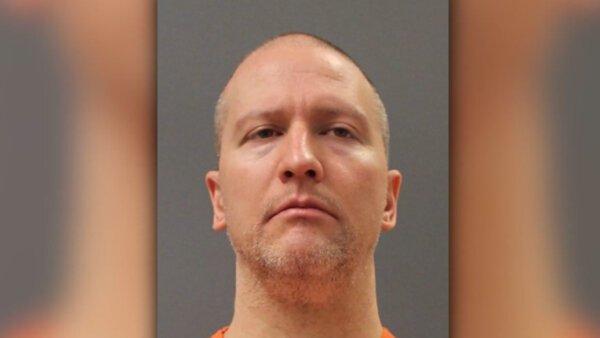

Minnesota’s Republican state convention in Duluth ended with a gubernatorial endorsement and a fresh national controversy — a delegate-driven moment of silence for Derek Chauvin, the former Minneapolis police officer serving more than 22 years in prison for murdering George Floyd. What should have been a routine convention kickoff has since become a flashpoint that encapsulates the deep partisan divides consuming Minnesota politics heading into a consequential 2026 election year.
Who Is Derek Chauvin? A Brief Recap
Derek Chauvin is the former Minneapolis police officer who was convicted of second-degree murder in the May 25, 2020 death of George Floyd. Footage of Chauvin kneeling on Floyd’s neck for nearly ten minutes — as bystanders pleaded — sparked worldwide protests against police brutality and systemic racism. Chauvin was subsequently convicted on both state murder charges and separate federal civil rights offenses. He is currently incarcerated in a federal prison in Texas, where he is serving a sentence of more than 22 years. His appeals have repeatedly failed, with a judge denying his latest petition for a new trial in May 2026.
What Happened at the Minnesota GOP Convention?
The Moment of Silence
The Minnesota Republican Party held its endorsement convention on Saturday, May 30, 2026, in Duluth — coinciding almost exactly with the sixth anniversary of George Floyd’s death. According to reporting by the Minnesota Star Tribune, a delegate among the roughly 2,300 in attendance made a motion during the opening proceedings for a moment of silence for Derek Chauvin.
Convention chair and state Rep. Danny Nadeau (R-Rogers) put the motion to an informal voice vote, asking whether delegates “would like to have a short 30-seconds stand in silence for Derek Chauvin.” The motion passed. The actual pause lasted fewer than ten seconds before Nadeau brought down his gavel. As reported by the Minnesota Reformer, the silence came on the sixth anniversary of Floyd’s death — a detail that quickly became central to Democratic criticism.
Nadeau later said he had recommended against the motion but explained that his role as convention chair is to facilitate properly made motions from the floor, not to unilaterally block them.
Party Leaders Caught Off Guard — and On Defense
Minnesota GOP Chair Alex Plechash went on WCCO Radio Monday to defend the episode, telling host Vineeta Sawkar: “That came from the body, of course. The body elected to have that moment of silence, we had maybe 10 seconds or so. There are a lot of people that believe Derek Chauvin was improperly convicted, and not treated well. Those people wanted to have a moment of silence in recognition because they felt that way.”
When pressed directly on whether Chauvin was guilty, Plechash declined to challenge the court’s verdict, but he also did not condemn the tribute.
Congressman Tom Emmer offered a sharper deflection, saying in a statement that it was “a sad day in the State of Minnesota” when honoring members of law enforcement became news, and redirecting attention toward what he called “the corrupt and incompetent Walz-Flanagan-Ellison-Simon administration.”
Democratic Reaction: Outrage and Political Opportunity
The fallout was swift. Minnesota Attorney General Keith Ellison released a statement calling himself “heartbroken and frankly shocked” by the Republican Party’s decision. He wrote that the court system had heard all the evidence, appeals courts had reviewed every claim, and justice had been rendered — adding that honoring Chauvin “days after the very anniversary of that terrible day is an act of profound cruelty to the Floyd family and to every Minnesotan who believes in accountability under law.”
State Rep. Jamie Long (D-Minneapolis) called the tribute “disgusting,” pointing out that the Minnesota GOP chose to memorialize a convicted murderer rather than honoring victims of gun violence or soldiers lost in combat.
Community leaders and activists also gathered Monday evening at the Hennepin County Government Center to rally against a potential presidential pardon for Chauvin — a prospect floated by figures in the MAGA movement. No pardon has been issued, but the speculation added further tension to an already charged week.
The Walz Administration: A Convenient Target
The moment of silence did not exist in a vacuum. Minnesota Republicans have spent much of 2025 and 2026 hammering the outgoing Walz administration over its handling of what federal prosecutors described as the largest pandemic fraud in United States history — a scandal centered on the Feeding Our Future nonprofit and cascading into Medicaid waiver services, child care assistance, and other public benefits programs.
Republicans on a House oversight committee, including state Rep. Kristin Robbins (R-Maple Grove), have characterized the administration as not merely slow to act but politically motivated to look the other way. Walz, who announced he would not seek a third term, has denied those accusations, saying his administration took steps to address systemic fraud issues. Ellison has separately cited more than 300 Medicaid-fraud convictions and $80 million in recovered judgments under his tenure.
Congressman Emmer’s pivot toward the “Walz-Flanagan-Ellison-Simon administration” in the wake of the Chauvin moment of silence was a deliberate attempt to keep the fraud narrative front and center — even as the convention handed Democrats one of their strongest lines of attack of the 2026 cycle.
Screens in Schools: The Other Minnesota Flash Point
Lost in the noise of the convention weekend was another front in Minnesota’s political culture wars: the debate over cellphones and screens in schools.
In February 2026, a bipartisan bill authored by Sen. Alice Mann (DFL–Edina) moved through the state Senate Education Committee. Senate File 508 would prohibit students in kindergarten through eighth grade from using cellphones and smartwatches at school entirely, and ban their use in the classroom for high school students in grades nine through twelve. The legislation, if passed, would take effect statewide for the 2026–2027 school year.
The bill built on a 2024 law that required school districts to adopt some form of cellphone policy by March 2025. The new proposal would standardize those policies with a “bell-to-bell” approach modeled on North Dakota, where a similar ban began in the 2025–26 school year to broadly positive reviews. Fargo Public Schools Superintendent Cory Steiner described the North Dakota policy as a “win,” saying students were “looking at each other in the eyes” again.
Data from the Minnesota Department of Education’s 2025 Student Survey found that nearly 38 percent of surveyed eighth graders believed they were spending too much time on social media — a number that climbed to 44 percent among eleventh graders. Supporters of the ban cited mounting evidence linking constant device access to declining academic focus and worsening student mental health.
The legislation drew bipartisan co-sponsorship, with Republican Rep. Jordan Rasmusson of Fergus Falls joining as a co-author. Opposition largely came from student safety concerns: one student testifying before the committee described receiving a message from his father during school warning him not to come home because ICE was at their door — a scenario where a phone represented a genuine lifeline.
Walz signed a related measure into law in late May 2026 — a bipartisan social media guardrails bill requiring parental consent for children under 16 to create accounts on platforms including Instagram, TikTok, and Snapchat. It was one of his final acts before the end of the legislative session.
Partisan Derangement in Stereo: A Convention Weekend in Contrast
The conventions of both major Minnesota parties happened simultaneously — and the contrast was almost too perfect.
On the Republican side in Duluth: a moment of silence for a convicted murderer on the sixth anniversary of his victim’s death.
On the Democratic side in Rochester: Klobuchar campaign staffers distributing hundreds of foam flashing glow sticks bearing the senator’s name, only to have convention officials demand they be turned off — and then confiscated — over concerns that the blinking lights could trigger seizures in the small subset of the population with photosensitive epilepsy. Star Tribune reporter Max Nesterak captured the absurdity succinctly: “State of the political parties: Minnesota Republicans held a moment of silence for Derek Chauvin at their endorsement convention while Democrats confiscated glow sticks because of the potential risk to a small subset of epileptics.”
The Republican convention ultimately endorsed Army veteran and former healthcare executive Kendall Qualls for governor over House Speaker Lisa Demuth after ten rounds of voting — making Qualls, if nominated, the first Black major-party candidate for governor in state history. The DFL convention in Rochester endorsed Sen. Amy Klobuchar for governor over progressive challenger Kobey Layne.
What This Tells Us About 2026 Minnesota Politics
The Chauvin moment of silence is unlikely to decide a single election on its own. But it is a revealing window into the grassroots Republican base — and the widening gap between what party leaders want to talk about (taxes, fraud, public safety) and what the activist core actually believes. The delegate base that passed the motion on a voice vote is the same base that will turn out in primaries, knock doors, and fund campaigns.
As Republicans attempt to end a 20-year drought without a GOP governor in Minnesota, handing Democrats a ready-made “character” attack is a costly error — especially in a state where cultural flash points from 2020 have never fully cooled. Democrats, for their part, are eager to run against that moment of silence all the way to November.
Partisan derangement, it turns out, is not a partisan condition. It is a structural one — produced by primary systems, delegate conventions, and the incentive to perform for a base rather than govern for everyone.
Frequently Asked Questions (FAQs)
Q: Why did Minnesota Republicans hold a moment of silence for Derek Chauvin? A: A delegate at the May 30, 2026 Minnesota GOP convention in Duluth made a floor motion for the tribute. Convention chair Rep. Danny Nadeau put it to a voice vote, it passed, and the silence lasted fewer than ten seconds. Some in the Republican grassroots believe Chauvin was wrongly convicted or treated unfairly by the justice system.
Q: Is Derek Chauvin still in prison? A: Yes. Chauvin is currently incarcerated in a federal prison in Texas, serving a sentence of more than 22 years. A judge denied his most recent petition for a new trial in May 2026.
Q: Has President Trump pardoned Derek Chauvin? A: No presidential pardon has been issued as of June 2026. Some figures in the MAGA movement have called for one, prompting community rallies at the Hennepin County Government Center in opposition.
Q: What is the Minnesota school cellphone ban proposal? A: A bipartisan bill (SF 508) moving through the Minnesota Legislature would ban phones entirely for K–8 students and restrict classroom use for high schoolers, taking effect in the 2026–2027 school year if signed into law.
Q: What did Tim Walz sign related to children and screens? A: In late May 2026, Governor Walz signed a bipartisan social media guardrails law requiring parental consent for children under 16 to open accounts on major platforms including Instagram, TikTok, and Snapchat.
Q: Who won the Minnesota GOP gubernatorial endorsement in 2026? A: Army veteran and former healthcare executive Kendall Qualls won the endorsement after ten rounds of voting, defeating House Speaker Lisa Demuth. If nominated in the August primary, Qualls would be the first Black major-party candidate for governor in Minnesota history.
The moment lasted fewer than ten seconds — but its political echo will reverberate across Minnesota all the way to November 2026. What do you think: was the GOP moment of silence for Derek Chauvin a grassroots expression of genuine belief, or a stunning miscalculation that will cost Republicans the governor’s office? Drop your thoughts in the comments below.