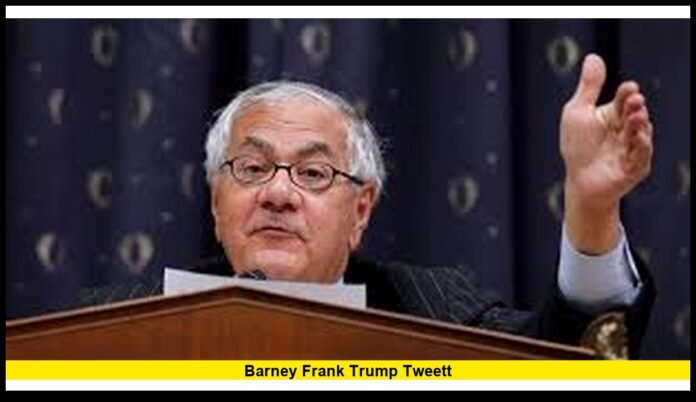

The phrase “barney frank trump tweet” surged across social media and search trends after the death of former Massachusetts Congressman Barney Frank at age 86 renewed attention on one of President Donald Trump’s most controversial old posts. As tributes poured in for the longtime Democratic lawmaker and financial reform architect, online users began resharing Trump’s years-old remark about Frank’s appearance during a congressional appearance, igniting fresh political discussion across the United States.
Frank, one of the most influential liberal lawmakers of his era, died Tuesday after battling congestive heart failure while in hospice care in Maine. His death immediately prompted reactions from political leaders, LGBTQ advocates, Wall Street observers, and longtime critics and supporters alike. At the same time, archived posts involving Trump and Frank quickly resurfaced online, driving renewed public interest in their long-running political clashes.
The renewed attention comes as Americans revisit Frank’s complicated but highly influential political legacy, from shaping financial reform after the 2008 recession to becoming one of the first openly gay members of Congress.
Readers following the renewed online debate can expect more reactions in the coming days as political figures and commentators continue revisiting Frank’s decades-long impact on American politics and culture.
The Return of an Old Political Flashpoint
Much of the recent online conversation centers around a social media post Trump made years ago criticizing Frank’s appearance during remarks on the House floor. The post became controversial at the time and has again circulated widely following news of Frank’s death.
The resurfaced comment spread rapidly across X and other platforms after several prominent political commentators referenced it while discussing Frank’s career. Many users contrasted the sharp political hostility of past years with the flood of tributes now honoring Frank’s contributions to banking reform and LGBTQ rights.
The renewed attention also reflects the intense political rivalry that existed between Frank and Trump for years. Frank frequently criticized Trump publicly, especially during and after Trump’s first presidential administration. Trump, meanwhile, repeatedly attacked Frank over economic policy, liberal politics, and television appearances.
Political analysts say the renewed focus on the old exchange shows how quickly major public events can revive long-dormant political controversies in the digital era.
Barney Frank’s Influence on Modern American Politics
Frank served in Congress for more than three decades and became one of the Democratic Party’s most recognizable voices. Representing Massachusetts from 1981 until 2013, he earned a reputation for sharp wit, blunt arguments, and detailed policy expertise.
His most enduring legislative achievement remains the Dodd-Frank Wall Street Reform and Consumer Protection Act, the sweeping financial reform law passed after the 2008 financial crisis. Working alongside former Senator Chris Dodd, Frank helped craft rules designed to strengthen oversight of major financial institutions and reduce systemic risks across the banking industry.
Supporters credit the law with reshaping federal financial regulation and strengthening consumer protections after the economic collapse that devastated millions of Americans.
Frank also became a groundbreaking figure in LGBTQ political history. In 1987, he publicly came out as gay, becoming one of the first members of Congress to do so voluntarily. Over time, he emerged as one of Washington’s most visible advocates for gay rights, eventually supporting the repeal of “Don’t Ask, Don’t Tell” and backing same-sex marriage rights.
In 2012, Frank made history again when he became the first sitting member of Congress to enter a same-sex marriage.
His career combined major policy influence with constant public visibility, making him both admired and criticized across the political spectrum.
If you’ve followed Barney Frank’s political career over the years, this latest online debate shows just how lasting his influence remains in Washington and beyond.
Why Trump’s Old Post Returned to the Spotlight
The resurfacing of Trump’s old remark reflects the way political history often gets revisited during moments of national attention.
Following Frank’s death, social media users began sharing clips, screenshots, and old interviews involving both men. Trump’s earlier criticism rapidly became one of the most discussed items connected to Frank online.
The exchange originally gained notoriety because of Trump’s unusually personal criticism. Critics accused Trump of mocking Frank’s appearance rather than debating policy differences. Supporters of Trump argued the comment reflected his confrontational political style that later became central to his presidential campaigns.
Now, years later, the post has become part of broader discussions about political rhetoric in the United States and the increasingly personal nature of political conflict online.
The renewed debate also highlights how social media archives can preserve controversial moments indefinitely. Political comments once seen as fleeting now often return years later during major news events.
For many Americans, the renewed circulation of the post serves as a reminder of how dramatically political discourse evolved during the Trump era.
Tributes Pour In Across Political Circles
Despite years of partisan battles, reactions to Frank’s death included praise from many corners of American politics.
Democratic leaders highlighted his role in shaping financial regulation and expanding LGBTQ rights. Several lawmakers praised Frank’s legislative skill and ability to simplify highly complex financial issues during the aftermath of the Great Recession.
Former colleagues described him as fiercely intelligent, relentlessly prepared, and deeply committed to government policy. Others pointed to his humor and direct speaking style as defining traits of his public image.
Frank’s role in advancing gay rights also drew widespread recognition. Advocacy organizations and political allies described him as a pioneering public figure who helped normalize LGBTQ representation in American government.
At the same time, critics revisited controversies that followed Frank throughout his career, including ethics investigations during the late 1980s and disputes over financial regulation.
Still, even longtime political opponents acknowledged his major influence on Congress and national policymaking.
A Career Defined by Pragmatism and Conflict
Frank often described himself as both deeply progressive and politically pragmatic. That combination sometimes placed him at odds with activists on the left as well as conservatives on the right.
In recent interviews conducted while he was receiving hospice care, Frank criticized parts of the Democratic Party for embracing positions he believed alienated moderate voters. He argued Democrats needed to focus more heavily on economic inequality and politically achievable goals.
Those comments generated significant discussion within Democratic circles in recent weeks and added another layer to public reactions following his death.
Frank’s willingness to criticize his own party reflected a broader reputation he carried throughout his congressional career: outspoken, combative, and often unpredictable.
He remained active in political commentary long after leaving Congress in 2013. Television appearances, interviews, and public speeches kept him involved in national debates on banking regulation, elections, and social issues.
That continued visibility partly explains why his death immediately reignited discussions involving old political feuds, including those connected to Trump.
How Social Media Changed Political Memory
The return of the “barney frank trump tweet” discussion also reveals how modern political memory functions differently than it once did.
Years ago, controversial remarks might disappear after a few news cycles. Today, archived posts, screenshots, and viral reposts can bring old controversies back into public focus within minutes.
Political strategists increasingly monitor these digital flashpoints because they can shape public narratives around major events. In Frank’s case, the resurfaced Trump post quickly became intertwined with broader conversations about civility, legacy, and the evolution of political communication.
Some commentators argued the renewed attention distracted from Frank’s accomplishments. Others said the controversy reflected the unavoidable reality of modern political history, where both achievements and personal attacks remain permanently searchable online.
The episode demonstrates how public figures today are often remembered not only through legislation and speeches but also through viral digital moments that continue resurfacing years later.
Frank’s Lasting Legacy Beyond the Headlines
Although online debates continue, Frank’s long-term legacy will likely center on his impact in two major areas: financial regulation and LGBTQ political visibility.
The Dodd-Frank Act remains one of the most significant financial reform laws in modern American history. Even critics acknowledge the law fundamentally changed how Washington oversees banks and financial markets.
Meanwhile, Frank’s openness about his sexuality during an era of far greater stigma helped pave the way for broader LGBTQ representation in national politics.
Political historians frequently describe him as one of the defining liberal lawmakers of his generation.
His sharp debating style, encyclopedic policy knowledge, and willingness to challenge opponents made him a uniquely visible figure in Congress for decades.
Even after retirement, Frank remained deeply engaged in national political discussions, ensuring his voice continued influencing debates well into his 80s.
Now, with renewed attention surrounding both his life and his clashes with Trump, Americans are once again revisiting the broader political and cultural impact he had on the country.
As reactions continue to pour in, many Americans are revisiting Barney Frank’s legacy and debating how history will remember one of Washington’s most outspoken political figures