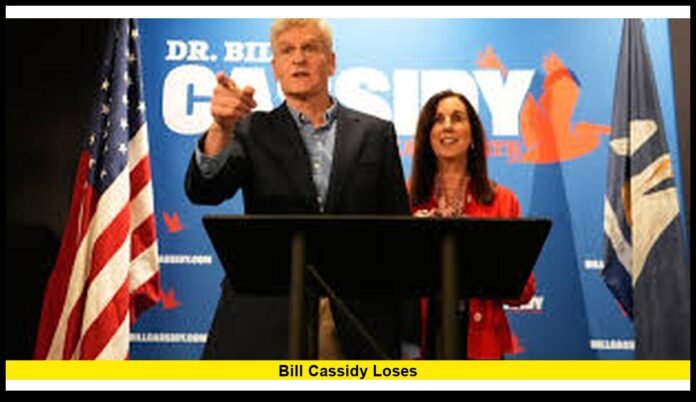

Bill Cassidy loses his bid for another Senate term after Louisiana Republican voters rejected the longtime senator in one of the most closely watched GOP primaries of 2026. The result marked a major political turning point in Louisiana and delivered another victory for candidates closely tied to President Donald Trump’s political movement.
The three-way Republican primary ended with U.S. Rep. Julia Letlow finishing first, followed by Louisiana State Treasurer John Fleming. Cassidy placed third and failed to qualify for the runoff election scheduled for June 27. The outcome immediately reshaped the Senate race and sparked national political reaction across Republican circles.
Cassidy’s defeat did not happen overnight. For years, conservative activists and Trump supporters targeted the senator after his 2021 impeachment vote against Trump. That issue remained central throughout the campaign and eventually became impossible for Cassidy to escape.
The Louisiana race now stands as one of the clearest signs yet that Republican primary voters continue to prioritize loyalty to Trump over seniority, legislative experience, or bipartisan credentials.
Louisiana Republicans Deliver a Clear Message
The final primary numbers reflected a decisive shift among Louisiana Republican voters.
Julia Letlow captured the largest share of the vote and entered runoff season with strong momentum. John Fleming secured the second runoff position after consolidating support from deeply conservative voters in several rural areas. Cassidy, despite years in statewide office and a major fundraising operation, failed to gain enough support to survive the first round.
Political strategists had warned for months that Cassidy faced serious danger. Internal polling throughout the campaign showed many Republican voters still angry over the impeachment vote. That frustration intensified as Trump repeatedly attacked Cassidy at rallies, interviews, and online posts.
The election result demonstrated how much influence Trump still holds inside Republican primaries, especially in strongly conservative states like Louisiana.
The Impeachment Vote Changed Cassidy’s Political Future
Cassidy’s problems with Republican voters began in February 2021.
Following the January 6 Capitol riot, the Senate held an impeachment trial focused on Trump’s conduct after the 2020 presidential election. Cassidy joined six other Republican senators in voting to convict Trump.
At the time, Cassidy defended his decision by arguing that the Constitution required senators to judge the case independently. He also said Trump’s actions surrounding the Capitol attack crossed a dangerous line.
Those comments immediately triggered backlash in Louisiana.
Republican organizations across the state condemned Cassidy within days. Several local Republican committees passed resolutions criticizing him, while conservative activists launched campaigns encouraging challengers to run against him in the next election cycle.
The anger never faded.
Even though Cassidy later supported many Republican priorities in Congress, conservative voters continued viewing him through the lens of the impeachment vote. Every major opponent in the 2026 race centered their campaign messaging around that moment.
By the time primary voting arrived, the issue had become the defining story of Cassidy’s Senate career.
Trump’s Endorsement Changed the Race
Donald Trump’s endorsement of Julia Letlow became one of the most important developments in the primary contest.
Before the endorsement, several Republican candidates competed for conservative voters. After Trump publicly backed Letlow, her campaign gained rapid momentum. Donations increased, grassroots organizing expanded, and Republican activists united behind her candidacy.
Trump repeatedly described Cassidy as disloyal and encouraged Louisiana Republicans to support candidates who fully aligned with his agenda.
That message resonated strongly with voters.
At campaign stops throughout Louisiana, Letlow emphasized support for Trump’s immigration policies, energy development plans, border security proposals, and economic priorities. She also reminded voters about Cassidy’s impeachment vote during speeches and television appearances.
The strategy worked.
Many Republican voters viewed the primary less as a debate over policy details and more as a referendum on loyalty to Trump’s political movement.
Julia Letlow Emerges as the New Republican Favorite
Julia Letlow’s rise inside Louisiana politics has been rapid.
She first gained national attention after winning a special congressional election in 2021. Since entering Congress, she built strong relationships with conservative organizations and Republican leadership figures.
Her Senate campaign focused heavily on cultural issues, conservative values, and alignment with Trump’s agenda. She also emphasized support for Louisiana’s oil and gas industry, military communities, and agricultural economy.
Unlike Cassidy, Letlow avoided presenting herself as a bipartisan figure. Instead, she campaigned as a dependable conservative who would consistently support Trump-backed priorities in Washington.
That approach energized Republican voters who wanted a sharper ideological contrast with Democrats.
Throughout the primary season, Letlow maintained strong fundraising numbers and performed well in televised debates. Her campaign also built an aggressive ground operation in smaller parishes where conservative turnout often determines statewide Republican contests.
After the primary results became official, many national Republican strategists immediately labeled her the favorite for the runoff election.
John Fleming Still Holds Conservative Support
Although Letlow finished first, John Fleming also emerged from the primary with significant support.
Fleming previously served in Congress and remains popular among highly conservative voters. His campaign highlighted traditional Republican positions on taxes, federal spending, and social issues.
Unlike Cassidy, Fleming never faced accusations of disloyalty to Trump. That helped him remain competitive throughout the race.
Still, Trump’s endorsement of Letlow created challenges for Fleming during the final stretch of the campaign. Some conservative voters shifted toward Letlow after the endorsement became public.
The runoff election between Letlow and Fleming will now decide which Republican advances to the November general election.
Both candidates appeal to conservative voters, but Letlow currently holds stronger statewide momentum.
Louisiana’s New Election System Hurt Cassidy
Changes to Louisiana’s election system also played a major role in Cassidy’s defeat.
For decades, Louisiana used a “jungle primary” structure where all candidates appeared on the same ballot regardless of party affiliation. Under that format, independent voters and moderate Democrats sometimes supported centrist Republicans.
Cassidy benefited from that system during previous elections because he attracted crossover support from voters outside the Republican base.
The rules changed before the 2026 cycle.
Louisiana adopted closed party primaries, limiting participation to registered Republicans in the GOP contest. That created a much more conservative electorate.
Political observers widely believed the new structure favored candidates with stronger support among core Republican voters. Cassidy struggled under those conditions because many moderates and independents who once backed him could no longer influence the Republican primary outcome.
The new election rules reshaped campaign strategies statewide and intensified ideological competition inside the Republican Party.
Cassidy’s Senate Career Included Major Legislative Work
Despite the primary loss, Cassidy leaves behind a lengthy political record.
Before entering Congress, he worked as a physician in Louisiana and often discussed healthcare policy during his political career. He first won election to the U.S. House of Representatives before securing a Senate seat in 2014.
During his time in the Senate, Cassidy participated in several bipartisan negotiations involving infrastructure, healthcare, disaster relief, and education policy.
He also supported major Republican priorities, including tax cuts, conservative judicial appointments, and energy expansion projects important to Louisiana’s economy.
Yet many Republican voters ultimately focused on one issue above all others: the impeachment vote.
That single decision overshadowed years of legislative work and eventually defined the primary campaign.
Conservative Activists Celebrated the Result
Republican activists across Louisiana reacted quickly after Cassidy’s defeat became clear.
Several conservative groups described the result as proof that Republican voters remain committed to Trump’s leadership. Social media accounts tied to conservative organizations celebrated the outcome throughout election night.
Trump allies also pointed to Cassidy’s loss as a warning to other Republican officeholders who publicly oppose Trump.
The Louisiana race now joins a broader national trend in which Republican candidates closely aligned with Trump continue performing strongly in GOP primaries.
Political analysts expect the outcome to influence campaign strategies in other Senate races over the coming months.
Read More – Bill Cassidy Trump
Democrats Face Difficult Odds in Louisiana
Even though the Republican primary generated national attention, Democrats still face major challenges in Louisiana statewide elections.
The state has become increasingly Republican over the last decade, especially in federal contests. GOP candidates regularly dominate Senate, presidential, and congressional races.
Democratic candidate Jamie Davis is expected to appear on the November ballot, but Republicans remain heavily favored to keep the Senate seat.
Most national political organizations currently classify Louisiana as a safe Republican state for the general election.
That reality means the June runoff between Letlow and Fleming may effectively determine Louisiana’s next senator.
National Republicans Watch the Race Closely
Republican leaders in Washington closely monitored the Louisiana primary because it offered insight into voter priorities heading into the midterm season.
The results reinforced several key trends inside the GOP:
- Trump endorsements still carry major influence.
- Conservative voters remain highly motivated by loyalty issues.
- Incumbents who challenge Trump continue facing serious political risks.
- Closed primaries favor ideologically conservative candidates.
Strategists believe other Republican senators and House members will study the Louisiana outcome carefully while preparing for future elections.
The race also demonstrated how quickly longtime incumbents can lose support inside modern primary politics.
Cassidy’s Concession Speech Focused on Principles
After the primary results became final, Cassidy addressed supporters during a concession speech in Louisiana.
He thanked campaign volunteers, staff members, and longtime supporters. Cassidy also defended his record in the Senate and said he always tried to make decisions based on constitutional principles and what he believed served the country best.
While he acknowledged political disagreement inside the Republican Party, he avoided directly attacking Trump or the other Republican candidates.
The speech drew attention because Cassidy appeared calm and reflective despite suffering a major political defeat.
Many observers noted that Cassidy’s remarks contrasted sharply with the aggressive tone dominating much of modern campaign politics.
What Comes Next in the Runoff Election
The Republican runoff between Julia Letlow and John Fleming now becomes the center of attention in Louisiana politics.
Letlow enters the next phase with several advantages:
- Stronger fundraising momentum
- Trump’s endorsement
- Broader statewide visibility
- Larger primary vote share
Fleming, however, still maintains loyal conservative support and may attempt to consolidate voters who opposed Letlow during the first round.
The runoff campaign is expected to focus heavily on immigration, energy policy, federal spending, and conservative cultural issues.
Both candidates will likely compete aggressively for Trump-aligned voters, who now represent the dominant force inside Louisiana Republican politics.
A Defining Moment for the Republican Party
Bill Cassidy’s loss may become one of the defining Republican primary stories of 2026.
For years, analysts debated whether Republican voters would eventually move beyond internal conflicts surrounding Trump. Louisiana’s Senate primary suggested that those divisions remain deeply important inside the GOP base.
Cassidy entered the race with experience, name recognition, financial resources, and years of statewide victories. None of those advantages protected him once Republican voters decided they wanted a different direction.
The result showed how dramatically Republican politics has changed over the last decade.
In Louisiana, support for Trump proved stronger than incumbency, seniority, or bipartisan credentials.
The runoff election will determine who officially becomes the Republican nominee, but one political reality is already clear: Louisiana Republicans have chosen a new path forward after ending Bill Cassidy’s Senate reelection campaign.
Do you think Louisiana Republicans made the right decision in the Senate primary? Share your thoughts and follow the latest updates as the runoff election approaches.