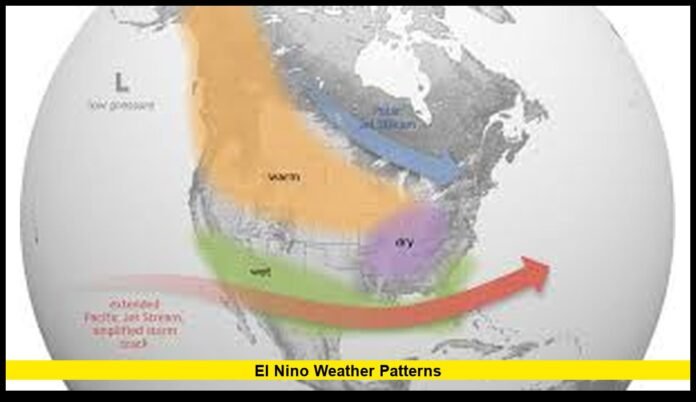

The el nino weather pattern is once again becoming a major focus for meteorologists, emergency planners, farmers, and millions of Americans watching for possible weather disruptions later this year. Climate experts tracking the Pacific Ocean say rising sea-surface temperatures are strengthening the likelihood of El Niño conditions developing over the coming months, potentially reshaping rainfall, temperatures, drought conditions, and storm activity across the United States.
Scientists monitoring the tropical Pacific have reported a rapid warming trend beneath the ocean surface, a key sign that atmospheric conditions may soon align with an official El Niño event. Forecast agencies now expect a high probability that the climate pattern will emerge during the second half of the year and continue into the winter season.
The growing concern comes at a time when global temperatures remain historically elevated. Researchers say the combination of long-term climate warming and a developing El Niño could increase the risk of heat waves, severe weather swings, and climate-related disruptions around the world.
Americans across coastal, drought-prone, and storm-sensitive regions are already being encouraged to follow seasonal forecasts closely as weather experts prepare for potentially significant climate impacts.
Weather shifts tied to El Niño can influence everything from energy bills and crop production to travel delays and wildfire danger, making this one of the most closely watched climate developments of the year.
Why El Niño Matters So Much
El Niño is part of a larger climate cycle known as the El Niño-Southern Oscillation, often shortened to ENSO. The cycle includes El Niño, La Niña, and neutral phases, each capable of influencing weather patterns worldwide.
During El Niño, surface waters across the central and eastern equatorial Pacific Ocean become warmer than average. That warming affects atmospheric circulation and changes how heat and moisture move around the planet.
The impacts can stretch far beyond the Pacific region. Storm tracks often shift, rainfall patterns change, and temperatures can swing dramatically in different parts of the world.
In the United States, El Niño has historically influenced winter storms, hurricane activity, drought severity, and seasonal temperatures.
Meteorologists say every El Niño behaves differently, but even moderate events can significantly affect daily life and economic activity.
Pacific Ocean Temperatures Continue Rising
Climate scientists have spent months watching subsurface warming spread through the Pacific Ocean. Recent measurements show expanding pools of warm water beneath the surface moving eastward toward the South American coastline.
Those underwater heat buildups often signal the early stages of El Niño development.
As warmer water rises closer to the surface, atmospheric circulation patterns can begin shifting. Trade winds may weaken, rainfall patterns can move eastward, and ocean temperatures can continue increasing across key monitoring regions.
Several forecasting models now project sustained warming through summer and into fall.
Meteorologists caution that climate forecasting always involves uncertainty, especially during spring transition periods. However, the consistency among multiple forecast models has increased confidence that El Niño conditions are likely to emerge.
Some researchers say the pace of warming observed recently has drawn particular attention because it developed relatively quickly compared with some past events.
Potential Effects on U.S. Weather
El Niño can affect different parts of the United States in dramatically different ways.
The southern portion of the country often experiences wetter-than-average winters during strong El Niño periods. Heavy rainfall sometimes develops across parts of California, Texas, the Gulf Coast, and the Southeast.
Northern states may experience warmer and drier winter conditions depending on the strength and timing of the event.
These shifts can alter snowfall totals, reservoir levels, flood risks, and agricultural conditions across multiple regions.
Forecasters say one of the biggest questions involves how this developing climate pattern could interact with existing drought conditions in parts of the western United States.
Some areas could benefit from additional precipitation, while others may still struggle with long-term water shortages despite seasonal storms.
The Pacific Northwest could also experience changing storm tracks depending on how atmospheric patterns evolve later in the year.
How El Niño Could Influence Hurricane Season
Hurricane experts are paying especially close attention to the warming Pacific Ocean because El Niño often changes conditions in the Atlantic Basin.
Historically, El Niño tends to increase upper-level wind shear across the Atlantic Ocean. Stronger wind shear can disrupt tropical systems and make it harder for hurricanes to organize and strengthen.
That effect sometimes reduces the number of Atlantic hurricanes during El Niño years.
At the same time, Pacific hurricane activity can increase because warmer waters and shifting atmospheric patterns create more favorable conditions for storm formation.
Meteorologists caution that even quieter Atlantic hurricane seasons can still produce highly destructive storms. A single major hurricane can cause catastrophic damage regardless of overall storm totals.
Emergency officials continue encouraging coastal residents to review hurricane preparedness plans before peak storm season begins.
Communities vulnerable to storm surge, flooding, and power outages are being reminded not to rely solely on seasonal outlooks when making safety decisions.
Heat Waves Could Intensify
Scientists are also warning that a developing El Niño may contribute to additional global heat records.
Global ocean temperatures have remained exceptionally warm in recent years, and many climate researchers believe El Niño could add another layer of warming to the atmosphere.
Historically, strong El Niño events have coincided with some of the warmest years ever recorded globally.
Extreme heat events have become increasingly common across many parts of the United States, with cities facing longer heat waves, warmer nights, and rising health concerns during summer months.
Public health agencies are monitoring how additional warming may affect vulnerable populations, including older adults, outdoor workers, and communities with limited cooling infrastructure.
Energy providers are also preparing for potentially higher electricity demand if temperatures rise significantly during summer.
Agriculture Faces Uncertainty
Farmers and ranchers throughout the United States are closely monitoring El Niño forecasts because changing rainfall patterns can dramatically influence crop yields and livestock conditions.
In some regions, increased precipitation may improve soil moisture and help replenish reservoirs after years of drought stress.
In other areas, excessive rainfall could delay planting schedules, damage crops, and increase flood risks.
Agricultural markets often respond quickly to changing climate forecasts because weather conditions affect corn, wheat, soybeans, cotton, and livestock production.
International agriculture can also feel the impact. El Niño has historically contributed to drought in some regions of Australia, Southeast Asia, and parts of Africa while increasing rainfall in portions of South America.
Those disruptions sometimes affect food prices and global supply chains.
Water availability remains another major concern. Irrigation systems, hydroelectric operations, and water storage agencies often rely heavily on seasonal climate outlooks when planning for future demand.
Wildfire Concerns Remain High
Wildfire experts say El Niño can influence fire activity in complicated ways.
In some western regions, wetter conditions may temporarily reduce wildfire risk by increasing soil moisture and lowering vegetation stress.
However, heavy rainfall can also stimulate vegetation growth. If hot and dry conditions return later, that additional plant growth can become fuel for future fires.
Climate scientists say wildfire behavior has become increasingly unpredictable as temperatures rise and drought conditions intensify across parts of the western United States.
Longer fire seasons and more extreme fire behavior have already placed growing pressure on emergency response systems and utility infrastructure.
Communities in fire-prone areas are being urged to continue defensible space preparation and emergency planning regardless of seasonal rainfall outlooks.
Impact on Energy and Infrastructure
Utility companies and infrastructure planners are closely tracking climate projections associated with El Niño.
Changing weather patterns can affect electricity demand, transportation systems, water supply operations, and disaster response planning.
Warmer winters in northern states may reduce heating demand, while hotter summers could sharply increase air conditioning use.
Heavy rain events can also damage roads, bridges, rail systems, and drainage infrastructure.
Major cities across the United States have already experienced increasing pressure on aging infrastructure due to extreme weather in recent years.
Emergency management agencies are reviewing preparedness plans for flooding, severe storms, heat emergencies, and power disruptions as seasonal forecasts evolve.
Economic Ripple Effects Could Spread Nationwide
Large climate events often create economic impacts far beyond directly affected regions.
Insurance companies frequently experience higher claim volumes after floods, storms, droughts, or wildfire disasters.
Transportation disruptions can delay shipping operations and increase supply chain costs.
Tourism industries may also experience shifts depending on weather conditions. Ski resorts, beach destinations, agricultural tourism operators, and outdoor recreation businesses often depend heavily on seasonal climate stability.
Retailers and energy companies also adjust inventory planning and pricing strategies based on long-range weather forecasts.
Financial analysts say large-scale climate variability increasingly affects economic forecasting because weather-related disasters now create billions of dollars in damages annually across the United States.
Scientists Continue Improving Forecast Technology
Climate forecasting technology has advanced dramatically over the last several decades.
Meteorologists now use satellites, ocean buoys, underwater sensors, aircraft observations, and advanced computer models to track conditions across the Pacific Ocean in real time.
These systems allow scientists to identify warming trends earlier and improve seasonal forecasting accuracy.
Researchers continue studying how El Niño interacts with other climate systems, including Arctic warming patterns, ocean heat content, and atmospheric circulation changes.
Artificial intelligence and high-performance computing are also helping climate agencies analyze enormous datasets more efficiently than ever before.
Despite those advancements, forecasting exact regional impacts months ahead remains difficult because weather systems can still evolve unpredictably.
Could This Become a Historically Strong Event?
Some climate models suggest the developing event could eventually become strong if warming intensifies through summer and fall.
Historically powerful El Niño events have produced major flooding, drought, agricultural disruptions, coral bleaching, and temperature extremes across multiple continents.
Meteorologists stress that it remains too early to determine whether this developing pattern will reach those levels.
However, several experts have noted that the current warming trend is being watched carefully because ocean heat buildup has accelerated rapidly.
The coming months will likely determine whether the Pacific warming stabilizes at moderate levels or continues strengthening into winter.
Scientists say ocean temperatures, trade wind behavior, and atmospheric pressure changes will remain critical indicators.
Communities Are Preparing Earlier Than Usual
State and local agencies across the United States are already reviewing emergency response plans as climate outlooks evolve.
Flood-control agencies are inspecting levees, drainage systems, and reservoir operations in vulnerable regions.
Agricultural organizations are advising producers to monitor drought and rainfall outlooks closely.
Utility companies are preparing for possible demand spikes during extreme heat periods.
Emergency planners are also emphasizing public awareness campaigns to encourage households to prepare for severe weather risks before conditions worsen.
The developing el nino weather pattern has already become one of the most important climate stories of the year because of its potential to influence nearly every corner of the country in some way.
What Americans Should Watch Next
Meteorologists expect the next several months to provide a much clearer picture of how the climate pattern develops.
If Pacific Ocean temperatures continue rising and atmospheric changes strengthen, El Niño could become firmly established before the end of summer.
Forecasters will continue monitoring hurricane conditions, drought outlooks, winter storm projections, wildfire risks, and temperature trends as new data becomes available.
For millions of Americans, those forecasts may shape travel plans, farming decisions, emergency preparation, and energy usage throughout the year ahead.
Climate experts say staying informed early can help communities respond more effectively if major seasonal weather shifts begin taking shape.
Have weather patterns already started changing in your area? Share your thoughts and keep following the latest updates as forecasters track the months ahead.