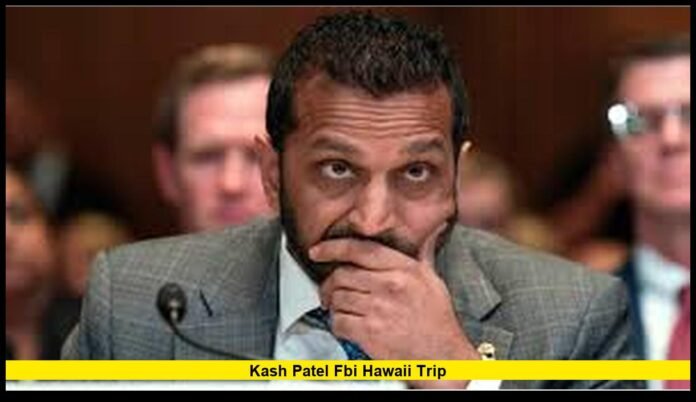

The kash patel fbi hawaii trip has become one of the most talked-about political stories in the United States after reports revealed that the FBI director participated in a military-coordinated snorkeling excursion near the USS Arizona Memorial at Pearl Harbor.
The controversy intensified after internal government communications described the activity as a “VIP snorkel” connected to Patel’s visit to Hawaii. Public reaction quickly followed as veterans, lawmakers, military families, and political commentators questioned whether the outing was appropriate at one of America’s most sacred memorial sites.
Kash Patel traveled to Hawaii earlier this year for official FBI-related meetings and events. Those activities included visits with federal law enforcement personnel, security discussions, and meetings with officials in Honolulu. Attention shifted dramatically once additional details surfaced showing Patel later returned for the snorkeling excursion that had not initially been disclosed publicly.
The story has continued dominating political discussion because it combines several major issues at once: government transparency, federal travel spending, respect for military memorials, and the increasingly high-profile public image of the FBI director.
Why the Hawaii Visit Became a National Story
Pearl Harbor remains one of the most emotional historic locations in the United States. The attack on December 7, 1941 changed American history and pushed the nation into World War II.
The USS Arizona Memorial stands directly above the remains of the battleship destroyed during the attack. More than 900 sailors and Marines still rest inside the submerged wreckage. Millions of Americans visit the memorial every year to honor those who died during the attack.
Because of that history, public activity near the memorial receives careful attention.
The reports involving Patel created immediate controversy because snorkeling and diving activities around the site are heavily restricted. Access to the surrounding waters is tightly controlled to preserve the integrity and dignity of the memorial area.
As soon as details about the excursion became public, critics argued that the activity appeared insensitive regardless of whether official approval had been granted.
Supporters of Patel responded by pointing out that military coordination reportedly took place and that public criticism was politically motivated.
The debate rapidly spread across television networks, online political discussions, and social media platforms across the country.
What Reports Revealed About the Snorkeling Excursion
Government emails described the outing as a “VIP snorkel” tied to military personnel at Pearl Harbor. The reports indicated that officials coordinated logistics related to the excursion.
The details immediately raised several questions:
- Who approved the snorkeling activity?
- Was the trip personal or official?
- Were government resources used?
- Why was the excursion not publicly disclosed earlier?
- Did the activity violate traditions tied to the memorial?
Military officials acknowledged awareness of the outing but released limited public information regarding the authorization process.
Officials stressed that precautions were taken to maintain respect for the memorial site. However, those statements did not fully quiet public criticism.
The lack of detailed explanations fueled even more debate online and in Washington political circles.
The Importance of the USS Arizona Memorial
The USS Arizona Memorial carries enormous historical and emotional significance in American culture.
Unlike ordinary tourist attractions, the site functions as both a memorial and a military gravesite. Visitors travel from across the world to pay tribute to those killed during the Pearl Harbor attack.
The wreck itself remains underwater in Pearl Harbor harbor. Small amounts of oil still rise from the ship decades later. Many visitors refer to those oil droplets as the “black tears” or “tears of the Arizona.”
The waters surrounding the wreck remain carefully protected.
Tour boats bring visitors near the memorial structure above the ship, but recreational activity near the wreck is extremely limited. Specialized research teams and preservation experts occasionally enter the area for official purposes.
That reality explains why the reports involving Patel created such strong emotional reactions among veterans and military families.
Many Americans view the location as sacred ground rather than simply a historic landmark.
Criticism From Veterans and Former Officials
The backlash following the Hawaii reports grew quickly.
Several veterans publicly criticized the optics surrounding the snorkeling excursion. Some argued that no recreational activity should occur near the memorial regardless of authorization.
Former federal officials also questioned the judgment involved in participating in the outing.
The criticism centered on symbolism as much as procedure.
Critics argued that senior federal leaders carry additional responsibility when visiting nationally significant memorials. Some said the FBI director should avoid any activity that could distract from the seriousness of the office.
Others focused on transparency concerns.
The FBI had publicly discussed Patel’s official Hawaii schedule earlier, including meetings with law enforcement leaders and visits with FBI personnel. However, the snorkeling excursion was not included in those summaries.
That omission became another major talking point after the reports surfaced.
Supporters Defend Patel
Patel’s supporters pushed back strongly against the criticism.
Conservative commentators argued that opponents were attempting to create outrage over a legally coordinated activity. Some noted that dignitaries and military guests occasionally receive special access to historic sites under controlled conditions.
Supporters also argued that there was no evidence showing Patel violated any laws or formal restrictions.
Several online commentators accused critics of exaggerating the controversy because Patel remains a deeply polarizing political figure.
His supporters frequently praise him for maintaining a visible public presence and taking a more aggressive communication approach than previous FBI directors.
For those supporters, the backlash represented another example of political attacks directed toward Patel since taking office.
Kash Patel’s Leadership Style Draws Attention
Since becoming FBI director, Patel has operated differently from many of his predecessors.
Previous FBI directors often maintained lower public profiles and rarely participated in highly visible social or public events outside official law enforcement activities.
Patel, by contrast, has frequently appeared in public settings that attract major media attention.
Earlier this year, he gained headlines after celebrating publicly with the U.S. men’s hockey team following its Winter Olympics success. Videos from those celebrations circulated widely online and sparked criticism from some political opponents.
Questions involving FBI aircraft usage and travel schedules have also appeared in recent months.
The Hawaii controversy added another layer to the broader national conversation surrounding Patel’s leadership style.
Supporters view his public presence as modern and energetic.
Critics argue that the visibility creates unnecessary distractions for the nation’s top federal law enforcement agency.
Political Fallout Continues Growing
The timing of the Hawaii controversy intensified political tensions in Washington.
Patel already faced scrutiny from lawmakers over other matters tied to agency management and leadership decisions. The snorkeling reports quickly became part of those broader political disputes.
Democratic lawmakers questioned whether the excursion reflected poor judgment for the head of the FBI.
Some former Justice Department officials also criticized the optics surrounding the trip.
Conservative allies defended Patel and accused critics of focusing on symbolic outrage instead of serious national security issues.
The political divide surrounding Patel has become one of the defining themes of his tenure as FBI director.
Almost every public controversy involving Patel now immediately turns into a larger partisan debate.
Social Media Reaction Intensifies
Online reaction to the Hawaii story exploded within hours after reports became public.
Political commentators on both sides shared sharply different opinions.
Critics argued:
- The activity appeared disrespectful to military history
- Public officials should avoid recreational outings at memorial sites
- The FBI director should maintain stricter professional boundaries
Supporters argued:
- Military coordination reportedly existed
- No evidence showed illegal conduct
- The controversy was politically amplified
The story spread rapidly across YouTube, Facebook, X, TikTok, and political discussion forums.
Videos discussing the controversy generated millions of views within days. Many posts focused less on technical authorization issues and more on emotional reactions connected to Pearl Harbor’s history.
That emotional dimension helped push the story into mainstream national conversation.
How Pearl Harbor Shapes Public Reaction
Pearl Harbor occupies a unique place in American history.
The attack killed more than 2,400 Americans and transformed the course of World War II. For generations of military families, veterans, and historians, the memorial remains deeply personal.
That emotional connection explains why activity near the USS Arizona Memorial can trigger strong reactions even decades later.
For many Americans, the issue involves dignity and respect rather than legal technicalities.
Even some individuals who defended Patel acknowledged that the optics surrounding the excursion created avoidable controversy.
Public officials visiting historically sensitive locations often face additional scrutiny because symbolism matters heavily in national memory.
Read More – Kash Patel Bourbon Controversy Draws National Attention as Questions Grow Around FBI Leadership
Questions About Government Transparency
Another major issue surrounding the Hawaii trip involves transparency.
Critics questioned why the snorkeling excursion was not initially mentioned in earlier public discussions about Patel’s travel schedule.
Government watchdog groups frequently monitor travel activities involving high-ranking federal officials, especially when taxpayer-funded transportation or security resources are involved.
Although no official misconduct findings related to the trip have been announced, the lack of detailed public information continued fueling speculation and criticism.
Questions remain regarding:
- The exact timeline of the return trip
- Funding arrangements
- Security logistics
- Authorization procedures
- The purpose of the excursion
Until fuller explanations emerge publicly, the story will likely remain part of ongoing political and media discussion.
The FBI’s Limited Public Response
The FBI has released only limited comments about the controversy.
Agency officials emphasized that Patel’s Hawaii visit included legitimate FBI business involving meetings and coordination with law enforcement personnel.
However, the agency did not initially publicize the snorkeling activity connected to the later return trip.
That limited response has kept public attention focused on unanswered questions.
Some observers believe the FBI avoided extensive public comment to prevent the controversy from growing larger. Others argue that fuller transparency could help reduce speculation.
Regardless of strategy, the story has continued attracting major attention nationwide.
Travel Controversies and Public Officials
Public scrutiny over official travel is not new in Washington.
Federal officials from both political parties have faced criticism over travel expenses, government aircraft usage, and recreational activities tied to official visits.
What made the Hawaii story different was the location.
The USS Arizona Memorial carries emotional significance that few other American sites can match.
Because of that, even activities technically permitted by authorities can generate strong public backlash if people view them as inappropriate.
That emotional factor helped transform the Hawaii excursion into a national headline rather than a routine travel story.
Impact on Patel’s Public Image
The controversy arrives during a period when Patel’s public profile continues growing nationally.
Before becoming FBI director, Patel built national recognition through intelligence work and political investigations during President Donald Trump’s administration.
Supporters often praise him as a reform-focused outsider willing to challenge traditional Washington institutions.
Critics argue his leadership style has blurred the line between federal law enforcement and political spectacle.
The Hawaii story strengthened both viewpoints simultaneously.
Supporters saw another politically motivated attack.
Critics viewed another example of unnecessary controversy involving the FBI director.
That divide reflects the broader polarization surrounding federal institutions in modern American politics.
Why the Story Continues Dominating Headlines
Several factors explain why the controversy continues receiving national attention.
Historic Symbolism
Pearl Harbor remains one of the most emotionally important sites in American history.
Political Division
Patel remains one of the most polarizing officials in Washington.
Public Accountability
Americans closely watch how senior federal officials use government resources and conduct official travel.
Media Attention
The story combines politics, military history, public symbolism, and government transparency.
Together, those elements created a controversy capable of dominating headlines across the country.
Current Status of the Controversy
As of May 15, 2026, the kash patel fbi hawaii trip remains a major topic of national political discussion.
Confirmed details include:
- Government communications described a “VIP snorkel”
- The excursion occurred near the USS Arizona Memorial
- Military coordination took place
- The FBI initially focused public attention on other official Hawaii activities
- Public reaction remains sharply divided
No formal findings of misconduct tied to the excursion have been announced publicly.
However, the controversy continues increasing scrutiny surrounding Patel’s travel activities, leadership style, and public appearances.
Political observers expect additional discussion to continue if new records or official statements become public in the coming weeks.
The debate surrounding the Hawaii trip reflects larger national conversations about leadership, symbolism, accountability, and public trust in federal institutions.
What are your thoughts on the ongoing controversy surrounding the Hawaii trip and the Pearl Harbor memorial visit? Share your opinion and keep checking back for the latest updates.