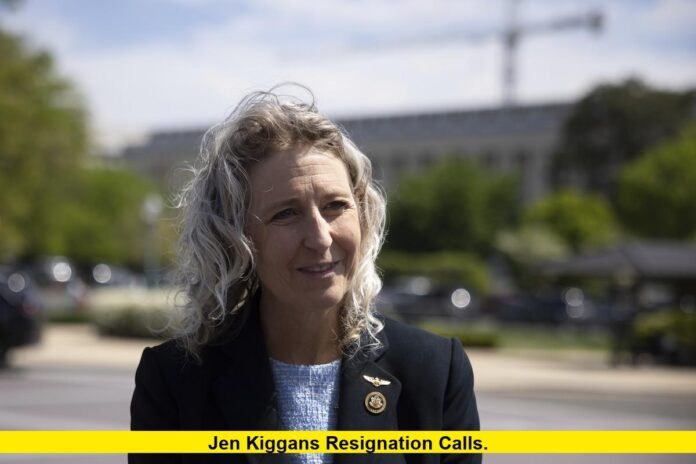

Political tensions in Virginia surged this week as jen kiggans resignation calls dominated headlines following a controversial radio appearance that triggered widespread criticism from Democratic lawmakers, civil rights advocates, and political strategists across the country. The Republican congresswoman, who represents Virginia’s highly competitive 2nd Congressional District, now faces growing scrutiny during a pivotal election season that could shape the balance of power in Washington.
The controversy has transformed what began as a local political discussion into a nationally debated issue involving race, political rhetoric, campaign accountability, and the responsibilities of elected officials in public forums.
A Radio Interview Sparks National Debate
The political uproar began after Kiggans appeared on a conservative Virginia radio program discussing congressional politics and outside influence in the state’s electoral battles. During the interview, the host used a phrase with historical racial connotations while referring to House Democratic leadership and ongoing redistricting disputes.
Kiggans did not immediately challenge the wording during the live exchange, leading critics to accuse her of appearing comfortable with inflammatory language that many consider offensive because of its ties to America’s history of slavery and racial discrimination.
Within hours, clips from the interview spread rapidly online. Political commentators, advocacy organizations, and rival campaigns quickly condemned the exchange, turning the incident into one of the most discussed political controversies of the week.
The backlash intensified as public officials weighed in, with some demanding apologies while others argued the congresswoman should resign from office altogether.
Virginia’s Competitive Political Landscape Raises Stakes
The timing of the controversy has amplified its impact. Virginia’s 2nd Congressional District is considered one of the nation’s most closely watched battlegrounds, with both major parties expected to invest heavily in the race.
Stretching across Virginia Beach and surrounding Hampton Roads communities, the district has repeatedly shifted between Republican and Democratic control in recent election cycles. Political analysts have long viewed the region as a key indicator of suburban voter sentiment in national politics.
Because margins in the district are often narrow, controversies that might fade quickly elsewhere can carry lasting consequences in a politically divided area where independents and moderate voters frequently determine election outcomes.
Campaign strategists from both parties are now evaluating whether the fallout could influence fundraising, turnout operations, and voter enthusiasm heading deeper into the election cycle.
Democrats Demand Accountability
Prominent Democrats in Virginia moved swiftly to criticize the congresswoman after the interview surfaced publicly. Several party leaders argued that elected officials have a responsibility to reject inflammatory rhetoric immediately, particularly when racially charged language is involved.
Some critics accused Kiggans of failing to recognize the seriousness of the phrase used during the broadcast. Others said her reaction reflected a broader problem involving political discourse becoming increasingly combative and insensitive nationwide.
The controversy also provided Democratic challengers with an opportunity to sharpen contrasts ahead of the campaign season. Political opponents framed the incident as evidence that stronger leadership and accountability are needed in Congress.
Calls for resignation began trending online shortly after the interview circulated, with activists organizing digital campaigns urging voters to pressure the congresswoman publicly.
Republicans Rally Behind Kiggans
Despite mounting criticism, Republican allies have largely defended Kiggans and accused opponents of politicizing the situation for electoral advantage.
Supporters argue the congresswoman was responding to broader comments about political interference in Virginia rather than endorsing controversial language. Conservative commentators also claimed the backlash reflects a pattern of selective outrage designed to damage Republican candidates in swing districts.
Several GOP strategists believe voters may ultimately view the controversy as overblown compared to issues such as inflation, border security, and economic concerns that continue dominating national polling.
Within conservative circles, some activists have framed the backlash as part of a wider political strategy aimed at weakening vulnerable Republican incumbents ahead of a crucial election year.
That defense, however, has done little to quiet criticism from civil rights organizations and political opponents who insist public officials should be held to higher standards regardless of intent.
Kiggans Issues Public Clarification
As criticism intensified, Kiggans released a public statement seeking to clarify her position and distance herself from the phrase that sparked the controversy.
She insisted she does not support racist language and said her comments during the interview were directed at broader political disagreements involving Virginia’s congressional map and outside political influence.
According to her statement, opponents were misrepresenting the exchange for political gain while ignoring the context of the larger conversation.
The congresswoman also emphasized her record of public service and argued that her focus remains on representing the interests of constituents across southeastern Virginia.
While the clarification satisfied some supporters, critics maintained that the response failed to fully address concerns raised by the interview.
The Power of Viral Political Moments
The incident underscores how rapidly modern political controversies can escalate in the social media era. A brief exchange during a local radio program quickly evolved into a national political issue once clips began circulating across digital platforms.
Political experts say viral moments increasingly shape campaign narratives because short video clips often spread faster than full contextual explanations. Candidates from both parties now face constant scrutiny in every public appearance, interview, and online interaction.
For campaigns operating in competitive districts, even a single controversial moment can dominate media coverage for days or weeks, potentially overshadowing policy discussions and legislative priorities.
The controversy surrounding Kiggans demonstrates how quickly political narratives can shift in today’s media environment, where reactions develop in real time and public pressure intensifies through online engagement.
Civil Rights Advocates Enter the Debate
Beyond partisan politics, civil rights advocates and community leaders also joined the conversation, emphasizing the historical weight of the phrase used during the interview.
Organizations focused on racial justice argued that language rooted in America’s painful history should never be minimized, especially by elected officials holding federal office.
Some advocacy groups urged political leaders across both parties to speak more forcefully against rhetoric they believe contributes to division and distrust.
The controversy reignited broader discussions about how politicians respond in unscripted settings and whether silence during offensive remarks can be interpreted as approval.
For many observers, the debate is no longer solely about one interview but about standards of conduct in modern American politics.
How the Controversy Could Shape the Election
Political analysts say the long-term consequences for Kiggans remain uncertain. Much will depend on whether the controversy continues dominating headlines or fades as voters shift attention toward economic and national security concerns.
In swing districts, voter perception often matters more than partisan loyalty. Independent voters may ultimately determine whether the issue affects the congresswoman’s standing with suburban moderates and military families who make up a significant portion of the district’s electorate.
Democratic campaigns are expected to continue referencing the controversy in fundraising appeals and campaign messaging. Republicans, meanwhile, are likely to focus on portraying the backlash as politically motivated outrage.
The district’s competitiveness means even small changes in voter turnout or independent support could influence the outcome of the race.
National Implications Beyond Virginia
The dispute has also become part of a broader national conversation about political rhetoric during an increasingly polarized election climate.
Across the country, both parties have faced criticism over language used by candidates, media figures, and campaign surrogates. The incident involving Kiggans highlights how quickly local political moments can become national flashpoints when questions involving race and public accountability emerge.
National strategists are closely monitoring the situation because battleground districts like Virginia’s 2nd often provide early clues about suburban voter attitudes heading into major elections.
Some political observers believe the controversy could energize Democratic turnout efforts, while others argue it may strengthen Republican claims that conservative candidates face disproportionate media scrutiny.
Either way, the incident has already become one of the defining political stories in Virginia this season.
A District Under the National Spotlight
Virginia’s 2nd District has repeatedly attracted national attention because of its political unpredictability and strategic importance. Control of the seat could become critical in determining the future balance of Congress.
With millions of dollars expected to pour into campaign advertising, every controversy carries heightened significance. Political operatives from both parties are preparing for an aggressive campaign season likely dominated by sharp messaging, high-profile appearances, and nonstop voter outreach.
As attention remains fixed on southeastern Virginia, voters in the district are likely to hear continued debate over the controversy in campaign ads, public forums, and televised interviews.
Whether the issue ultimately changes the trajectory of the race remains uncertain, but it has already reshaped the political conversation surrounding one of America’s most competitive congressional districts.
Political Pressure Continues to Mount
The coming weeks will likely determine whether the controversy fades or evolves into a lasting political liability. Public reaction, polling shifts, and campaign strategy adjustments could all influence how the story develops.
For now, Kiggans remains firmly under the national political spotlight as critics continue pressing for accountability and supporters rally to defend her against mounting attacks.
The controversy serves as another reminder that in today’s political climate, even brief moments can rapidly transform into defining campaign issues with national consequences.