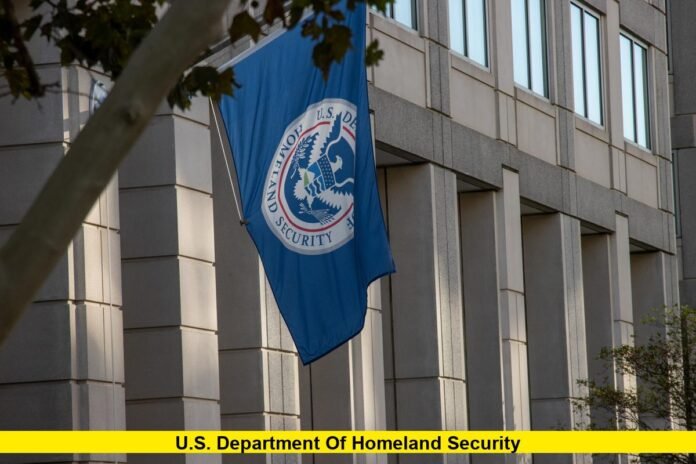

The u.s. department of homeland security is once again at the center of a major political debate after bipartisan lawmakers introduced legislation that would remove the United States Secret Service from DHS oversight and place it directly under the Executive Office of the President. The proposal comes amid growing scrutiny over agency structure, funding instability, and security concerns following recent threats against national leaders.
The new legislation, known as the Secret Service Transfer Act, has quickly become one of the most closely watched homeland security reform efforts in Washington. Supporters argue the current structure of DHS has become too large and bureaucratic, making it difficult for agencies like the Secret Service to operate efficiently and receive the resources they need.
According to lawmakers backing the bill, the goal is to streamline decision-making, reduce administrative bottlenecks, and strengthen accountability for one of the nation’s most critical protective agencies.
Bipartisan Support Builds for Secret Service Overhaul
The legislation was introduced by Representative Jared Moskowitz, a Democrat from Florida, and Representative Russell Fry, a Republican from South Carolina. Their proposal would move the Secret Service out of the Department of Homeland Security and place it directly under the White House structure.
Supporters of the measure say the Secret Service has struggled under the expanding size and responsibilities of DHS. Since the department was created after the September 11 attacks, it has grown into a massive federal organization overseeing border security, emergency management, transportation safety, cybersecurity, and numerous law enforcement agencies.
Critics argue that the Secret Service’s unique mission — protecting the president, vice president, visiting world leaders, and other top officials — requires more direct leadership and quicker operational flexibility than DHS currently provides.
Moskowitz stated that the department has become “too bureaucratic to make decisions,” while Fry argued that increasing political violence makes the agency’s protective mission more important than ever.
Why the Secret Service Was Placed Under DHS
The Secret Service originally operated under the Department of the Treasury before being moved into DHS in 2003 as part of the federal government’s post-9/11 reorganization efforts.
At the time, lawmakers believed consolidating security and intelligence functions under one umbrella agency would improve national coordination against terrorism and emerging threats.
Today, however, many lawmakers believe the structure has become overly complicated. The Secret Service’s responsibilities differ significantly from other DHS divisions such as Customs and Border Protection, TSA, FEMA, and Immigration and Customs Enforcement.
The agency’s dual role includes both protecting national leaders and investigating financial crimes, cybercrime, and counterfeit operations.
DHS Funding Problems Add Pressure for Reform
The reform push intensified after the Department of Homeland Security experienced one of the longest funding crises in modern U.S. history earlier this year.
Congress struggled for months to pass DHS appropriations, leading to a prolonged partial shutdown that affected numerous agencies inside the department. Transportation Security Administration workers, FEMA personnel, and other employees faced uncertainty as lawmakers fought over immigration and border policy.
Although Congress eventually approved a bipartisan funding package that restored operations for most of DHS agencies, the shutdown highlighted concerns about placing critical security operations inside broader political disputes.
Backers of the Secret Service bill argue that presidential protection operations should never be vulnerable to delays caused by larger DHS budget battles.
Additional DHS Reform Proposals Emerging
The Secret Service legislation is part of a wider bipartisan package aimed at restructuring several DHS agencies.
The proposal also includes:
- Making FEMA an independent cabinet-level agency
- Moving the Transportation Security Administration back to the Department of Transportation
- Reducing bureaucratic overlap across federal security agencies
Lawmakers promoting the reforms claim these changes would allow agencies to focus more directly on their missions rather than navigating administrative delays.
Supporters point to recent security incidents and operational concerns as evidence that changes are necessary to modernize federal protection and emergency management systems.
Debate Continues Over Homeland Security’s Future
Not everyone supports dismantling parts of DHS. Critics warn that moving agencies out of the department could weaken coordination between federal security organizations and create new logistical challenges.
Some national security experts argue that DHS was specifically designed to unify intelligence sharing and interagency communication after the failures exposed by the September 11 attacks.
Others believe reforms should focus on improving management and funding stability instead of restructuring agencies.
Still, the bipartisan nature of the latest proposal shows that frustration with DHS operations is spreading across both political parties. The Secret Service debate could become the first step in a broader conversation about the future of homeland security operations in the United States.
With Congress already debating immigration policy, border security funding, and federal agency reform, the coming months are expected to bring intense negotiations over how the Department of Homeland Security should function moving forward.
As the debate over homeland security reform grows, readers can expect even more developments surrounding the Secret Service, DHS funding, and federal security restructuring in the weeks ahead. Stay tuned and share your thoughts on whether these reforms are necessary.