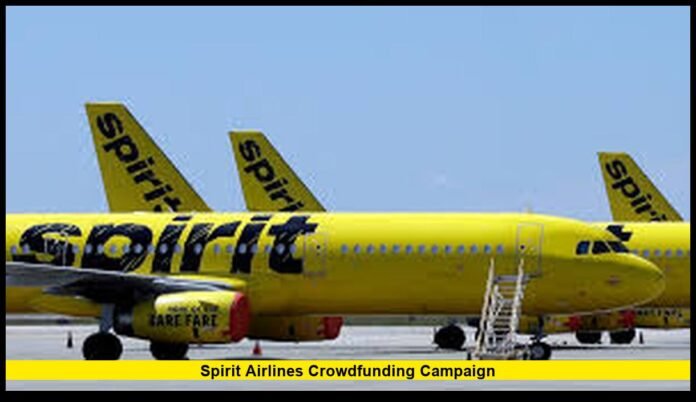

The sudden rise of the spirit airlines crowdfunding campaign has turned into one of the most talked-about transportation stories in the United States this week. After Spirit Airlines officially halted operations earlier this month, thousands of travelers, former employees, and aviation supporters quickly rallied behind a public-backed effort aimed at reviving the airline’s brand and restoring affordable flights across the country.
What started as a small online idea rapidly transformed into a nationwide movement attracting enormous attention on social media platforms, aviation forums, and travel communities. Supporters say the campaign represents more than nostalgia for a low-cost airline. Many believe it reflects growing frustration over rising airfare prices and shrinking budget travel options in the U.S.
The campaign’s organizers describe the effort as a chance to rebuild a people-focused airline that prioritizes low fares, simplified operations, and broad accessibility for everyday travelers.
Travel experts and airline analysts are now watching closely to see whether the movement can evolve from online enthusiasm into a legitimate aviation business proposal capable of attracting large-scale financial backing.
The story has already captured public attention because attempts to crowd-finance a commercial airline are extremely rare in modern aviation history.
Millions of Americans who once relied on Spirit Airlines for affordable domestic trips are now following every update connected to the proposed revival effort.
The movement has also sparked a broader national debate about airline competition, consumer costs, and the future of ultra-low-cost air travel in America.
Spirit Airlines Shutdown Sent Shockwaves Through the Travel Industry
Spirit Airlines officially suspended operations after a long period of financial instability, restructuring efforts, and mounting operational pressure. The company faced major economic challenges tied to fuel prices, debt obligations, competition, and changing travel demand.
The airline had already reduced routes and trimmed services before announcing the final shutdown.
Travelers across the United States suddenly found themselves scrambling to adjust canceled trips, locate replacement flights, and deal with uncertainty involving credits, reservations, and refunds.
For many Americans, Spirit Airlines represented one of the cheapest ways to travel domestically.
Its ultra-low-cost business model appealed to budget-conscious travelers willing to skip luxury perks in exchange for inexpensive airfare.
Students, families, solo travelers, and weekend vacationers often turned to Spirit because ticket prices could be dramatically lower than traditional airlines.
The company built its reputation around bare-bones fares that allowed customers to pay only for the services they wanted.
That strategy earned criticism over the years because baggage fees and add-on costs frequently surprised passengers. Yet despite the complaints, millions of travelers continued choosing the airline because of affordability.
When the company shut down operations, many consumers immediately worried about airfare increases across major domestic routes.
Industry observers have repeatedly noted that low-cost carriers create pricing pressure that forces larger airlines to remain competitive.
Without Spirit Airlines operating in the market, some analysts fear ticket prices could rise in multiple regions throughout the country.
That concern became one of the biggest emotional drivers behind the public-backed revival campaign.
How the Online Movement Gained Momentum
The campaign reportedly began when aviation enthusiasts and online creators started discussing ways to preserve the Spirit Airlines brand after the shutdown announcement.
The idea quickly spread through TikTok videos, online discussion groups, Instagram posts, and aviation communities.
Supporters began describing the project as a potential “people-powered airline.”
The movement gained momentum because many travelers viewed Spirit as an important part of affordable American travel, even if the airline itself faced years of criticism.
The campaign’s organizers introduced the concept of allowing ordinary individuals to contribute financially toward a potential relaunch effort.
Participants were encouraged to submit pledges showing how much they might invest if a structured acquisition plan moved forward.
Traffic to the campaign website surged within days.
Online discussions exploded as supporters debated whether community-backed ownership could realistically work in the airline industry.
Some people treated the movement as a symbolic protest against rising travel costs and airline consolidation.
Others genuinely believed the airline could eventually return under a revised operational structure.
The viral attention surrounding the campaign helped transform it into a national conversation almost overnight.
Why Spirit Airlines Still Had a Strong Customer Base
Despite becoming a frequent target for internet jokes and customer complaints, Spirit Airlines maintained an extremely loyal audience among price-sensitive travelers.
For many passengers, the airline made travel possible.
Families on tight budgets often used Spirit to visit relatives or take vacations they otherwise could not afford.
Young travelers frequently booked Spirit flights because ticket prices were dramatically lower than competitors on similar routes.
The airline’s approach worked especially well for travelers who packed lightly and cared more about price than comfort.
Supporters of the airline say many critics misunderstood Spirit’s business model.
The airline intentionally separated services into optional purchases rather than including everything in a higher base fare.
Passengers who traveled with only a small bag could often save substantial amounts of money.
As inflation and travel expenses continued increasing in recent years, low-cost airfare became even more important for millions of Americans.
That reality explains why so many former Spirit customers quickly supported efforts to revive the airline after the shutdown.
The spirit airlines crowdfunding campaign became a rallying point for travelers who feared losing one of the few remaining ultra-budget airline options in the country.
The Financial Problems That Led to Collapse
Spirit Airlines struggled with serious financial problems long before operations officially ended.
The company faced heavy debt obligations and rising operational expenses during a difficult economic period for the airline industry.
Fuel costs placed enormous pressure on the carrier’s finances.
Because ultra-low-cost airlines operate with narrower profit margins, sharp increases in jet fuel prices can significantly impact overall operations.
Spirit also faced challenges connected to aircraft availability, staffing costs, and competitive pricing pressure from larger airlines.
The company attempted multiple restructuring strategies designed to stabilize operations and reduce losses.
Executives reduced routes, adjusted schedules, and implemented cost-cutting measures.
The airline also explored broader strategic options aimed at improving long-term survival prospects.
However, the financial pressure continued growing.
Travel demand patterns shifted after several years of economic uncertainty in the aviation industry, making recovery increasingly difficult.
As the situation worsened, concerns mounted among employees, investors, and customers.
Eventually, the company reached a point where continuing operations was no longer sustainable.
The final shutdown announcement immediately disrupted travel plans nationwide and left thousands of workers facing uncertainty about future employment.
Former Employees Join the Revival Conversation
One of the most emotional aspects of the campaign involves former Spirit Airlines employees.
Pilots, flight attendants, mechanics, customer service representatives, and ground workers all felt the immediate impact of the airline’s closure.
Many employees spent years building careers with the company.
After the shutdown, some workers publicly shared stories about their experiences and expressed sadness over the loss of the airline.
Others voiced support for efforts aimed at preserving parts of the brand or restoring jobs in the future.
The airline industry quickly began recruiting displaced workers because many former Spirit employees already possessed valuable aviation experience.
Major carriers and regional airlines started advertising hiring opportunities targeting affected staff members.
Even so, the emotional connection many workers had with the airline remained visible across social media.
Supporters of the crowdfunding effort frequently highlighted the importance of protecting aviation jobs and preserving competition in the industry.
The movement therefore became about more than aircraft and branding.
For many participants, it also represented support for workers and affordable travel access.
Can a Community-Owned Airline Actually Succeed?
The idea of publicly backed airline ownership has generated enormous debate among aviation experts.
Supporters argue that strong public engagement demonstrates there is still demand for affordable airline options in the United States.
They believe the Spirit brand retains enough recognition to attract customers if operations could somehow restart under a more stable structure.
Critics remain skeptical.
Launching or relaunching a commercial airline requires enormous financial resources and regulatory approvals.
Even with strong public interest, the aviation industry remains one of the most expensive and complex business sectors in the world.
Airlines require aircraft access, airport agreements, insurance coverage, maintenance operations, technology systems, staffing networks, and federal oversight.
Operational costs can reach billions of dollars annually.
Some analysts say the crowdfunding campaign may struggle to move beyond internet enthusiasm unless institutional investors or experienced aviation executives become involved.
Still, the movement has already achieved something unusual by capturing widespread national attention.
The campaign revealed how deeply many travelers care about affordable airfare options and airline competition.
Even aviation professionals have acknowledged that the public response surrounding the airline’s collapse exceeded expectations.
Rising Airfare Concerns Continue Driving Public Interest
The broader concern behind the campaign involves the future cost of domestic air travel.
Budget airlines traditionally help keep ticket prices lower across the market by increasing competition.
When ultra-low-cost carriers disappear, travelers often lose access to the cheapest fare categories available on many routes.
That dynamic worries consumers already dealing with rising costs in housing, food, and transportation.
Travel industry observers say Spirit Airlines played an important role in shaping pricing strategies throughout the American aviation market.
Even travelers who never flew Spirit sometimes benefited indirectly because larger airlines adjusted prices to remain competitive.
The disappearance of the airline therefore carries wider implications for the industry.
Consumers are increasingly worried that reduced competition may lead to fewer affordable travel options in coming years.
That concern continues fueling interest in the online revival movement.
For many supporters, the campaign represents a fight to preserve accessible air travel for ordinary Americans.
Social Media Helped Turn the Story Into a National Phenomenon
The campaign’s explosive growth would not have been possible without social media.
Videos discussing the proposed airline revival generated millions of views within days.
Users shared memories of cheap vacations, spontaneous trips, and budget travel experiences made possible by Spirit Airlines.
Some posts focused on humor and nostalgia.
Others centered on economic frustration and concern over rising airfare prices.
The viral nature of the story helped push it far beyond aviation-focused audiences.
Mainstream travelers who rarely follow airline industry news suddenly became interested in the campaign because of its unusual concept.
Crowdfunding a major airline felt almost unbelievable to many observers.
That novelty helped drive even more attention online.
The campaign also tapped into broader public conversations about corporate consolidation and consumer affordability.
Many supporters viewed the effort as a rare opportunity for ordinary people to participate directly in a major transportation business.
Whether realistic or not, the idea itself captured public imagination.
What Comes Next for the Campaign
The future of the movement remains uncertain.
At the moment, the campaign primarily consists of public support, online organizing, and financial pledges rather than finalized acquisition agreements.
Turning that enthusiasm into a functioning airline would require major operational planning, regulatory approvals, and substantial investment capital.
Organizers would also need experienced aviation leadership capable of navigating the complexities of commercial airline management.
Aircraft leasing negotiations, staffing infrastructure, airport partnerships, and federal certification processes would all become critical factors.
Despite those challenges, supporters remain optimistic.
The campaign continues attracting attention each day as new travelers discover the story online.
Even if the airline never fully returns, the movement has already highlighted growing concerns surrounding affordability and competition in American aviation.
The campaign also demonstrated the powerful role online communities can play in shaping national business conversations.
For now, travelers across the country continue watching closely to see whether this unusual public-backed effort can move beyond social media momentum and become something much larger.