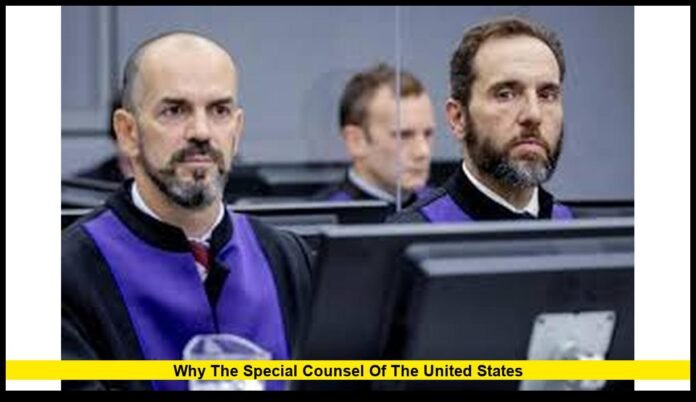

The role of the special counsel of the united states has become one of the most debated issues in American politics as Washington faces renewed legal clashes, congressional investigations, and intense scrutiny over federal prosecutorial power. Recent developments tied to former Special Counsel Jack Smith, ongoing courtroom disputes, and fresh political reactions have pushed the issue back into national headlines at a time when trust in federal institutions remains sharply divided across the country.
What began as a legal mechanism designed to ensure independence in sensitive investigations has evolved into a major political flashpoint. Democrats and Republicans continue battling over how special counsels should operate, how much authority they should have, and whether the current system still serves the public interest in an era of nonstop political conflict.
The debate has expanded beyond one investigation or one administration. It now touches larger questions about executive power, federal oversight, accountability, presidential immunity, and the future of the Justice Department itself.
Readers following the latest Washington developments are paying close attention because decisions made now could shape how future presidents, cabinet officials, and federal agencies are investigated for years to come.
Political tensions surrounding federal investigations have only intensified in recent months. Congressional hearings, legal filings, and renewed public debate have turned the special counsel system into one of the most closely watched legal issues in America.
If you follow U.S. politics, legal affairs, or federal investigations, this story continues to impact nearly every corner of the national conversation.
How the Special Counsel System Works
The special counsel framework was created to allow the Justice Department to appoint an outside prosecutor when conflicts of interest or extraordinary political sensitivity make ordinary investigations difficult.
A special counsel operates with a significant degree of independence while still remaining under the authority of the Attorney General. The goal is to protect public confidence by ensuring investigations involving powerful political figures are handled fairly and without direct political interference.
The system became especially prominent during past high-profile investigations involving presidents and senior government officials. Over time, however, the process has become increasingly controversial.
Critics argue that special counsels can gain enormous influence with limited accountability. Supporters believe the system remains essential for preserving public trust when investigations involve top government leaders.
The modern debate surrounding federal investigations intensified dramatically during the investigations overseen by Jack Smith.
Jack Smith’s Appointment Changed the Political Landscape
In late 2022, Attorney General Merrick Garland appointed Jack Smith as special counsel to oversee two major investigations involving Donald Trump.
The first investigation focused on efforts tied to the 2020 presidential election and the events surrounding the certification process in Washington. The second investigation centered on classified government documents discovered at Mar-a-Lago after Trump left office.
The appointment immediately transformed the national political landscape.
Trump was already preparing another presidential campaign, and the investigations quickly became central topics in American politics. Supporters of Trump described the investigations as politically motivated, while critics argued federal prosecutors had a duty to pursue the evidence regardless of political consequences.
Smith’s investigations eventually led to historic federal indictments against Trump, marking the first time a former U.S. president faced federal criminal charges.
The legal battles dominated news coverage throughout 2023 and 2024 and played a major role during the presidential election cycle.
Why the Federal Cases Ended
The legal path changed dramatically after Donald Trump won the 2024 presidential election and prepared to return to the White House.
Longstanding Justice Department policy states that sitting presidents cannot face federal criminal prosecution while serving in office. Following Trump’s election victory, Smith’s office moved to dismiss the pending federal cases.
The decision immediately sparked fierce reactions.
Trump allies argued the dismissals validated their position that the investigations should never have happened. Critics responded that the legal system had been interrupted before courts could fully resolve the allegations.
Jack Smith resigned from the Justice Department before Trump officially returned to office in January 2025, but the controversy surrounding his investigations did not disappear.
Instead, the political battle only intensified.
Congressional Republicans Increase Pressure
Republican lawmakers in Congress have spent months examining the conduct of federal investigators and Justice Department officials connected to the Trump cases.
Several House committees launched oversight efforts focused on the handling of the investigations, communications between prosecutors, and internal DOJ procedures.
The hearings quickly became major political events.
Lawmakers questioned whether federal agencies acted impartially or whether political considerations influenced prosecutorial decisions. Republicans argued that stronger oversight is necessary to prevent future abuse of federal investigative power.
Democrats pushed back aggressively, defending the investigations and arguing that independent prosecutors must remain free from political pressure.
The divide between the two parties reflects a larger national disagreement over how federal law enforcement agencies should operate in politically sensitive cases.
Jack Smith’s Public Testimony Draws National Attention
One of the biggest developments came when Jack Smith appeared publicly before congressional investigators.
The hearings generated intense public interest because they offered one of the first major opportunities for lawmakers to directly question Smith about his investigations, prosecutorial decisions, and interactions with Justice Department leadership.
Smith defended the integrity of his office and maintained that investigative decisions were based on evidence and legal standards rather than politics.
Lawmakers questioned him on a wide range of issues, including charging decisions, investigative timelines, witness interviews, and the release of public filings.
The hearings became one of the most discussed political events in Washington, drawing reactions from legal experts, political strategists, and former federal prosecutors across the country.
For supporters of the investigations, Smith’s testimony reinforced arguments that federal prosecutors acted independently. For critics, the hearings deepened concerns about the growing power of politically charged investigations.
The Court Fight Over the Final Report
Legal disputes surrounding Smith’s final investigative report have also become a major issue.
A federal court ruling prevented large portions of the report connected to the classified documents investigation from becoming public. The decision triggered another nationwide debate over transparency and prosecutorial authority.
Supporters of limiting the report’s release argued that publishing extensive investigative findings after a criminal case was dismissed could unfairly damage individuals without a completed trial process.
Others argued that the American public has a right to understand the findings of investigations involving a president and national security matters.
The court battle highlighted a major unresolved question inside the American legal system: how much information prosecutors should release when investigations end without a final courtroom verdict.
The issue could influence future Justice Department policies involving politically sensitive investigations.
Why the Debate Has Become So Intense
The controversy surrounding federal investigations is not only about legal procedure. It also reflects deep political divisions that continue shaping modern America.
Many conservatives believe federal agencies have increasingly targeted political opponents. They argue that reforms are necessary to restore public confidence and limit the influence of unelected investigators.
Many liberals and legal scholars argue that weakening independent investigations would create dangerous protections for powerful political figures and undermine accountability.
The investigations involving Trump became the clearest example of these competing views.
Because Trump returned to office after the federal cases began, the situation created unprecedented legal and constitutional complications.
The country has never before experienced a situation where a former president under federal indictment successfully returned to the presidency while the cases remained active.
That reality transformed ordinary legal disputes into historic constitutional questions.
Possible Reforms to the Special Counsel System
As public attention remains focused on the issue, lawmakers and legal experts continue discussing possible reforms.
Some proposals would place tighter restrictions on special counsel authority and require greater oversight from Congress or the Attorney General.
Other proposals focus on improving transparency and clarifying how final reports can be released after investigations conclude.
There are also discussions about establishing clearer rules involving investigations tied to presidential campaigns and election periods.
Supporters of reform say the current structure lacks sufficient accountability. Opponents warn that limiting independent prosecutors too heavily could weaken the Justice Department’s ability to investigate corruption or abuse of power at the highest levels of government.
No major legislative changes have passed yet, but the issue is expected to remain a major topic in Washington throughout the year.
The Justice Department Faces Growing Pressure
The Justice Department now faces increasing pressure from both political parties.
Republicans continue demanding stronger oversight and greater transparency surrounding past investigations. Democrats continue warning against efforts they believe could politicize law enforcement or intimidate federal prosecutors.
The department also faces challenges involving public trust.
Polling over the past several years has shown declining confidence in many federal institutions, including law enforcement agencies and the broader justice system.
That environment makes every major federal investigation politically explosive.
Future Attorneys General may become more cautious about appointing special counsels because of the intense backlash surrounding recent cases. Others may continue relying on independent prosecutors specifically to avoid accusations of political favoritism.
Either path carries significant political risk.
How the Special Counsel Debate Could Shape Future Elections
The national debate over federal investigations may also play a major role in future elections.
Political candidates increasingly use Justice Department controversies as campaign issues, especially when discussing government accountability, presidential power, and federal oversight.
Some candidates have called for sweeping reforms to the FBI and DOJ. Others argue that protecting the independence of prosecutors is necessary for preserving democratic institutions.
The issue resonates strongly with voters because it touches fundamental questions about fairness, power, and the rule of law.
As congressional hearings continue and court disputes remain active, the debate surrounding the special counsel of the united states is likely to remain one of the defining legal and political stories in Washington.
Historical Importance of the Current Moment
Legal scholars already view the current period as historically significant.
The combination of federal criminal investigations, presidential immunity questions, congressional oversight battles, and ongoing constitutional disputes has created one of the most extraordinary chapters in modern American legal history.
The long-term effects may extend far beyond current political leaders.
Future presidents, Attorneys General, and federal investigators could operate under entirely new rules depending on how lawmakers and courts respond in the coming years.
Many experts believe the decisions made now will shape the relationship between the presidency and the Justice Department for decades.
What Happens Next
Several legal and political developments remain unresolved.
Congressional committees are expected to continue oversight investigations tied to federal prosecutions and Justice Department conduct. Additional legal disputes involving investigative records and executive authority may also continue moving through federal courts.
At the same time, political pressure surrounding federal investigations shows no signs of slowing down.
The country remains sharply divided over whether recent prosecutions reflected accountability or political overreach.
That divide ensures the special counsel system will remain under intense public scrutiny moving forward.
For Washington, the issue is no longer simply about one prosecutor or one investigation. It has become a larger battle over how power is exercised inside America’s legal and political institutions.
As new developments emerge, the national conversation surrounding federal investigations is expected to remain one of the biggest stories in American politics.
What changes, if any, should lawmakers make to the special counsel system? Share your thoughts and stay connected for more updates as this story continues developing.