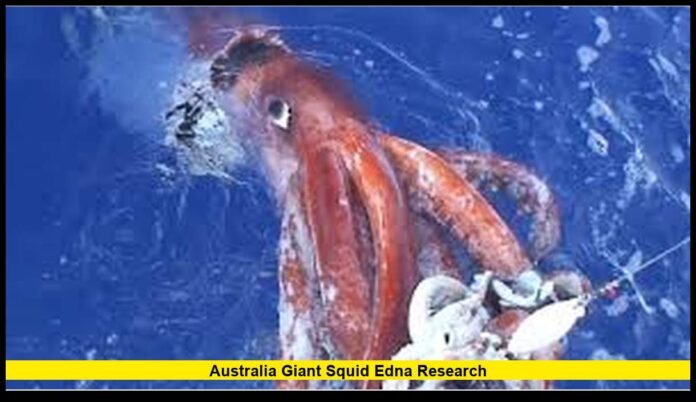

The remote underwater canyons off Western Australia have become the focus of worldwide scientific attention after groundbreaking australia giant squid edna research revealed genetic evidence of one of the ocean’s most mysterious creatures. Marine scientists studying deep waters near the Ningaloo region detected traces of giant squid DNA thousands of meters below the surface, offering an extraordinary glimpse into ecosystems that remain largely unexplored.
The discovery emerged from a large-scale expedition examining submarine canyons along Australia’s western coastline. Researchers used advanced environmental DNA technology to analyze seawater collected from extreme ocean depths, identifying hundreds of marine species, including the elusive giant squid.
Scientists say the findings mark a major step forward in deep-sea exploration and biodiversity mapping. The results also highlight how modern genetic science is transforming the way researchers study marine life hidden far beneath the ocean surface.
Interest in the project has rapidly spread beyond Australia because giant squid sightings remain exceptionally rare. For decades, these massive deep-sea creatures have fascinated scientists, filmmakers, and ocean enthusiasts around the world.
The latest research now suggests that the waters surrounding Western Australia may host far richer and more diverse ecosystems than previously understood.
Deep-Sea Expedition Explores Hidden Ocean Worlds
The expedition focused on the Cape Range and Cloates submarine canyons located near the Ningaloo coast in Western Australia. These underwater formations plunge into the deep Indian Ocean and create unique habitats for marine species adapted to life in darkness and crushing pressure.
Marine researchers collected more than a thousand seawater samples during the mission. Some samples came from depths exceeding 4,500 meters, where sunlight cannot penetrate and temperatures remain near freezing.
Instead of relying only on traditional methods such as underwater cameras and trawling equipment, scientists used environmental DNA analysis. This process allows researchers to detect animals by studying tiny traces of genetic material left behind in seawater.
Every marine animal releases biological material into the environment through skin cells, mucus, waste, or reproductive material. By sequencing that genetic information, researchers can determine which species recently occupied a specific area.
The technique has become increasingly important in marine science because many deep-sea animals rarely appear on camera and are difficult to physically capture.
During the analysis, researchers identified giant squid DNA in multiple water samples collected from both canyon systems.
Giant Squid Discovery Sparks Global Attention
The giant squid, known scientifically as Architeuthis dux, remains one of the least understood large animals on Earth. Despite centuries of legends and speculation, scientists still know surprisingly little about its behavior and life cycle.
The latest findings off Australia’s coast have generated excitement because direct encounters with giant squid remain incredibly uncommon. Most historical evidence of the species has come from carcasses washed ashore or remains recovered from the stomachs of sperm whales.
Marine experts involved in the expedition described the DNA discovery as highly significant because it confirms the species’ presence in deep Indian Ocean waters near Western Australia.
Researchers detected the genetic traces in six separate seawater samples, increasing confidence that giant squid inhabit the region rather than appearing accidentally through ocean currents.
Scientists believe the canyon systems provide suitable hunting grounds and shelter for deep-sea predators due to steep underwater terrain and nutrient-rich currents.
The discovery has renewed interest in understanding how giant squid move across global oceans and whether certain deep-water environments serve as long-term habitats.
Why Giant Squid Fascinate Scientists
Few marine animals inspire as much curiosity as giant squid.
Stories about massive tentacled creatures have existed for centuries in maritime folklore. Ancient sailors described giant monsters emerging from the sea, creating myths that eventually evolved into legends of the kraken.
Modern science later confirmed the existence of giant squid, but the species still remains deeply mysterious.
Adult giant squid can grow to extraordinary lengths, with some estimates placing females above 40 feet. Their enormous eyes, among the largest in the animal kingdom, help them navigate dark ocean depths where light barely exists.
Scientists believe giant squid spend much of their lives in mesopelagic and bathypelagic zones, regions far below the ocean surface where human observation is extremely difficult.
The first photographs of a live giant squid in its natural environment were captured only in the early 2000s. Even today, live footage remains extremely limited.
Researchers still debate many aspects of giant squid biology, including migration patterns, reproduction, growth rates, and lifespan.
That uncertainty makes every new discovery involving the species especially important for marine science.
Environmental DNA Is Transforming Marine Research
The australia giant squid edna research also demonstrates how environmental DNA methods are reshaping the future of ocean exploration.
Traditional marine surveys often require expensive submersibles, remotely operated vehicles, or fishing equipment. Even with advanced technology, scientists can spend weeks searching deep waters without seeing rare animals.
Environmental DNA changes that process dramatically.
Instead of waiting to visually encounter a species, researchers can identify marine life from water samples collected across large geographic areas.
This approach allows scientists to detect elusive animals that might otherwise remain invisible.
Environmental DNA technology has already been used to monitor whales, sharks, coral reef ecosystems, and freshwater species. However, its growing use in deep-sea research is opening entirely new possibilities for understanding biodiversity.
The Western Australia expedition showed how eDNA can reveal hidden ecological patterns in regions that have never been thoroughly explored.
Scientists say the technology is especially valuable because it reduces disturbance to fragile marine environments while still providing detailed biological information.
Hundreds of Species Found in Deep Waters
Although the giant squid attracted the most public attention, the expedition uncovered evidence of a remarkably diverse ecosystem.
Researchers identified 226 species belonging to 11 major animal groups throughout the canyon systems.
The findings included marine mammals, deep-sea fish, crustaceans, cephalopods, and other organisms rarely observed in the wild.
Species detected during the study included pygmy sperm whales, sleeper sharks, Dana octopus squid, giant hydroids, faceless cusk eels, and slender snaggletooths.
Some detected genetic signatures did not clearly match known species databases, suggesting additional undiscovered or poorly documented organisms may inhabit the region.
Scientists involved in the project noted that neighboring submarine canyons often hosted surprisingly different ecological communities despite being geographically close.
That discovery highlights how underwater topography can shape marine biodiversity in ways scientists are only beginning to understand.
The results also reinforce how little humanity currently knows about deep-ocean ecosystems.
Ningaloo’s Importance Extends Beyond Coral Reefs
The Ningaloo coast already holds international recognition for its vibrant coral reef ecosystems and whale shark migrations. However, the latest research indicates that the region’s deeper waters may be equally important from a scientific perspective.
Submarine canyons create unique oceanographic conditions that support diverse marine life. Steep underwater slopes can funnel nutrients upward from deep water, creating productive feeding grounds for predators and smaller organisms alike.
Researchers believe the Cape Range and Cloates canyons may function as biological hotspots within the eastern Indian Ocean.
Unlike shallow reef systems, these deep habitats remain largely unexplored because of the logistical challenges involved in studying them.
Scientists say additional expeditions will likely reveal even greater biodiversity in surrounding waters.
The research has already strengthened calls for continued deep-sea monitoring and long-term conservation planning.
Deep-Sea Ecosystems Face Growing Threats
Marine scientists warn that remote ocean environments are not immune to environmental pressures.
Climate change, warming oceans, industrial fishing activity, marine pollution, and future resource extraction projects could all affect fragile deep-water ecosystems.
One major challenge facing conservationists is the lack of detailed biodiversity data for deep-sea habitats.
Without understanding what species exist in these environments, it becomes far more difficult to protect them effectively.
Environmental DNA research offers a potential solution by allowing scientists to rapidly survey large marine areas and monitor ecological changes over time.
Researchers involved in the Australia expedition say the study provides an important baseline for future conservation efforts.
The ability to track biodiversity through seawater sampling may eventually help scientists identify population changes before major ecosystem disruptions occur.
The Deep Ocean Remains Largely Unexplored
Despite advances in technology, scientists estimate that most of the deep ocean remains unmapped and poorly studied.
The extreme conditions of the deep sea create major obstacles for exploration. Immense water pressure, freezing temperatures, darkness, and vast distances make research operations expensive and technically challenging.
As a result, researchers continue discovering new species during nearly every major deep-sea expedition.
Marine biologists believe countless organisms may still await discovery in underwater canyon systems, hydrothermal vents, abyssal plains, and trench environments around the world.
The recent findings near Western Australia reinforce how much remains hidden beneath the ocean surface.
For many scientists, the deep ocean represents one of the final frontiers of biological exploration on Earth.
Every new expedition contributes valuable knowledge about ecosystems that influence global climate systems, marine food chains, and biodiversity.
Technology Is Unlocking New Discoveries
The success of the expedition reflects how rapidly ocean science technology continues evolving.
Researchers increasingly combine environmental DNA analysis with advanced robotics, sonar mapping, artificial intelligence, and high-resolution imaging systems.
These tools allow scientists to investigate habitats that would have been nearly impossible to study only a generation ago.
Future expeditions near Western Australia are expected to expand genetic databases, improve species identification methods, and investigate how marine populations change over time.
Scientists hope additional surveys will provide more insight into giant squid distribution patterns and deep-sea ecological relationships.
Researchers also believe similar eDNA techniques could help identify biodiversity hotspots in other remote ocean regions worldwide.
The approach may eventually become a standard tool for marine conservation planning.
Public Fascination With Ocean Mysteries Continues Growing
The discovery has captured widespread public interest because giant squid remain symbols of the unknown ocean world.
Deep-sea creatures often fascinate audiences because they inhabit environments that feel almost alien compared with life on land.
The combination of advanced DNA science and mysterious marine animals creates a powerful story that appeals to both scientific communities and the general public.
Experts say discoveries like this remind people that Earth still contains many unexplored environments filled with hidden species and unanswered questions.
The ocean covers most of the planet, yet vast portions remain poorly understood.
That reality continues driving international interest in deep-sea research and exploration.
Future Expeditions Could Reveal Even More Species
Scientists involved in the project expect future missions to uncover additional rare marine life throughout the region.
Researchers plan to continue sampling waters surrounding submarine canyon systems while refining environmental DNA analysis techniques.
The growing use of genetic science may help researchers identify migration routes, feeding areas, and biodiversity changes across entire marine ecosystems.
Additional discoveries could reshape scientific understanding of deep-sea food webs and species interactions in the Indian Ocean.
Marine experts say the giant squid detection represents only one part of a much larger story unfolding beneath Australia’s coastal waters.
As technology improves and exploration expands, scientists expect more extraordinary discoveries to emerge from the deep ocean in coming years.
The findings serve as another reminder that even in the modern era, some of the world’s most remarkable creatures continue living beyond ordinary human observation.