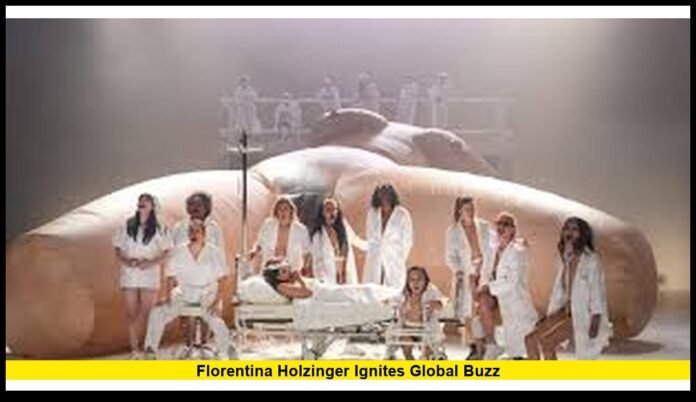

The international art scene is paying close attention to florentina holzinger as the Austrian choreographer and performance artist enters one of the biggest years of her career. Known for visually intense stage productions that combine dance, opera, theater, stunt work, and provocative imagery, Holzinger has become one of Europe’s most talked-about cultural figures. Her latest projects, including a major appearance at the Venice Biennale and several high-profile theater productions, are fueling global discussion across the contemporary arts community.
Critics, audiences, and festival organizers continue debating the impact of her work, but few artists working in live performance today generate the same level of attention. From daring stage spectacles to politically charged artistic themes, Holzinger’s productions consistently push conversations about the future of theater and performance art into new territory.
Her growing visibility also reflects a wider shift happening across international culture, where immersive and boundary-breaking live experiences are attracting younger audiences seeking something beyond traditional theater formats.
A Landmark Year for Holzinger
This year marks a major turning point in Holzinger’s international career. Her participation in the Venice Biennale has elevated her profile far beyond avant-garde theater circles and into the broader global contemporary art conversation.
Austria selected Holzinger to represent the country at the internationally renowned exhibition, a move that many arts observers viewed as both ambitious and symbolic. The Biennale is considered one of the world’s most influential art events, bringing together leading artists, curators, collectors, critics, and institutions from around the globe.
Her presentation, titled SEAWORLD VENICE, transforms the Austrian Pavilion into a live and evolving artistic environment rather than a static gallery installation. The project incorporates water imagery, physical choreography, environmental themes, and site-specific interventions connected to Venice’s unique geography and climate concerns.
Visitors entering the pavilion encounter a hybrid space that merges performance, visual art, installation design, and theatrical staging. Instead of focusing on conventional exhibition methods, Holzinger’s work places the human body at the center of the artistic experience.
The project also aligns with larger cultural discussions surrounding environmental vulnerability, climate anxiety, and humanity’s changing relationship with nature.
How Holzinger Built Her Reputation
Holzinger did not become a global arts figure overnight. Her rise came through years of challenging productions that rejected conventional expectations within dance and theater.
Originally trained in choreography, she developed a signature artistic style centered on physical endurance, feminist critique, ritualistic performance, and spectacle. Over time, her work expanded into larger multidisciplinary productions that blurred the line between opera, live art, experimental theater, and visual installation.
One reason her productions attract such strong reactions is their refusal to separate beauty from discomfort. Her performances often include physically demanding choreography, acrobatics, body-focused symbolism, blood imagery, and theatrical confrontations with themes like religion, gender expectations, aging, violence, and control.
Rather than presenting polished entertainment, Holzinger creates experiences designed to provoke emotional and intellectual responses.
For supporters, this makes her one of the most fearless contemporary artists working today. For critics, it raises difficult questions about artistic limits and audience boundaries.
That tension has become central to her growing international identity.
The Success of ‘A Year Without Summer’
One of Holzinger’s biggest recent achievements involves her production A Year Without Summer, which has continued gaining recognition at major European festivals.
The production draws inspiration from the historical climate disaster of 1816, when volcanic eruptions caused severe atmospheric disruption and widespread crop failures across parts of the world. Holzinger uses that historical framework to explore themes of ecological instability, bodily transformation, mortality, and society’s obsession with perfection.
The performance combines theatrical spectacle with satirical commentary and physically demanding choreography. Audiences encounter a world where environmental collapse and human ambition collide in visually overwhelming ways.
The production has earned praise for its ambition and scale. Many theater critics highlighted the way Holzinger balances humor, horror, music, athleticism, and political commentary within a single production.
The show’s selection for prestigious theater festivals further strengthened her reputation as one of Europe’s most influential experimental stage directors.
‘SANCTA’ Continues Generating Conversation
Holzinger’s opera-inspired production SANCTA remains another major focal point in discussions surrounding modern performance art.
The production reimagines Paul Hindemith’s early twentieth-century opera Sancta Susanna while transforming it into an intense contemporary theatrical experience. Holzinger mixes opera vocals, religious symbolism, feminist imagery, choreography, and extreme visual performance to create a production unlike traditional opera presentations.
The show gained widespread attention because of its graphic stage imagery and emotionally overwhelming sequences. Audience reactions became part of the public conversation surrounding the production, especially after reports emerged of viewers requiring assistance during certain performances.
Despite the controversy, SANCTA received major artistic recognition and continues attracting audiences across Europe.
Many supporters argue that the production critiques institutional control over women’s bodies, religious repression, and historical systems of authority. Others remain uncomfortable with the intensity of the imagery used throughout the performance.
Regardless of differing opinions, the production succeeded in placing Holzinger at the center of contemporary cultural debate.
A Different Kind of Performance Artist
Unlike many directors or choreographers working in contemporary theater, Holzinger approaches performance as an immersive physical event rather than a narrative-driven stage production alone.
Athletic endurance plays a major role in her work. Performers often execute physically risky movement while simultaneously engaging with dramatic storytelling and symbolic stage imagery.
This emphasis on bodily vulnerability creates a sense of immediacy that many audiences find both captivating and unsettling.
Her productions also frequently feature all-female ensembles performing synchronized acts that challenge stereotypes surrounding femininity, discipline, and spectacle.
By combining ballet-inspired choreography with circus techniques, heavy music influences, religious symbolism, and visual excess, Holzinger has created a style that feels instantly recognizable.
Her artistic world is chaotic, confrontational, theatrical, and visually unforgettable.
Why Younger Audiences Are Paying Attention
One major reason Holzinger’s popularity continues growing is her appeal to younger audiences interested in immersive and unconventional cultural experiences.
Traditional theater attendance has struggled in many markets, especially among younger generations seeking more interactive or visually dynamic forms of entertainment. Holzinger’s productions offer something radically different from standard stage productions.
Her work blends internet-age visual intensity with live physical performance. Scenes from her productions frequently circulate online because of their shocking imagery and large-scale theatrical design.
At the same time, the themes explored in her work resonate with broader social conversations involving feminism, identity, climate anxiety, body politics, and institutional power.
For many viewers, her productions feel connected to the emotional and political tensions shaping modern society.
The rise of immersive theater and experimental live experiences has also created new opportunities for artists like Holzinger to reach audiences outside traditional dance communities.
The Growing Influence of Live Art
Holzinger’s career reflects larger changes happening within contemporary art and performance culture.
In recent years, the boundaries separating theater, dance, opera, visual art, and installation work have become increasingly fluid. Major museums and international festivals now regularly present performance-based works alongside paintings, sculptures, and multimedia exhibitions.
This shift has helped elevate artists who specialize in live experience rather than static visual objects.
Holzinger stands out because her productions operate simultaneously on multiple levels. They function as choreography, political commentary, visual art, physical endurance performance, and immersive spectacle.
Her Venice Biennale presentation further demonstrates how performance art is gaining greater institutional recognition within the international art world.
For decades, live performance often occupied a more marginal position compared to traditional gallery-based art. That hierarchy appears to be changing rapidly.
International Festivals Continue Embracing Her Work
Festival programmers across Europe continue inviting Holzinger to headline major cultural events.
Her productions regularly appear at internationally respected venues known for supporting experimental work. This growing demand reflects both her artistic reputation and the increasing audience appetite for unconventional live experiences.
Large-scale productions like Ophelia’s Got Talent and TANZ previously established her reputation for blending satire, feminism, physical performance, and spectacle into visually explosive stage works.
Each new production seems to push her artistic scale further.
Rather than repeating earlier successes, Holzinger continuously introduces new themes and visual concepts that challenge audience expectations.
This ability to evolve creatively while maintaining a recognizable artistic identity has become one of her greatest strengths.
The Role of Shock in Contemporary Art
A major part of the public conversation surrounding Holzinger involves the role of provocation in modern art.
Some critics argue that contemporary culture has become desensitized and that artists increasingly rely on shock value to gain attention. Others believe confrontation remains an essential artistic tool for challenging social norms and encouraging deeper reflection.
Holzinger’s work sits directly within that debate.
Her productions intentionally provoke strong emotional reactions. Yet beneath the spectacle lies a consistent focus on institutional power, bodily autonomy, vulnerability, gender politics, and collective identity.
For supporters, the intensity of her work forces audiences to confront uncomfortable truths that traditional theater often avoids.
Even people who dislike her productions frequently acknowledge the originality and ambition behind them.
That combination of admiration, discomfort, fascination, and controversy keeps her work at the center of international cultural discussion.
What Could Come Next
With her Venice Biennale project continuing through the year and several productions still touring internationally, Holzinger’s influence appears likely to keep expanding.
Industry insiders increasingly view her as one of the defining performance artists of her generation. Her crossover into gallery culture and large-scale visual art institutions could further increase her global profile in the coming years.
There is also growing interest in how her work may influence younger choreographers and theater creators. Many emerging artists already draw inspiration from her combination of physicality, spectacle, political critique, and interdisciplinary staging.
As audience expectations continue evolving, Holzinger’s style of immersive and confrontational live art may become even more influential across contemporary theater and performance culture.
For now, she remains one of the most unpredictable and widely discussed figures in international art.
Whether audiences leave inspired, shocked, emotionally exhausted, or deeply divided, her productions rarely leave anyone indifferent.
That ability to command attention in an increasingly crowded cultural landscape is part of what makes her work impossible to ignore.
In a world where countless performances compete for visibility every day, Holzinger continues creating theatrical experiences that audiences remember long after the curtain falls.