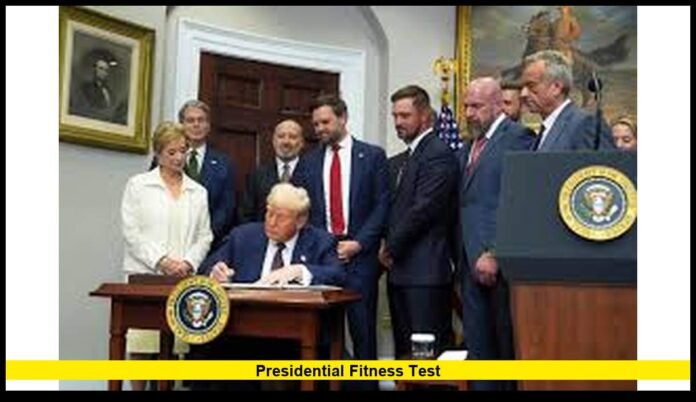

The presidential fitness test has returned to the center of national debate as Donald Trump, now 79, calls for stronger physical standards across the United States, renewing attention on how schools measure student fitness and overall health.
The renewed focus reflects growing concern about declining activity levels among young Americans. It also highlights a broader cultural shift toward accountability in education and wellness. While no federal policy has reinstated the test, discussions have accelerated across political, educational, and public health circles.
A Look Back at the Presidential Fitness Test
The presidential fitness test played a major role in American schools for decades. It served as a structured way to measure student fitness using clear benchmarks.
The program began under Dwight D. Eisenhower in the 1950s. At that time, leaders expressed concern that American youth were falling behind their international peers in physical readiness.
The test became a symbol of discipline and national strength. It was later expanded under several administrations and remained a standard part of physical education for generations.
Students typically completed a set of exercises designed to evaluate different aspects of fitness:
- Push-ups to measure upper body strength
- Sit-ups to assess core endurance
- Pull-ups or arm hang for strength and control
- Sit-and-reach to test flexibility
- A timed mile run to evaluate cardiovascular endurance
Those who achieved top scores received national recognition. For many students, earning that distinction became a memorable goal.
Why the Program Changed in 2012
In 2012, the federal government shifted away from the traditional testing model. Under Barack Obama, schools adopted a new system focused on health rather than competition.
This updated approach aimed to create a more inclusive environment. It emphasized personal improvement instead of comparing students against each other.
Several factors led to the change:
- Concerns that strict benchmarks discouraged participation
- A desire to reduce stress and embarrassment among students
- Growing awareness of mental health in school settings
- A push to promote lifelong fitness habits instead of short-term performance
The revised program encouraged students to track their own progress. It also gave teachers flexibility in how they approached physical education.
Trump’s Renewed Emphasis on Fitness
Now, the conversation has shifted again. Donald Trump has publicly highlighted the importance of physical strength and discipline, urging a stronger national focus on measurable fitness.
His stance reflects a belief that structured standards can help improve overall health outcomes. He has pointed to concerns about inactivity and declining physical readiness among younger generations.
The message has gained traction among supporters who see fitness as a key part of education. They argue that clear goals and measurable results can motivate students and improve accountability.
At the same time, critics remain cautious. They warn that returning to older models may reintroduce pressure that schools have worked to reduce.
Current Policy Status in the United States
Despite the renewed attention, the presidential fitness test has not been officially reinstated at the federal level.
Instead, the current system remains in place across many schools. This program focuses on health-based metrics rather than competitive scoring.
However, several developments show that the issue is far from settled:
- State education agencies are reviewing physical education standards
- Some districts are considering updated fitness assessments
- Public debate is influencing policy discussions
The lack of a single national standard has led to varied approaches across the country.
Why Youth Fitness Is a Growing Concern
The renewed discussion is rooted in real challenges.
Across the United States, many students are not meeting recommended levels of physical activity. Schools have reduced time dedicated to physical education in some areas, while screen time continues to increase.
Key concerns include:
- Lower daily activity levels among children and teens
- Increased sedentary behavior due to digital devices
- Rising rates of obesity and related health conditions
Health professionals emphasize that early habits often carry into adulthood. This makes school-based fitness programs especially important.
How Schools Are Adapting Today
Even without a federal mandate, schools are evolving their physical education programs.
Many districts now focus on creating a more engaging and flexible environment. Teachers aim to encourage participation from all students, regardless of skill level.
Common approaches include:
- Fitness tracking tools that help students monitor progress
- Activities beyond traditional sports, such as yoga or dance
- Personalized fitness goals tailored to individual abilities
- Programs that connect physical health with mental well-being
These changes reflect a broader shift in how educators view student wellness.
Support for Bringing Back Structured Testing
Supporters of reinstating the presidential fitness test argue that measurable standards are necessary.
They believe structured testing provides clarity and direction. It also allows schools to track progress in a consistent way.
Key arguments in favor include:
- Clear expectations help students understand fitness goals
- National benchmarks create consistency across states
- Recognition programs can motivate participation
- Data collection helps identify areas for improvement
Many supporters also see fitness as part of overall discipline and character development.
Concerns About Returning to the Old Model
Opponents raise several concerns about bringing back a performance-based system.
They argue that strict benchmarks may not reflect individual differences. Some students may feel discouraged if they struggle to meet certain standards.
Common concerns include:
- Increased anxiety during testing
- Risk of embarrassment for less athletic students
- Limited flexibility in measuring diverse abilities
- Overemphasis on performance rather than health
Education experts stress the importance of creating a supportive environment where all students can succeed.
The Role of Parents and Communities
Parents play a key role in shaping children’s fitness habits.
As schools evaluate their programs, families are encouraged to support active lifestyles at home.
Simple steps can make a difference:
- Encouraging outdoor play and physical activity
- Limiting screen time
- Promoting balanced routines that include exercise
- Participating in family fitness activities
Community programs and local initiatives also contribute to improving youth fitness.
Read Also – Trump Senate Housing Bill Objection
Comparing Past and Present Approaches
The debate often centers on the differences between traditional testing and modern programs.
Traditional Model:
- Focused on performance and rankings
- Used standardized benchmarks
- Offered national recognition for top performers
Modern Approach:
- Focuses on personal improvement
- Encourages inclusivity and participation
- Emphasizes long-term health habits
Both systems aim to improve fitness, but they take different paths to achieve that goal.
The Broader National Conversation
The renewed attention to fitness reflects a larger national conversation about health and education.
Americans are increasingly aware of the connection between physical activity and overall well-being. Schools are seen as a key place to address these challenges.
The discussion also touches on broader themes:
- The role of schools in shaping lifelong habits
- The balance between standards and inclusivity
- The importance of measurable outcomes in education
These issues extend beyond physical education and influence policy decisions in multiple areas.
What Could Happen Next
The future of the presidential fitness test remains uncertain, but momentum around the issue is building.
Several factors will shape what happens next:
- Policy discussions at the federal and state levels
- Feedback from educators and health professionals
- Public opinion and community involvement
- Ongoing evaluation of student health data
Changes may come gradually, with schools testing new approaches before adopting broader policies.
Why This Debate Matters
The conversation about fitness testing goes beyond exercise routines. It reflects how the nation prepares its youth for the future.
Physical health affects academic performance, mental well-being, and long-term quality of life. Schools play a central role in shaping these outcomes.
The challenge is finding a system that balances structure with support. Students need clear goals, but they also need encouragement and flexibility.
Key Takeaways
- The presidential fitness test is not currently required nationwide
- Discussions about reinstating structured testing are increasing
- Youth fitness remains a major concern in the United States
- Schools are adapting programs to promote health and participation
- The debate highlights the balance between performance and inclusivity
Final Thoughts
The presidential fitness test has once again become a focal point in the national conversation about health, education, and accountability. As leaders, educators, and families weigh the benefits and challenges of structured fitness standards, the outcome will shape how millions of students experience physical education in the years ahead.
Do you think structured fitness testing should return to schools, or should the focus remain on personal health goals? Share your perspective and stay engaged as this national discussion continues to evolve.