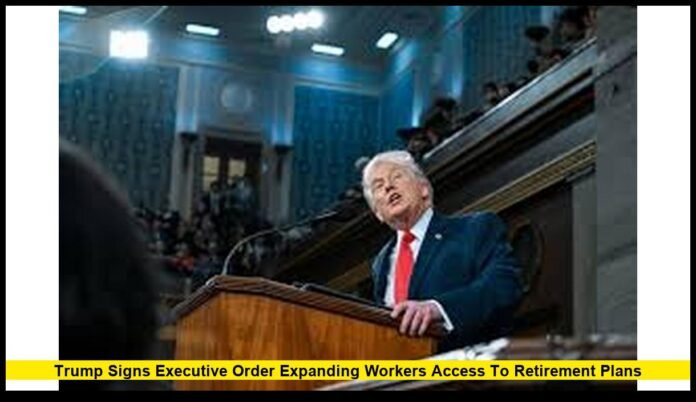

Trump signs executive order expanding workers access to retirement plans, introducing a major federal initiative designed to reshape how Americans save for retirement. The order focuses on widening access to employer-sponsored plans, especially for workers who have historically been excluded, while also reducing the burden on businesses that want to offer these benefits.
Signed by Donald Trump, the directive reflects a continued push to strengthen long-term financial security across the U.S. workforce. It aims to close persistent gaps in retirement access by encouraging innovation, simplifying plan structures, and promoting participation among both employers and employees.
A Turning Point for Retirement Access
Retirement savings in the United States have long been uneven. Millions of workers still lack access to employer-sponsored retirement plans such as 401(k)s. This gap affects employees in small businesses, part-time roles, and industries with high turnover.
The executive order directly addresses these challenges by:
- Encouraging broader plan availability
- Making it easier for businesses to participate
- Promoting consistent savings habits
- Supporting modern workforce trends
By focusing on access and usability, the policy aims to ensure more Americans can build retirement savings over time.
Key Provisions of the Executive Order
The order outlines several actionable steps to expand retirement plan participation nationwide. These measures are designed to remove structural barriers while maintaining flexibility for employers.
1. Expansion of Multiple Employer Plans (MEPs)
Multiple Employer Plans allow unrelated businesses to join a single retirement plan. This structure reduces costs and simplifies administration.
Key benefits include:
- Shared administrative responsibilities
- Lower overall costs
- Access to professional management
- Reduced compliance complexity
This provision is expected to be especially valuable for small and mid-sized businesses.
2. Simplified Compliance for Employers
Compliance has been a major obstacle for businesses considering retirement plans. The executive order seeks to reduce these hurdles.
Changes include:
- Streamlined reporting requirements
- Clearer regulatory guidance
- Reduced fiduciary risk concerns
These adjustments make it easier for employers to offer plans without navigating complex rules.
3. Promotion of Automatic Enrollment
Automatic enrollment is one of the most effective ways to increase participation in retirement plans. The order encourages employers to adopt this feature.
With automatic enrollment:
- Employees are enrolled by default
- Contributions begin immediately
- Workers can opt out if they choose
This approach removes inertia and helps workers start saving earlier in their careers.
4. Improved Portability of Retirement Accounts
Job mobility has increased significantly in recent years. Workers often change employers multiple times, which can disrupt retirement savings.
The executive order supports:
- Easier rollovers between plans
- Faster transfer processes
- Consolidation of accounts
These changes help workers maintain continuous savings regardless of career moves.
Why This Policy Matters Now
The timing of this executive order is important. Economic conditions, workforce shifts, and rising living costs have made retirement planning more complex.
Several factors highlight the need for reform:
- Increased life expectancy requires larger savings
- Social Security alone may not cover retirement needs
- Many workers delay saving due to lack of access
- Small businesses employ a large share of the workforce
By addressing these issues, the policy aims to create a more inclusive retirement system.
Impact on American Workers
For employees, the executive order has the potential to significantly improve access to retirement savings tools.
Broader Access
Workers who previously had no access to employer-sponsored plans may now gain opportunities through shared plans and simplified offerings.
Higher Participation Rates
Automatic enrollment and streamlined processes are expected to increase participation across all income levels.
Improved Financial Stability
Consistent contributions over time can lead to stronger retirement outcomes and reduced financial stress later in life.
Impact on Employers
Employers play a critical role in retirement savings. The executive order provides incentives and support to encourage broader participation.
Reduced Costs
Shared plans and simplified compliance reduce financial barriers for businesses.
Enhanced Competitiveness
Offering retirement benefits helps businesses attract and retain talent.
Operational Simplicity
Clear guidelines and reduced administrative requirements make plan management more manageable.
Focus on Small and Mid-Sized Businesses
Small businesses are central to the success of this initiative. Many have avoided offering retirement plans due to cost and complexity.
The executive order addresses these concerns by:
- Allowing businesses to pool resources
- Lowering administrative expenses
- Providing access to professional plan management
This could lead to a significant increase in the number of businesses offering retirement benefits.
Economic Benefits of Expanded Retirement Access
Expanding access to retirement plans can have far-reaching economic effects.
Increased Savings Rates
More workers contributing to retirement accounts leads to higher national savings levels.
Reduced Public Assistance Needs
Financially secure retirees are less likely to rely on government programs.
Stronger Financial Markets
Retirement contributions support long-term investment and economic growth.
Comparison with Previous Approaches
While retirement reform has been a focus for years, this executive order introduces a more targeted approach to accessibility.
| Area | Earlier Approach | Current Direction |
|---|---|---|
| Employer Participation | Limited incentives | Expanded support and flexibility |
| Plan Access | Uneven availability | Broader nationwide access |
| Enrollment | Voluntary emphasis | Strong encouragement of automatic enrollment |
| Portability | Basic systems | Improved transfer and consolidation |
These updates reflect a shift toward practical solutions that address real-world challenges.
How the Policy Supports Modern Work Trends
The American workforce has changed significantly. More people work in non-traditional roles, including gig work and part-time employment.
The executive order aligns with these trends by:
- Supporting flexible plan structures
- Encouraging portability across jobs
- Making retirement savings accessible regardless of employment type
This approach ensures that retirement planning keeps pace with evolving work patterns.
What Workers Should Expect Next
As the policy takes effect, workers may begin to notice changes in their workplace benefits.
Possible developments include:
- New retirement plan offerings
- Automatic enrollment notifications
- Updated contribution options
- Easier account management tools
Employees should review these options carefully and take advantage of available benefits.
What Employers Should Do
Businesses should take proactive steps to evaluate how the executive order impacts their operations.
Recommended actions:
- Assess eligibility for multiple employer plans
- Explore cost-saving opportunities
- Consult with retirement plan providers
- Communicate changes clearly to employees
Early adoption can provide both financial and competitive advantages.
Challenges and Considerations
While the executive order offers many benefits, successful implementation will require careful attention.
Key challenges include:
- Educating employers about new options
- Ensuring workers understand participation benefits
- Monitoring compliance across industries
- Addressing gaps in awareness
Ongoing engagement from both the public and private sectors will be essential.
Long-Term Outlook for Retirement Security
The executive order represents a significant step toward improving retirement outcomes in the United States. By focusing on access, simplicity, and participation, it aims to create lasting change.
If widely adopted, the policy could:
- Expand retirement coverage to millions of workers
- Increase long-term savings rates
- Strengthen financial independence among retirees
The long-term success of this initiative will depend on consistent implementation and continued support.
Conclusion
The decision as Trump signs executive order expanding workers access to retirement plans signals a major effort to strengthen retirement security across the country. By removing barriers, encouraging participation, and supporting employers, the policy aims to create a more inclusive and effective retirement system.
What do you think about these changes? Share your thoughts and stay informed as this policy continues to shape the future of retirement in America.