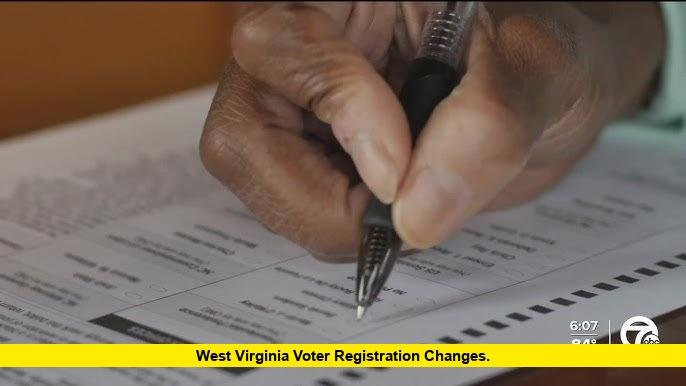

West Virginia has made significant changes to its voter registration and voting laws. Whether you are a first-time voter, a long-time resident, or someone who recently moved within the state, understanding these updates is essential before you head to the polls. This guide breaks down everything you need to know about West Virginia voter registration changes, new photo ID requirements, closed primaries, and upcoming election deadlines.
The Biggest Change: Stricter Photo ID Requirements
The most important update West Virginia voters need to be aware of is the new photo identification law. On April 30, 2025, Governor Patrick Morrisey signed House Bill 3016 into law, requiring voters to present photo identification to vote in person. Previously, voters were permitted to use non-photo forms of identification such as utility bills and Medicaid cards — those options have now been eliminated.
Accepted Forms of Photo ID in West Virginia
The following forms of identification are now accepted at West Virginia polling places:
- A valid West Virginia driver’s license or state-issued ID
- A driver’s license from another state
- A U.S. passport or passport card
- An employee ID with a photo issued by local, state, or federal government
- A student ID with a photo from a WV institution of higher education or a WV high school
- A U.S. military ID with a photo
- A voter registration card with a photo issued by a WV county clerk or the WV Secretary of State
Free Photo Voter Registration Cards
If you do not currently have any of the accepted forms of ID, you are not out of options. West Virginia voters can obtain a free photo voter registration card directly from their county clerk’s office at no charge. Advocates encourage voters to act early and request this card well in advance of Election Day.
Exceptions to the Photo ID Requirement
Voters 65 years of age or older may use an expired ID, including an expired driver’s license, provided it was valid on their 65th birthday. Additionally, a registered voter may be accompanied at the polling place by an adult who has personally known the voter for at least six months. That adult can sign a sworn affidavit confirming the voter’s identity.
Anyone who arrives at the polls without a valid photo ID can still cast a provisional ballot after signing an affidavit confirming their identity. That provisional ballot will then be reviewed during the official canvass.
Republican Party Closes Its Primary
Another significant change for West Virginia voters involves the Republican Party primary. For the first time since the mid-1980s, the West Virginia Republican Party has closed its primary. This means only voters who are registered as Republican can participate in the Republican primary election.
If you are an independent or unaffiliated voter who wishes to vote in the Republican primary, you must re-register as a Republican before the voter registration deadline. The Democratic Party currently holds a semi-closed primary, meaning unaffiliated voters may still participate on that side.
West Virginia Voter Registration: How It Works
Eligibility Requirements
To register to vote in West Virginia, you must:
- Be a U.S. citizen
- Be a resident of West Virginia and the county where you are registering
- Be at least 17 years old and turning 18 before the next general election
- Not currently be serving a sentence, probation, or parole following a conviction for a felony, treason, or election bribery
- Not have been declared mentally incompetent by a court of competent jurisdiction
Registration Deadlines
West Virginia requires voters to register at least 21 days before Election Day. This deadline applies whether you register online, by mail, or in person. Always verify the exact date for each specific election at the West Virginia Secretary of State’s website.
Ways to Register
You can register to vote in West Virginia through several methods:
- Online at the West Virginia Secretary of State’s official online voter registration portal (requires a WV driver’s license or DMV-issued ID)
- By mail using the state registration form or the National Mail Voter Registration Form (must be postmarked 21 days before Election Day)
- In person at your county clerk’s office, the Secretary of State’s office, the Department of Motor Vehicles, any public assistance office, any agency serving people with disabilities, any marriage license office, or a military recruiting agency
Voter Registration Maintenance: What Could Cancel Your Registration
West Virginia actively maintains its voter rolls. Under amendments that took effect January 1, 2025, county clerks are required to cancel registrations of voters who are no longer West Virginia residents and have obtained a driver’s license in another state, based on information shared by the Division of Motor Vehicles.
Voters who have been placed on the inactive list and fail to respond to confirmation notices, update their registration, or vote in any election over a defined period may also have their registrations canceled.
If you have recently moved, changed your name, or have not voted in several years, it is strongly recommended that you verify your registration status through the West Virginia Secretary of State’s website before the next election.
Absentee Voting in West Virginia
West Virginia offers absentee voting for eligible residents. If you have voted in the state before, registered in person, or provided ID at the time of registration, you generally do not need to provide additional ID to vote by mail.
If you are voting in West Virginia for the first time, registered by mail, and did not provide ID during registration, you must include a copy of an acceptable photo ID or a document such as a utility bill, bank statement, government check, or paycheck showing your name and address when returning your ballot.
Polling Place Hours and Workplace Voting Rights
Polls in West Virginia are open from 6:30 AM to 7:30 PM on Election Day. Any voter who is standing in line when polls close must still be permitted to vote.
West Virginia law also requires that private and public employers provide employees with paid time off to vote, unless the employee already has three or more hours of non-work time available during polling hours, or unless the employee fails to actually vote after being given the time.
What Critics and Supporters Are Saying
The new changes have generated debate across the state. Opponents of House Bill 3016 argue that the stricter photo ID requirement creates unnecessary barriers, particularly for elderly West Virginians, people with disabilities, and those without access to transportation or the internet. The League of Women Voters of West Virginia has been actively educating residents about the new requirements, urging voters who lack acceptable ID to visit their county clerk’s office as soon as possible.
Supporters of the law argue that it strengthens election security and instills public confidence in the voting process. Governor Morrisey described the legislation as commonsense and said it secures West Virginia elections. Republicans in the Legislature argued that the photo voter registration card — available free through county clerks — removes any practical barrier for voters.
Similarly, the closure of the Republican primary has drawn criticism from Democratic lawmakers and party leaders, who argue it discourages participation, while Republican Party leadership says it reflects the party’s right to determine its own primary process.
Key Takeaways for West Virginia Voters
- You now need a photo ID to vote in person — utility bills and Medicaid cards are no longer accepted.
- Free photo voter registration cards are available at your county clerk’s office.
- The Republican primary is now closed — unaffiliated voters must re-register as Republican before the deadline to participate.
- The voter registration deadline is 21 days before Election Day.
- Regularly check your registration status at sos.wv.gov to ensure it has not been canceled.
- Polls are open from 6:30 AM to 7:30 PM on Election Day.
Staying informed is the best way to protect your right to vote. If you have questions about your registration, accepted ID, or polling location, contact your local county clerk’s office directly.