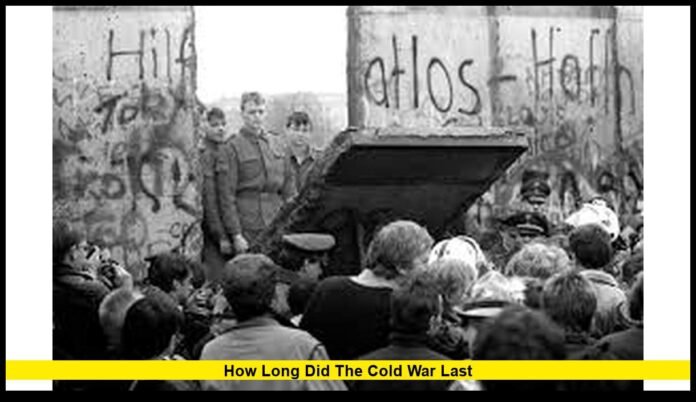

The question how long did the cold war last remains one of the most searched topics in modern history, especially as global tensions continue to evolve in 2026. The Cold War spanned from 1947 to 1991, lasting roughly 44 years and defining an era marked by political rivalry, military competition, and ideological conflict between the United States and the Soviet Union.
This period was not a traditional war fought on battlefields between the two superpowers. Instead, it was a prolonged struggle for global influence that shaped economies, governments, and everyday life across the world. Its impact continues to influence U.S. foreign policy, defense strategies, and international relations today.
If you want to understand why today’s global landscape looks the way it does, you need to understand the Cold War. Keep reading to explore its full timeline, major turning points, and lasting consequences.
The Beginning: Tensions After World War II
The roots of the Cold War can be traced back to the end of World War II in 1945. The United States and the Soviet Union emerged as the two dominant global powers, but their visions for the world were fundamentally different.
The United States promoted democracy, capitalism, and open markets. The Soviet Union supported communism, state control of the economy, and one-party rule. These opposing ideologies quickly created friction.
By 1947, tensions had escalated to the point where the United States adopted a formal policy aimed at limiting the spread of communism. This marked the widely accepted starting point of the Cold War.
Why It Lasted So Long
One of the most striking aspects of the Cold War is its duration. Unlike conventional wars that end after decisive battles, this conflict continued for over four decades because it was driven by ideology and global influence rather than territorial conquest.
Several factors contributed to its longevity:
- Both sides possessed nuclear weapons, creating a balance of power
- Direct conflict risked catastrophic consequences
- Each side sought to expand influence through indirect means
- Political systems on both sides reinforced long-term rivalry
This created a situation where neither side could easily defeat the other, leading to a prolonged standoff.
Key Phases of the Cold War Timeline
Early Cold War (1947–1953)
The initial phase was marked by rising tensions and the establishment of opposing alliances. The United States formed military partnerships, while the Soviet Union tightened control over Eastern Europe.
This period also saw the first major proxy conflict in Korea, where communist and non-communist forces clashed.
Heightened Tensions (1953–1962)
During this phase, both superpowers expanded their nuclear arsenals and competed for global influence. The Space Race began, symbolizing technological rivalry.
The Cuban Missile Crisis in 1962 became the most dangerous moment of the Cold War, bringing the world close to nuclear conflict. It demonstrated just how high the stakes had become.
Détente and Rivalry (1963–1979)
After the near disaster of 1962, both sides took steps to reduce tensions. This period, known as détente, included arms control agreements and improved communication.
However, competition continued through proxy wars and political maneuvering, especially in Southeast Asia and other regions.
Renewed Tensions (1979–1985)
The late 1970s and early 1980s saw a return to heightened rivalry. Military spending increased, and relations between the United States and the Soviet Union became strained once again.
This phase included renewed emphasis on nuclear strength and strategic dominance.
The Final Years (1985–1991)
The final stage of the Cold War brought significant change. Economic difficulties within the Soviet Union and political reforms led to a gradual easing of tensions.
Eastern European countries began to move away from Soviet control, and symbolic events signaled the weakening of the divide between East and West.
In 1991, the Soviet Union dissolved, marking the official end of the Cold War.
Major Events That Defined the Cold War
Throughout its long duration, several key events shaped the direction of the Cold War and influenced global politics.
The Berlin Airlift
One of the first major confrontations occurred when access to West Berlin was blocked. In response, a massive airlift operation supplied the city, demonstrating U.S. commitment to its allies.
The Korean War
This conflict became the first large-scale proxy war of the Cold War. It ended in a stalemate, but it reinforced divisions between communist and non-communist regions.
The Cuban Missile Crisis
This moment brought the world to the brink of nuclear war. It remains one of the most intense confrontations in modern history.
The Vietnam War
A prolonged and controversial conflict that deeply affected American society and politics, highlighting the global reach of the Cold War.
The Fall of the Berlin Wall
In 1989, the collapse of this physical and symbolic barrier signaled the approaching end of the Cold War and the decline of Soviet influence.
Life in America During the Cold War
For Americans, the Cold War was not just an abstract geopolitical struggle. It shaped daily life in noticeable ways.
Everyday Effects
- School drills preparing for nuclear emergencies
- Increased government focus on national security
- Expansion of military and defense industries
- Cultural influence through media, film, and education
The constant awareness of potential conflict created a unique atmosphere of caution and patriotism.
The Role of Technology and Innovation
The Cold War fueled rapid technological progress, particularly in areas tied to national security and competition.
Key Developments
- Space exploration advancements
- Early computing technologies
- Satellite communication systems
- Military innovations
The Space Race, in particular, captured public imagination and led to breakthroughs that continue to impact everyday life today.
How Long Did the Cold War Last in Historical Context
Revisiting the question how long did the cold war last helps put its significance into perspective. At approximately 44 years, it far exceeded the duration of most modern conflicts.
This extended timeline allowed it to influence multiple generations, shaping political thought, economic systems, and global alliances over decades.
Its long duration also meant that its effects did not disappear quickly after it ended. Instead, they continue to influence current events and international relations.
Why the Cold War Ended
The end of the Cold War was not caused by a single event but rather a combination of factors that unfolded over time.
Key Reasons
- Economic strain within the Soviet Union
- Political reforms that reduced centralized control
- Growing independence movements in Eastern Europe
- Increased diplomatic engagement between superpowers
These developments gradually reduced tensions and led to a peaceful conclusion of the conflict.
Lasting Impact on the United States
Even decades after its conclusion, the Cold War continues to shape American policy and global strategy.
Ongoing Influence
- Strong emphasis on national defense
- Continued leadership in global alliances
- Strategic approach to international diplomacy
- Focus on technological advancement
The lessons learned during this period remain relevant as the United States navigates modern geopolitical challenges.
The Cold War’s Global Legacy
The Cold War reshaped the global order in ways that are still visible today. It influenced borders, governments, and economic systems across multiple continents.
Many current international relationships and conflicts can be traced back to decisions made during this era. Understanding its timeline provides valuable insight into today’s world.
Final Thoughts
The Cold War lasted from 1947 to 1991, spanning more than four decades of sustained tension and competition between two superpowers. It was a conflict defined by strategy, influence, and ideology rather than direct warfare.
Its legacy continues to shape global politics, technological progress, and international relations in 2026 and beyond.
What do you think is the most lasting impact of the Cold War on today’s world? Share your thoughts and keep exploring the history that still shapes our future.