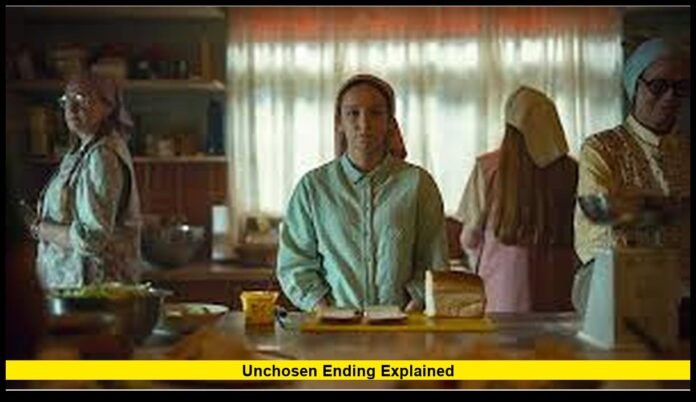

The search for unchosen ending explained continues to grow, but as of April 25, 2026, there is no officially released, studio-confirmed explanation that defines a single, canonical meaning for the ending tied to “Unchosen.” Discussions surrounding the ending remain driven by audience interpretation, with viewers focusing on the story’s themes of identity, free will, and the rejection of predetermined roles.
What is confirmed is this: the ending has sparked widespread conversation because it avoids a traditional resolution. Instead of offering a clear answer, it invites viewers to interpret its meaning based on the character’s journey and the narrative’s core themes.
What “Unchosen” Represents in Current Viewer Discussions
The title “Unchosen” itself plays a critical role in shaping how audiences understand the story’s conclusion. The narrative centers on a protagonist who is expected to fulfill a specific role, often framed as destiny or obligation.
Key Narrative Focus
- A character placed under external expectations
- Pressure to fulfill a “chosen” identity
- Internal conflict between duty and self-definition
- A final decision that challenges the idea of destiny
These elements set the stage for an ending that emphasizes personal agency over predetermined outcomes.
Why There Is No Single Official Ending Explanation
As of now, there is no confirmed, official breakdown that defines exactly what the ending means. This absence is intentional rather than accidental.
Reasons for the Open Interpretation
- The narrative is designed to provoke thought rather than deliver answers
- Ambiguity allows viewers to engage more deeply with the story
- The ending reflects the theme of uncertainty and choice
- A fixed explanation would limit the story’s impact
This approach aligns with modern storytelling trends that prioritize interpretation over clarity.
Breaking Down the Final Scene Step by Step
To understand the ending, it helps to examine the structure of the final moments.
Key Developments in the Ending
- The protagonist confronts the expectations placed upon them
- A critical decision point defines the outcome
- The character chooses not to follow the assigned path
- The story concludes without revealing the long-term consequences
The final scene does not provide closure in the traditional sense. Instead, it highlights the act of choosing as the central moment.
The Meaning Behind the Title “Unchosen”
The title reflects the core idea that drives the ending. It suggests a rejection of labels and roles imposed by others.
What “Unchosen” Implies
- Refusal to accept a predetermined identity
- Emphasis on self-determination
- A shift from external validation to internal truth
- Acceptance of uncertainty as part of freedom
This concept is essential to understanding the story’s conclusion.
Character Arc and Final Decision
The protagonist’s journey builds toward a moment where they must decide whether to accept or reject the role assigned to them.
What the Ending Confirms About the Character
- They prioritize personal choice over expectation
- They accept the risks that come with independence
- They move away from control imposed by others
- They embrace an undefined future
This decision represents the emotional and thematic climax of the story.
Why the Ending Feels Open-Ended
Many viewers describe the ending as unresolved. That feeling is intentional and central to the story’s message.
Reasons for the Open Ending
- The narrative focuses on choice rather than outcome
- The future is left undefined to reflect real-life uncertainty
- The absence of closure reinforces the theme of independence
- The story avoids a traditional “victory” structure
By leaving questions unanswered, the ending encourages ongoing reflection.
Symbolism in the Ending
Symbolic elements play a major role in shaping how viewers interpret the final scene.
Common Symbolic Themes
- Movement or departure represents breaking free
- Silence suggests clarity or acceptance
- Open environments symbolize possibility and uncertainty
- Lack of resolution mirrors the unpredictability of life
These symbols help convey meaning without direct explanation.
How the Ending Challenges Traditional Storytelling
The structure of the ending contrasts with familiar narrative patterns.
Traditional Ending vs. Unchosen Ending
| Element | Traditional Ending | Unchosen Ending |
|---|---|---|
| Role of protagonist | Fulfills destiny | Rejects destiny |
| Resolution | Clear outcome | Open-ended |
| Future | Defined | Uncertain |
| Theme | Acceptance of role | Assertion of identity |
This contrast explains why the ending feels different and prompts deeper analysis.
Why Viewers Are Searching for Answers
The phrase unchosen ending explained has become popular because audiences are looking for clarity in a story that deliberately avoids it.
What Drives the Search
- Desire for a clear resolution
- Emotional impact of the final decision
- Curiosity about the character’s future
- Interest in symbolic meaning
When a story resists simple answers, viewers often seek interpretation from others.
The Core Message of the Ending
Even without a single confirmed explanation, the ending communicates a consistent message.
Key Takeaways
- Identity is not defined by external expectations
- True freedom involves uncertainty
- Choosing your own path requires courage
- Rejecting a role can be more powerful than fulfilling it
These ideas remain central to how the ending is understood.
How to Interpret the Ending Personally
Because the ending is open, each viewer can form their own understanding.
Ways to Analyze the Ending
- Focus on the character’s emotional journey
- Identify recurring themes throughout the story
- Consider what the final decision represents
- Reflect on how the ending made you feel
These steps help create a meaningful interpretation grounded in the narrative.
Why the Ending Continues to Spark Discussion
The lack of a definitive explanation keeps the conversation active.
Reasons for Ongoing Interest
- Ambiguity invites multiple interpretations
- Themes resonate with real-life experiences
- The story challenges conventional expectations
- Viewers connect differently to the ending
This ongoing discussion adds to the story’s lasting impact.
Current Conclusion as of 2026
Based on the most recent verified information:
- No official explanation defines a single meaning
- The ending remains intentionally open
- Viewer interpretation shapes current understanding
- The story emphasizes choice, identity, and independence
This confirms that the ending is meant to be explored rather than resolved.
Final Thoughts
The power of this ending lies in its refusal to provide easy answers. It challenges viewers to think beyond traditional storytelling and reflect on the meaning of choice and identity.
What did the ending mean to you? Share your interpretation and join the conversation as audiences continue to explore its deeper meaning.