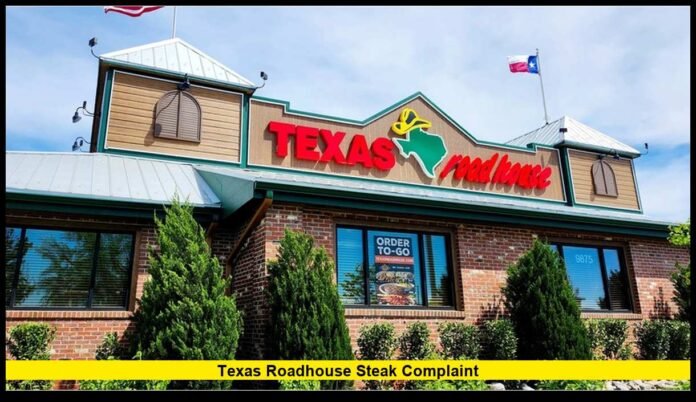

The Texas Roadhouse Steak Complaint has attracted attention after Illinois customer Kenneth Card alleged that a restaurant served him sirloin instead of the filet mignon he ordered on three separate visits. The restaurant chain confirmed that it corrected one steak mix-up at its Forsyth, Illinois, location but said it could not verify that all three incidents occurred as described.
The dispute centers on a basic expectation in the restaurant business: customers should receive the food they order and pay for. Card said he recognized the difference between the two steaks because of his previous experience working in hotel and restaurant kitchens. His account gained attention after he shared his experience in a TikTok video.
The reported menu prices added another dimension to the complaint. Card said the eight-ounce filet mignon cost approximately $30, while the eight-ounce sirloin cost around $20 at the location. That difference raised questions among viewers about order accuracy, menu pricing, and how restaurants should respond when customers believe they received the wrong cut of meat.
Texas Roadhouse acknowledged one corrected error but disputed the claim that it could confirm three separate mix-ups. The distinction is important because the customer’s account and the company’s findings do not match in full. The available information also does not establish that employees deliberately substituted a less expensive steak.
How the Texas Roadhouse Steak Dispute Began
Kenneth Card, an Illinois resident who said he regularly visited Texas Roadhouse, described his experience at the chain’s Forsyth restaurant. He reported visiting the location about once a week for more than a year.
According to Card, the problem first appeared when he ordered filet mignon but believed the steak delivered to his table was sirloin. He said he brought the discrepancy to the restaurant’s attention and received a replacement.
Card described another similar experience during a later visit. On that occasion, he said he ate the steak without raising the same concern. The incident became more frustrating when he believed the problem happened again during a third visit.
Card said he ordered an eight-ounce filet mignon and received a steak he suspected was sirloin. He raised the issue with a manager, explaining that he believed he had encountered the same problem on three occasions.
Restaurant staff reportedly took the steak for further review. Card said the staff subsequently acknowledged that the item did not match his order and arranged a replacement.
He later shared his account online. His video attracted attention because it described repeated problems at a familiar restaurant and highlighted the difference between the prices of the two cuts.
However, the number of incidents remains a key point of disagreement. Card described three separate experiences, while Texas Roadhouse confirmed one corrected mix-up and said it could not verify the full account.
What Texas Roadhouse Said About the Complaint
Texas Roadhouse responded to the customer’s allegations by acknowledging that a steak mix-up had occurred at the Forsyth location. The company said the restaurant corrected that error and addressed the customer’s concern.
However, its response did not confirm that the same problem happened three times. The company said it could not track or substantiate all the incidents Card described.
The distinction matters when assessing the complaint. The company did not deny that a mix-up occurred, but it did not validate the complete sequence of events reported by the customer.
Texas Roadhouse also described the checks its teams use to support order accuracy. According to the company’s statement, restaurant employees check food quality and verify orders as meals move through the kitchen and toward the customer.
The company encouraged customers who suspect they received the wrong steak or were charged incorrectly to notify their server while they are still at the restaurant. This allows staff to review the order and attempt to resolve the problem immediately.
The response emphasizes a practical approach to restaurant complaints. Employees can examine the disputed order, check the ticket, and determine whether a replacement or another solution is appropriate.
As of the latest reported update, the company had confirmed one corrected mix-up but had not verified that three separate incidents occurred. The available information also does not establish that the restaurant intentionally served a less expensive cut.
Why the Price Difference Matters
One reason the complaint attracted attention was the reported price difference between filet mignon and sirloin.
Card said the eight-ounce filet mignon at the Forsyth restaurant was listed at approximately $30. He said the eight-ounce sirloin cost around $20.
The reported difference was about $10 before taxes and any other applicable charges.
| Steak ordered or received | Reported menu price |
|---|---|
| Eight-ounce filet mignon | Approximately $30 |
| Eight-ounce sirloin | Approximately $20 |
| Difference | Approximately $10 |
These amounts relate to the specific restaurant and the prices reported in connection with the complaint. They should not be treated as current prices at every Texas Roadhouse location. Restaurant menus and prices can vary by market and change over time.
For customers, the concern goes beyond the amount of money involved. A menu identifies the food a restaurant offers and the price associated with each item. When a customer orders one steak but believes another arrives, the restaurant must determine whether an ordering or preparation error occurred.
The difference becomes especially noticeable when the two cuts have different menu prices. Even if the customer receives a steak of similar weight, that does not automatically make the substitution acceptable.
Restaurants need to deliver the item a customer selects or explain any necessary change before proceeding. When an error occurs, a prompt response can help restore confidence and prevent a minor problem from becoming a larger dispute.
Still, a price difference does not prove deliberate wrongdoing. The available account supports the existence of one corrected mix-up, but it does not establish that anyone knowingly substituted cheaper meat.
Filet Mignon and Sirloin Are Different Cuts of Beef
Understanding the difference between filet mignon and sirloin helps explain why Card questioned the steak he received.
Filet mignon comes from the tenderloin, a muscle located along the spine of the animal. Because this muscle does relatively little work, the meat is known for its tenderness and fine texture.
The cut is generally lean and has a mild beef flavor. Restaurants often serve filet mignon as a premium steak because of its tenderness and the limited amount of meat available from the tenderloin.
Sirloin comes from another section of the animal. It generally offers a firmer texture and a more pronounced beef flavor, although tenderness varies according to the specific cut and preparation.
Both steaks can be appealing choices. Their differences, however, mean that one should not automatically replace the other when a customer orders a particular item.
Cooking method also affects how a steak feels and tastes. Temperature, resting time, trimming, and doneness can influence tenderness and moisture. These factors may make identification more difficult for some diners, especially when the steak has been sliced or heavily seasoned.
Card said his experience working in restaurant and hotel kitchens helped him recognize the difference. He described filet mignon as particularly tender and said the steak he questioned had a firmer, chewier texture.
His observations explain why he suspected a substitution, but texture alone does not establish the identity of every cooked steak. Restaurant staff can review the order and preparation details when a customer raises a concern.
How the Customer’s Restaurant Experience Shaped His Reaction
Card said he had visited the Forsyth location regularly for more than a year. He described going to the restaurant approximately once a week, making the alleged repeated mistakes particularly disappointing.
Regular customers often develop expectations about service, food quality, and the consistency of their favorite menu items. A single incorrect order can cause frustration, but repeated problems can have a stronger effect on trust.
In Card’s account, the first incident did not immediately end his relationship with the restaurant. He said he accepted a replacement after questioning the steak.
The later experiences changed his reaction. When he believed the same issue had occurred again, he decided to bring the matter to a manager and explain his concerns.
After the third reported incident, Card said he requested that the replacement steak be packaged for him to take home. He later posted his experience on TikTok.
Card said he did not expect to return to that particular restaurant and planned to try another establishment. His statement reflected his personal response to the experience rather than a claim about every restaurant in the chain.
The incident illustrates why customer service matters even when a mistake does not involve a serious safety concern. Customers want staff to listen, investigate, and provide a reasonable resolution.
Why the Complaint Attracted Attention Online
The dispute gained visibility through social media, where customers frequently share experiences involving restaurants, retailers, and other businesses.
Card’s TikTok video reportedly attracted more than 30,000 views. The story drew interest because it involved a recognizable restaurant chain, a specific menu item, and a customer who said he could identify the steak through his kitchen experience.
The reported price difference also gave viewers a straightforward issue to discuss. Some people considered whether they could distinguish filet mignon from sirloin, while others focused on whether the problem was limited to one location.
Online reactions can help bring a customer’s concerns to a wider audience. However, views, comments, and shares do not independently verify the details of an allegation.
The company’s response provided additional context by acknowledging one corrected error while saying it could not confirm three separate incidents.
That distinction is important for readers assessing the story. Card’s statements explain what he believed happened during his visits, while the company’s response explains what it said its review could establish.
The complaint does not demonstrate that other Texas Roadhouse restaurants have the same issue. It also does not establish that the chain follows a practice of substituting cheaper cuts for more expensive steaks.
A careful assessment should separate the customer’s account, the company’s confirmed findings, and conclusions that the available information does not support.
What Customers Should Do When a Restaurant Serves the Wrong Steak
Customers who suspect that a restaurant has delivered the wrong steak can take several practical steps to address the issue.
Check the order when it arrives. Confirm that the steak matches the menu item selected, including the requested size and doneness. If something appears incorrect, raise the concern before eating the meal.
Speak with the server. Explain which steak you ordered and why the item on the plate seems different. A clear explanation helps the restaurant identify the problem without turning the discussion into an argument.
Ask for a manager if necessary. If the server cannot resolve the concern, a manager may be able to review the order ticket and ask kitchen staff to verify the cut.
Keep the receipt. A receipt can help confirm the item ordered and the price charged. It may also be useful if the customer needs to contact the company’s guest-relations team later.
Explain the resolution you want. Depending on the situation, a customer may request the correct steak, an appropriate replacement, or a review of an apparent billing error.
Keep a record of unresolved problems. If the restaurant does not address the concern, note the date, location, order details, and response from management. Accurate records can help when explaining the complaint to the company.
Customers should also distinguish between an incorrect order and deliberate misconduct. A steak that appears different from the one ordered may indicate an error, but it does not automatically prove that an employee knowingly substituted another cut.
Reporting the concern promptly gives the restaurant an opportunity to investigate while the details remain fresh.
Can a Restaurant Mistake Affect Customer Loyalty?
Restaurant customers generally expect consistency, especially when they order the same menu item repeatedly. When the food does not match the order, customers may begin to question the reliability of the restaurant’s service.
The effect can be more significant for diners who visit regularly. They may choose a restaurant because they trust its menu, preparation, and service. An unresolved complaint can weaken that relationship.
Card’s account shows how dissatisfaction can develop when a customer believes a problem has happened more than once. He said he accepted a correction during an earlier visit but eventually decided to share his concerns publicly.
For restaurants, the response to a mistake can influence how a customer remembers the experience. A clear explanation and an appropriate replacement may help resolve the immediate issue. Ignoring the concern or failing to communicate can make the situation more difficult.
The company’s statement that customers should report incorrect orders during their visit reflects the importance of addressing problems directly.
That does not mean every complaint will result in an identical outcome. Staff must review the circumstances and determine what happened. However, a consistent process for investigating order discrepancies can help restaurants respond fairly.
What Is Confirmed About the Latest Complaint?
The available information supports several key details about the dispute.
- Kenneth Card identified the Texas Roadhouse restaurant in Forsyth, Illinois, as the location involved.
- He said he ordered eight-ounce filet mignon but believed he received sirloin on three occasions.
- He shared his account in a TikTok video that attracted online attention.
- The reported local menu prices were approximately $30 for filet mignon and $20 for sirloin.
- Texas Roadhouse confirmed that one steak mix-up was corrected.
- The company said it could not verify that three separate incidents occurred.
- The available information does not establish that employees deliberately substituted cheaper meat or that the issue affected other locations.
These details provide a clear picture of what is known and what remains unconfirmed. The customer’s account is central to understanding the complaint, but the company’s response limits what can be stated as verified.
The distinction also helps prevent an individual restaurant dispute from being presented as proof of a broader problem without supporting evidence.
Frequently Asked Questions
What is the Texas Roadhouse Steak Complaint about?
The complaint concerns Kenneth Card, an Illinois customer who said a Texas Roadhouse restaurant in Forsyth served him sirloin instead of the filet mignon he ordered. He described three incidents, while the company confirmed one corrected mix-up.
Where did the reported incident happen?
The complaint involved the Texas Roadhouse location in Forsyth, Illinois. The available information does not establish that other locations experienced the same issue.
How much was the reported price difference?
Card said the eight-ounce filet mignon cost approximately $30 and the eight-ounce sirloin cost around $20 at the location. The reported difference was about $10, although prices can vary.
Did Texas Roadhouse confirm all three incidents?
No. The company acknowledged one corrected steak mix-up but said it could not verify the customer’s account of three separate occurrences.
Did the company admit that employees intentionally substituted sirloin?
No. The available response confirms a corrected error but does not establish intentional substitution or deliberate overcharging.
Why did Card believe the steaks were different?
Card said his previous work in hotel and restaurant kitchens helped him recognize different cuts of beef. He described differences in texture and tenderness as part of his reasoning.
What should customers do if they receive the wrong steak?
Customers should tell their server or a manager while still at the restaurant. They can ask staff to review the order, request the correct item, and retain the receipt if the problem remains unresolved.
Does this complaint prove that Texas Roadhouse has a chain-wide issue?
No. The reported dispute concerns one identified location. The available information does not establish a broader pattern across the chain.
Did Card say he would continue visiting the restaurant?
Card said he did not expect to return to the Forsyth location and planned to try another restaurant. That was his stated response to the experience.
Final Takeaway
The Texas Roadhouse dispute highlights the importance of accurate orders, transparent pricing, and responsive customer service. Card described three occasions when he believed he received the wrong steak, while the company confirmed one corrected mix-up and said it could not verify the full account.
The reported $10 difference between the two steaks helps explain the customer’s concern, but the available facts do not establish intentional misconduct or a chain-wide problem. The case remains a specific customer complaint involving one restaurant.
Have you ever questioned whether a restaurant served you the correct cut of steak? Share your experience in the comments and stay informed about verified developments in this case.
Before visiting Texas Roadhouse, customers may also want to check its operating schedule for major holidays. Our article on Texas Roadhouse Thanksgiving and Christmas closures explains what diners should know when planning a holiday meal.