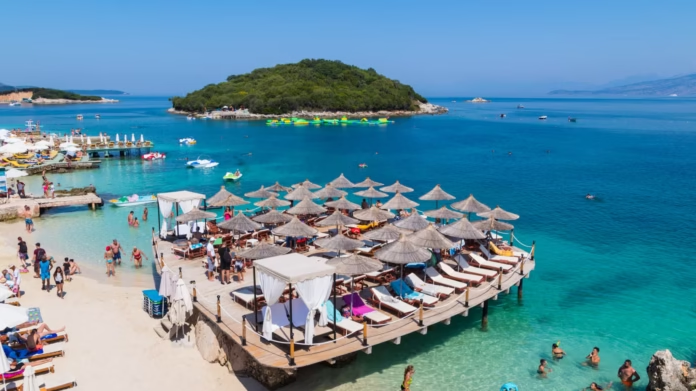

The us travel notice albania situation in 2026 reflects a nuanced reality: Albania remains open and increasingly popular with American travelers, yet U.S. officials continue to advise caution based on specific, well-defined risks.
For Americans planning a trip to the Balkans, this is not a “don’t go” warning—but it is not a “no concerns” destination either. Understanding what the advisory actually means—and how it translates into real-world travel—is essential before booking flights.
If you’re considering Albania this year, here’s what the latest government guidance actually says, what has changed, and what it means for your safety on the ground.
After reading this, you’ll know whether Albania fits your travel plans—and how to navigate it smartly.
Current U.S. Travel Advisory Level for Albania
As of now, Albania is classified under a Level 2: Exercise Increased Caution travel advisory.
This places Albania in the same category as many popular global destinations—not high-risk, but not risk-free.
The advisory is based primarily on crime-related concerns, rather than political instability or active conflict. That distinction matters.
Here’s what Level 2 actually signals:
- Travelers can visit safely with precautions
- There are identifiable risks that require awareness
- Government assistance may be limited in certain situations
Unlike Level 3 (“Reconsider Travel”) or Level 4 (“Do Not Travel”), Albania remains fully accessible to U.S. tourists.
Why Albania Carries a “Exercise Increased Caution” Notice
The advisory focuses on a few specific issues rather than widespread danger.
Crime and Organized Networks
Authorities note that organized crime groups operate within Albania, sometimes linked to drug trafficking networks.
This does not mean tourists are targeted directly. However, it does mean:
- Certain areas may experience targeted violence
- Criminal activity can occur unpredictably
- Visitors may encounter petty crime in urban or tourist-heavy zones
Limited Law Enforcement in Remote Areas
One of the most important—but often overlooked—points is the variation in police and emergency response capacity.
In rural or mountainous regions:
- Response times may be slower
- Emergency services may be less accessible
- Infrastructure can be limited
This becomes especially relevant for travelers exploring Albania’s increasingly popular hiking routes or remote coastal villages.
Situational Awareness Matters More Than Restrictions
Unlike countries with strict warnings, Albania’s advisory emphasizes awareness over avoidance.
There are no blanket restrictions on movement, tourism, or major cities.
Instead, travelers are advised to:
- Stay alert in unfamiliar areas
- Avoid poorly lit or isolated locations at night
- Monitor local conditions
What the Advisory Does NOT Mean
A common misunderstanding is that any advisory automatically signals danger.
That’s not the case here.
Albania’s Level 2 status does not mean:
- Widespread violence against tourists
- Political unrest affecting visitors
- Travel bans or entry complications
- High terrorism risk
In fact, the advisory is narrowly focused—primarily on crime patterns and infrastructure limitations.
Real-World Example: What This Looks Like for Travelers
Consider a typical American traveler visiting Tirana and the Albanian Riviera.
In major areas like Tirana:
- Restaurants, hotels, and attractions operate normally
- Tourism infrastructure continues to expand
- Police presence is visible in central districts
On the coast, in places like Sarandë or Himarë:
- Tourism is booming, especially during summer
- Safety conditions are generally stable
- Petty theft risks increase with crowds
However, if that same traveler decides to explore remote mountain regions:
- Navigation becomes more difficult
- Emergency services may be limited
- Preparation becomes essential
This contrast explains why the advisory exists—not because Albania is unsafe overall, but because conditions vary significantly depending on where you go.
How Albania Compares to Other European Destinations
From a broader perspective, Albania’s advisory level aligns with several other countries that Americans visit regularly.
Level 2 is often assigned to destinations where:
- Crime exists but is manageable
- Infrastructure varies by region
- Travelers must exercise personal judgment
In practical terms, Albania is closer to “use common sense” than “avoid travel.”
A Unique Advantage: Albania’s Position Outside Schengen
One factor that’s drawing more Americans to Albania in 2026 is its non-Schengen status.
Unlike many European countries:
- Albania does not require participation in new biometric entry systems
- Travelers may experience fewer border delays
- Longer stays can be easier compared to Schengen limits
This has made Albania increasingly attractive as an alternative destination—especially for travelers seeking flexibility.
Health, Infrastructure, and Practical Considerations
While crime is the main focus of the advisory, practical travel factors also matter.
Healthcare Access
- Major cities offer basic medical services
- Rural healthcare access is limited
- Travel insurance is strongly recommended
Transportation
- Roads vary in quality, especially outside cities
- Driving conditions can be unpredictable
- Public transport is improving but inconsistent
Communication
- English is widely spoken in tourist areas
- Less common in rural regions
These factors reinforce the same theme: Albania is accessible, but preparation improves safety significantly.
Opinion: Why the Advisory Is Often Misinterpreted
Many U.S. travelers see “Exercise Increased Caution” and assume the worst.
In reality, this level often reflects bureaucratic caution rather than real danger.
Here’s the key insight:
The advisory system is designed to inform, not discourage travel.
In Albania’s case, the warning highlights:
- Specific, manageable risks
- Regional differences in safety
- The importance of traveler awareness
It does not reflect a country in crisis.
Understanding this difference can change how travelers evaluate destinations—not just Albania, but globally.
Smart Travel Strategies for Americans Visiting Albania
If you’re planning a trip, a few simple strategies can significantly reduce risk:
Stay Connected
- Register with the Smart Traveler Enrollment Program (STEP)
- Keep emergency contact information accessible
Choose Locations Wisely
- Stick to well-known neighborhoods at night
- Research destinations before visiting remote areas
Protect Your Belongings
- Avoid displaying valuables
- Use hotel safes when available
Plan Ahead for Remote Travel
- Inform someone of your itinerary
- Carry offline maps or GPS tools
Understand Local Conditions
- Follow local news updates
- Pay attention to weather and terrain
These steps align directly with the advisory’s guidance—and are enough for most travelers to have a safe experience.
If you’re planning a trip soon, take a few minutes to review your itinerary and apply these tips—they can make a major difference.
Tourism Growth vs. Advisory Language
Here’s where things get interesting.
Despite the advisory, Albania’s tourism sector continues to grow rapidly.
More Americans are visiting because:
- The coastline is less crowded than Western Europe
- Costs are significantly lower
- Cultural and historical sites remain underexplored
This creates a paradox:
A country labeled “exercise caution” is simultaneously becoming a top emerging travel destination.
What Could Change Going Forward
Travel advisories are reviewed regularly and updated when conditions shift.
For Albania, potential changes could depend on:
- Crime trends and enforcement improvements
- Infrastructure development in rural areas
- Tourism expansion and safety measures
Until then, the current advisory reflects a stable—but not risk-free—environment.
Final Takeaway: Is Albania Safe for U.S. Travelers in 2026?
Yes—with awareness.
Albania is not a high-risk destination, but it is not entirely risk-free either.
The key difference lies in how you travel:
- Prepared travelers are likely to have smooth, enjoyable trips
- Unprepared travelers may face avoidable challenges
That’s exactly what the advisory is designed to communicate.
Planning a trip to Albania or already been there? Share your experience or questions below—your insight could help other travelers make smarter decisions.