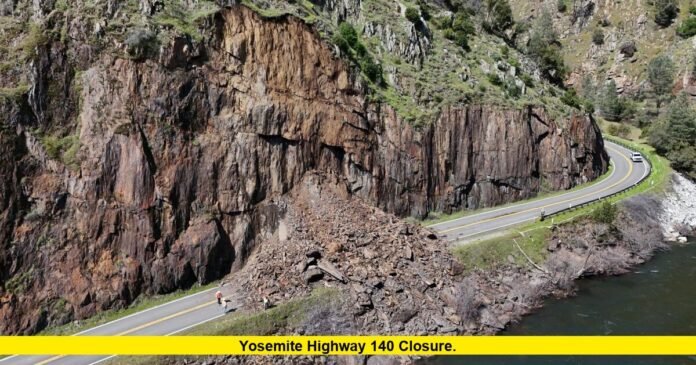

The yosemite highway 140 closure is disrupting access to one of America’s most visited national parks after a large rockfall blocked a key route into Yosemite, forcing travelers to change plans and navigate longer alternatives.
Rockfall Forces Immediate Shutdown
A substantial rockslide struck State Route 140 in California’s Mariposa County on April 12, 2026, sending tons of debris across the roadway. The incident occurred along a steep canyon section near the Merced River, an area known for geological instability.
Transportation crews initially attempted to reopen the road shortly after clearing some debris. However, continued falling rocks from above made conditions unsafe, prompting officials to shut down the highway again later the same day.
Since then, the affected stretch has remained closed in both directions while safety inspections and cleanup efforts continue.
No Clear Timeline for Reopening
Authorities have not provided a reopening date, as crews are still evaluating the slope above the roadway. Engineers must determine whether additional rockfall could occur before allowing vehicles back through the area.
Clearing debris is only one part of the process. Stabilizing the surrounding terrain is critical to prevent further incidents. Until those assessments are complete, the highway will remain inaccessible.
Travelers are being urged to prepare for ongoing disruptions and to avoid the closed section entirely.
Why This Route Is So Important
Highway 140 serves as a primary western entrance into Yosemite National Park, connecting visitors directly to the Arch Rock Entrance and Yosemite Valley.
Unlike higher elevation routes, this road typically stays open throughout the year because it avoids heavy snow accumulation. That reliability makes it a preferred option for many drivers, especially during transitional seasons like spring.
With this route unavailable, access into Yosemite becomes more complicated, particularly for those traveling from central and northern parts of California.
Alternate Ways Into Yosemite
Visitors now need to rely on other highways to reach the park. Each option comes with its own challenges:
Highway 41 (South Entrance)
This route connects through Fresno and Oakhurst. While generally open year-round, it can experience delays due to weather or increased traffic.
Highway 120 (Big Oak Flat Entrance)
Approaching from the west, this scenic route passes through Groveland. It involves higher elevations and winding roads, which can slow travel times.
Tioga Road (Eastern Access)
This high-altitude route remains closed during winter months and has not yet reopened for the season.
Drivers should expect congestion on these alternate roads as more visitors adjust their travel plans.
Visitors Face Delays and Uncertainty
The closure is already affecting travel across the region. Many visitors heading to Yosemite are encountering unexpected detours, longer drive times, and confusion about entry points.
Popular GPS routes that typically direct drivers along Highway 140 are no longer viable, leading to last-minute changes for those unfamiliar with the area.
Travelers are advised to double-check directions before departing and allow extra time to reach the park.
Local Businesses Feel the Impact
Communities near the closed highway are seeing immediate economic effects.
Towns such as Mariposa and El Portal depend heavily on tourist traffic flowing into Yosemite. With fewer vehicles passing through, businesses are experiencing a noticeable drop in customers.
Hotels, restaurants, and small shops are particularly affected, as reduced visitation translates directly into lost revenue during what is normally a busy travel period.
Geological Risks in the Canyon Corridor
The stretch of Highway 140 where the rockfall occurred runs through a narrow canyon shaped by the Merced River. This terrain is naturally prone to falling rock due to its steep slopes and fractured formations.
Seasonal changes can increase instability. Rainfall, temperature shifts, and erosion all contribute to weakening rock structures over time.
Rockslides in this corridor are not unusual, and transportation agencies routinely monitor the area for signs of movement. Despite these efforts, sudden events can still occur without warning.
Safety Measures Underway
Work crews are actively removing debris and assessing conditions along the closed segment. The process includes:
- Clearing large rocks and loose material from the roadway
- Inspecting cliff faces for cracks or unstable sections
- Using specialized equipment to evaluate slope stability
- Determining whether protective measures are needed
Officials have emphasized that safety will not be compromised for the sake of reopening quickly.
What Travelers Should Know Right Now
Anyone planning a Yosemite trip should take several precautions:
- Use alternate routes and avoid Highway 140 entirely
- Monitor travel conditions before departure
- Build extra time into travel plans
- Expect heavier traffic on other park entrances
Flexibility will be essential as conditions continue to evolve.
Park Access Remains Open
Despite the road closure, Yosemite National Park itself remains open to visitors. All major attractions, lodging areas, and facilities are operating as usual.
However, access points have shifted. Travelers must enter through open highways and adjust their routes accordingly.
The Arch Rock Entrance, which typically connects to Highway 140, is currently not accessible from the west due to the closure.
Looking Ahead
The duration of the closure depends on the outcome of ongoing safety assessments. Crews must ensure that the area is stable enough to prevent additional rockfall before reopening the road.
While progress is being made in clearing debris, the unpredictability of the terrain means delays are possible.
Visitors planning trips in the coming days or weeks should stay alert for updates and be prepared for continued changes.
A Disruption That Highlights Nature’s Power
The yosemite highway 140 closure underscores the challenges of maintaining infrastructure in rugged natural environments. Even well-traveled routes can be affected suddenly by shifting terrain.
For travelers, the situation serves as a reminder to stay informed and adaptable when visiting areas shaped by powerful natural forces.