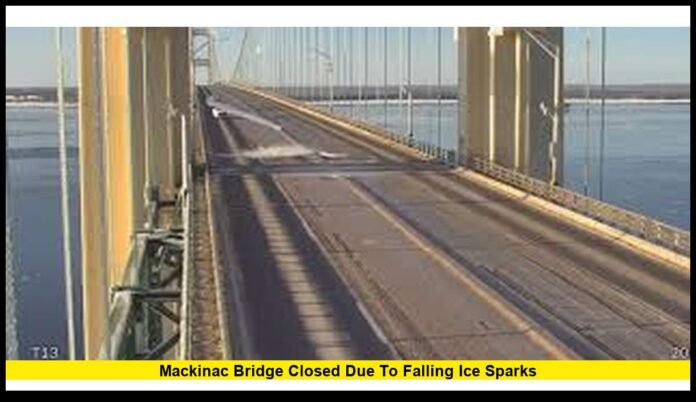

Travelers across Michigan are dealing with major disruptions after the mackinac bridge closed due to falling ice situation once again forced a shutdown of one of the state’s most vital transportation links. The Mackinac Bridge, which connects Michigan’s Upper and Lower Peninsulas, has been temporarily closed as ice accumulates on its massive structure and begins falling onto the roadway below.
The closure comes as hazardous winter conditions continue to impact the Straits of Mackinac region, where fluctuating temperatures and strong winds create dangerous conditions on the bridge. Officials have halted traffic in both directions to protect drivers from falling ice, which can cause severe vehicle damage and serious safety risks.
If you are planning to travel between Michigan’s peninsulas, this situation could significantly affect your plans today.
Take a moment to check conditions and rethink your route before heading out, as delays can stretch for hours when the bridge is closed.
Why Falling Ice Forces Immediate Closures
The Mackinac Bridge is an engineering landmark, but its towering suspension design makes it vulnerable during winter weather events.
Ice forms on the bridge when freezing rain or moisture coats the structure. This buildup occurs on:
- Main suspension cables
- Vertical hanger cables
- Tower surfaces rising high above the roadway
As temperatures rise slightly or winds pick up, the ice begins to loosen. When it breaks free, gravity takes over, sending chunks crashing down onto the bridge deck.
These are not small pieces of ice. Some chunks are large enough to:
- Shatter windshields
- Dent or puncture vehicle roofs
- Startle drivers and lead to accidents
Because of these risks, officials act quickly and decisively. Once falling ice is observed or expected, traffic is stopped entirely.
How Today’s Closure Unfolded
Today’s closure developed as weather conditions created the perfect environment for ice accumulation followed by release.
Moisture froze onto the bridge overnight. As daylight temperatures shifted and wind speeds increased, the ice began to detach from cables and towers.
Officials monitoring the bridge identified the hazard and shut down traffic to prevent injuries.
Vehicles already near the bridge were stopped or turned around, while others were advised to delay travel.
The shutdown remained in effect as crews assessed the situation and waited for falling ice activity to subside.
The Critical Role of the Mackinac Bridge
The Mackinac Bridge is more than just a roadway—it is a lifeline for Michigan.
Spanning roughly five miles across the Straits of Mackinac, the bridge:
- Connects two major regions of the state
- Supports daily commuter traffic
- Serves as a key route for commercial transport
- Enables tourism and seasonal travel
When the bridge closes, the impact is immediate and widespread.
There are no quick or convenient alternate routes, meaning travelers must wait for reopening or significantly alter their plans.
Traffic Impacts and Delays
Closures caused by falling ice often lead to extensive backups on both sides of the bridge.
Drivers can experience:
- Long lines of stopped traffic
- Delays lasting several hours
- Uncertainty about reopening times
Commercial vehicles face additional challenges, as delivery schedules and logistics plans are disrupted.
Tourists unfamiliar with the region may be especially affected, often unaware that such closures can happen with little warning.
Weather Patterns Behind the Hazard
The conditions that lead to falling ice are common in early spring across northern Michigan.
Key factors include:
- Freezing rain that coats the bridge in a layer of ice
- Temperature fluctuations that weaken ice bonds
- Wind gusts that shake ice loose from cables
Even when temperatures rise above freezing at ground level, ice can remain intact on higher portions of the bridge due to colder conditions at elevation.
This creates a delayed hazard where ice continues to fall even after the weather appears to improve.
Safety Comes Before Convenience
When ice begins falling, there is no safe way to allow traffic to continue.
Officials cannot predict:
- When the ice will stop falling
- How large the pieces will be
- Which areas of the bridge are most affected
Because of this unpredictability, a full closure is the only safe response.
The decision prioritizes human safety over travel convenience, even when it causes widespread delays.
How Crews Monitor Conditions
Bridge authorities rely on a combination of technology and direct observation to manage these events.
Monitoring methods include:
- Surveillance cameras positioned along the bridge
- Weather tracking systems
- On-site personnel assessing conditions
Despite these tools, falling ice remains difficult to forecast with precision.
Real-time decisions are based on current observations rather than long-term predictions.
What Happens Before the Bridge Reopens
Reopening the Mackinac Bridge is not immediate once the ice begins to fall.
Officials must ensure that:
- Ice is no longer detaching from the structure
- Roadway surfaces are safe for travel
- Weather conditions are stable
This process can take hours, especially if wind or temperature changes continue to dislodge ice.
Crews do not reopen the bridge until the risk has clearly diminished.
How Often Do These Closures Occur?
While not an everyday occurrence, falling ice closures are not rare either.
They typically happen:
- During late winter and early spring
- After freezing rain events
- When temperatures fluctuate rapidly
Over the years, the bridge has experienced numerous closures due to falling ice, with durations ranging from short interruptions to extended shutdowns.
Each event depends on specific weather conditions, making timing unpredictable.
Advice for Drivers Planning to Travel
If you are considering crossing the bridge today or in the near future, preparation is essential.
Keep these tips in mind:
- Check current bridge status before leaving
- Allow extra travel time
- Be prepared for sudden closures
- Avoid traveling during severe weather conditions
Drivers already near the bridge should follow official guidance and remain patient during delays.
Why This Issue Continues to Trend
The phrase mackinac bridge closed due to falling ice has become increasingly common during transitional weather periods.
As winter shifts toward spring, temperature swings create ideal conditions for ice buildup and release.
This recurring issue captures attention because of:
- The dramatic nature of falling ice
- The importance of the bridge
- The widespread impact of closures
For many residents and travelers, it serves as a reminder of how quickly conditions can change.
Economic and Regional Effects
Bridge closures do more than delay individual travelers—they also affect the regional economy.
Impacts include:
- Slowed commercial transportation
- Delayed deliveries and supply chains
- Reduced tourism activity during closures
Businesses that rely on cross-peninsula travel may experience interruptions when closures last for extended periods.
A Unique Challenge for an Iconic Structure
The Mackinac Bridge is one of the most recognizable landmarks in the United States, but its size and design present unique challenges.
Its towering height and long suspension cables make it especially susceptible to ice accumulation.
While maintenance and monitoring efforts continue to improve, falling ice remains an unavoidable reality during certain weather conditions.
What to Expect Moving Forward
As long as fluctuating temperatures and winter weather patterns continue, the possibility of additional closures remains.
Drivers should stay alert and flexible, especially during early spring.
Planning ahead and staying informed can help minimize disruptions.
Final Takeaway
The Mackinac Bridge remains open most of the time, but when ice begins to fall, closures are necessary to protect drivers.
Today’s shutdown highlights the importance of staying aware of conditions and adjusting travel plans when needed.
If you are traveling through northern Michigan, preparation and patience are your best tools.
Are you currently affected by the Mackinac Bridge closure or planning to travel soon? Share your experience and stay tuned for updates as conditions change.