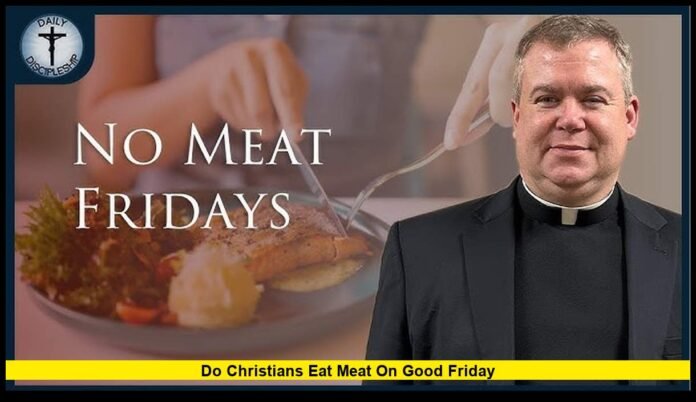

Do Christians eat meat on Good Friday? In 2026, the answer remains rooted in long-established Christian practice: many Christians in the United States—especially Catholics—abstain from meat, while others follow more flexible traditions depending on their denomination.
Good Friday marks the crucifixion of Jesus Christ and stands as one of the most solemn days in the Christian calendar. Across the U.S., millions observe it through fasting, prayer, and dietary changes. While customs differ, the practice of avoiding meat continues to be one of the most widely recognized traditions.
Catholic Guidelines on Eating Meat
The Catholic Church maintains clear and consistent rules for Good Friday observance.
Catholics aged 14 and older are required to abstain from eating meat on this day. Meat includes:
- Beef
- Pork
- Chicken
- Turkey
- Any animal flesh from land animals
Fish and seafood are allowed, which is why fish-based meals are common across the country.
Catholics between ages 18 and 59 are also expected to fast. This usually means:
- One full meal during the day
- Two smaller meals that together do not equal a full meal
- No eating between meals
These practices remain fully in effect in 2026 and are widely followed in the United States.
The Meaning Behind Avoiding Meat
The tradition is not just about food—it carries deep spiritual meaning. Meat has historically been seen as a symbol of celebration and abundance. On Good Friday, Christians choose simpler meals to reflect sacrifice and humility.
Avoiding meat serves to:
- Honor the suffering of Jesus Christ
- Encourage discipline and self-control
- Create space for reflection and prayer
This centuries-old tradition continues to shape how many Americans observe the day.
Do All Christians Avoid Meat on Good Friday?
Not all Christians follow the same rules. Observance depends largely on denomination and personal choice.
Protestant Practices
Many Protestant churches do not require members to avoid meat. However, some individuals still choose to fast or abstain as a personal act of faith.
Eastern Orthodox Traditions
Eastern Orthodox Christians typically follow stricter fasting practices. Many avoid meat, dairy, and eggs, especially during Holy Week. Their observance often extends beyond just Good Friday.
Anglican and Episcopal Observance
In Anglican and Episcopal communities, abstaining from meat is encouraged but not mandatory. Practices vary from person to person.
What Do People Eat Instead?
Since meat is avoided by many, alternative meals have become part of Good Friday tradition in the U.S.
Common choices include:
- Fried or grilled fish
- Shrimp and seafood dishes
- Soups like clam chowder
- Meatless pasta
- Vegetable-based meals
- Cheese pizza
Church-hosted fish fries remain popular in many areas, offering both a meal and a sense of community.
Are There Any Exceptions?
Yes, exceptions exist, especially within Catholic guidelines.
People may be excused from fasting or abstinence if they:
- Have health conditions
- Are pregnant or nursing
- Are elderly
- Perform physically demanding work
In such cases, individuals are not expected to follow the standard rules strictly.
How Americans Observe Good Friday Today
In 2026, observance varies across the country. Some follow the rules closely, while others take a more personal approach.
Current patterns in the U.S. include:
- Strong participation among practicing Catholics
- Selective observance among Protestant groups
- More flexible practices among younger generations
Even with these differences, Good Friday continues to hold deep cultural and spiritual importance.
The Influence on Food and Culture
The tradition of avoiding meat has also shaped American food culture.
Restaurants and fast-food chains often respond by offering:
- Seasonal fish specials
- Meat-free menu options
- Limited-time seafood promotions
This shift reflects the continued relevance of Good Friday traditions, even outside strictly religious settings.
Do Christians Eat Meat on Good Friday? Final Answer
So, do Christians eat meat on Good Friday? The answer depends on their faith tradition:
- Catholics: Do not eat meat
- Eastern Orthodox Christians: Follow strict fasting, avoiding meat and more
- Protestants: No universal rule; varies by individual
- Anglicans/Episcopalians: Optional practice
In the United States, abstaining from meat remains most strongly observed within the Catholic community.
Why This Tradition Still Matters
Good Friday traditions continue to offer a moment of pause in a busy world. For many, giving up meat is a small but meaningful act of faith.
It helps people:
- Connect with long-standing religious customs
- Reflect on sacrifice and purpose
- Strengthen personal discipline
Even those who do not fully observe the rules often recognize the day’s significance.
As Good Friday 2026 is observed nationwide, will you follow the tradition or approach the day in your own way? Share your thoughts below and join the discussion.