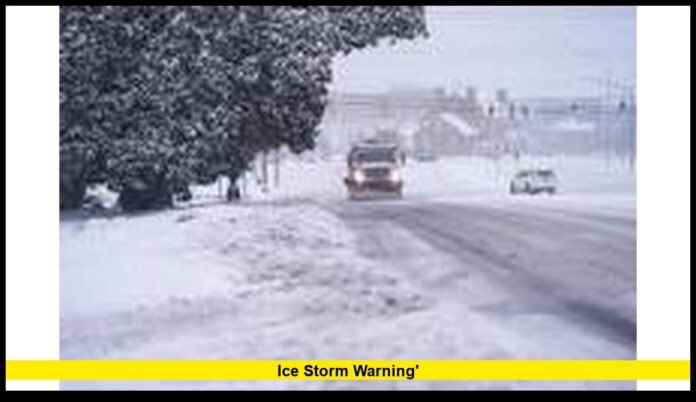

An ice storm warning has been issued in parts of the United States as a late-season winter system brings freezing rain, hazardous road conditions, and possible power outages to several communities. Weather officials are monitoring the storm closely as icy precipitation spreads across portions of the Upper Midwest and Great Lakes region.
The developing weather pattern began intensifying during the weekend, when a powerful system moved through the northern United States. Cold air near the surface combined with warmer air above it, creating the conditions needed for freezing rain. When rain hits surfaces that are already below freezing, it forms a glaze of ice that quickly coats roads, sidewalks, trees, and power lines.
Residents in the affected areas are being urged to limit travel and prepare for potentially dangerous conditions overnight and into early Monday morning.
Regions Currently Impacted by the Storm
Northern parts of Michigan are among the areas currently under an ice storm warning as freezing rain moves across the region. The alert covers several counties where ice accumulation could create hazardous travel conditions and potential infrastructure damage.
Counties affected include:
- Crawford County
- Grand Traverse County
- Kalkaska County
- Montmorency County
The warning remains active through early Monday morning as temperatures hover near freezing.
Weather teams expect the storm to bring a mix of precipitation types, including snow, sleet, and freezing rain. However, freezing rain poses the greatest threat because it creates a solid coating of ice on surfaces.
Even a small amount of ice accumulation can make roads extremely dangerous and increase the risk of falling branches and power outages.
How Freezing Rain Creates Ice Storm Conditions
Ice storms develop through a specific atmospheric setup that involves layers of warm and cold air.
The process begins when snow forms in cold air high in the atmosphere. As the snow falls, it passes through a warmer layer of air and melts into rain. When that rain reaches a shallow layer of freezing air near the ground, it becomes supercooled.
The droplets remain liquid until they hit a surface.
Once the rain touches roads, trees, vehicles, or power lines, it freezes instantly and forms a smooth layer of ice.
Unlike snow, which can often be plowed or shoveled, ice bonds tightly to surfaces and becomes extremely difficult to remove.
This type of precipitation is what leads meteorologists to issue an ice storm warning.
Ice Accumulation and Infrastructure Risks
Ice buildup can quickly place heavy stress on infrastructure.
When freezing rain accumulates on tree branches and power lines, the weight increases rapidly. Even a quarter inch of ice can add significant pressure to structures.
Possible impacts from the storm include:
- Downed tree limbs
- Broken utility poles
- Power outages across neighborhoods
- Road closures
- Travel delays
Utility companies typically stage repair crews ahead of major winter storms to respond quickly if outages occur.
Heavy ice can also damage communication lines and street infrastructure.
Communities that experience prolonged freezing rain sometimes see outages that last several days.
Road Conditions Becoming Increasingly Dangerous
Transportation officials warn that ice storms create some of the most dangerous driving conditions during winter weather events.
Unlike snow, ice can make roads nearly impossible to navigate.
When freezing rain coats pavement, vehicles lose traction easily. Drivers may experience sudden skidding even at slow speeds.
Common roadway hazards during ice storms include:
- Black ice covering highways
- Vehicles sliding off roads
- Chain-reaction crashes
- Blocked intersections
- Difficult braking conditions
Bridges and elevated roadways freeze faster than standard roads because cold air circulates above and below the pavement.
As a result, these areas often become hazardous first.
Transportation departments often recommend postponing travel until conditions improve.
Major Snowfall Across Neighboring States
While parts of Michigan face ice accumulation, neighboring states are experiencing heavy snowfall from the same storm system.
Areas of Minnesota and Wisconsin reported significant snow totals as the storm moved eastward.
Strong winds combined with snowfall have created poor visibility in several locations.
Blowing snow has also reduced visibility along rural highways.
In some communities, snowfall totals have reached double-digit amounts, causing road crews to work around the clock clearing highways and local roads.
The storm demonstrates how winter systems can produce different types of precipitation across nearby regions depending on temperature patterns.
Travel Disruptions and Flight Delays
The winter storm has also affected air travel across several major airports.
Airlines adjusted schedules due to snow and ice impacting runway operations.
Flight delays and cancellations increased throughout the weekend as conditions worsened.
Travel disruptions often occur during storms because aircraft require safe runway conditions for both takeoff and landing.
Airports may temporarily halt operations while crews clear ice and snow.
Passengers planning to travel through northern states have been advised to check flight schedules before heading to the airport.
The storm arrived during a busy spring travel period, which increased the number of travelers affected.
Emergency Agencies Monitoring Conditions
Emergency management officials continue to track the storm and coordinate responses across multiple states.
Local governments and state agencies have increased readiness as freezing rain spreads across affected regions.
Emergency response teams are focusing on several priorities:
- Monitoring road conditions
- Supporting transportation crews clearing highways
- Preparing for possible power outages
- Responding to emergency calls
Community officials encourage residents to stay informed through weather alerts and local updates.
Monitoring weather information can help residents prepare for rapidly changing conditions.
Power Outage Preparedness
Ice storms often lead to electrical outages when ice weighs down trees and utility lines.
Residents in affected areas are encouraged to prepare in advance.
Recommended steps include:
- Charging mobile phones and electronic devices
- Keeping flashlights and extra batteries ready
- Stocking nonperishable food and water
- Preparing warm clothing and blankets
Some households also prepare backup heating options in case power outages occur.
However, residents should always follow safety guidelines when using alternative heating sources.
Outdoor grills and generators should never be used inside homes due to carbon monoxide risks.
Public Safety Advice During Ice Storms
Safety experts emphasize caution during freezing rain events.
The following steps can help reduce risks during an ice storm:
Avoid Unnecessary Travel
Driving during freezing rain greatly increases accident risks.
Stay Indoors When Possible
Remaining inside reduces the chance of falls on icy surfaces.
Watch for Falling Branches
Ice accumulation can cause trees to shed heavy limbs.
Keep Emergency Supplies Nearby
Having essential items ready can help during power outages.
Monitor Local Weather Alerts
Weather conditions can change quickly during winter storms.
Following these safety practices can help reduce injuries and property damage during severe weather.
Late-Season Winter Weather in March
Many Americans associate winter storms with December or January, but March often brings powerful systems as well.
Spring officially begins later in March, yet winter conditions frequently persist in northern states.
Temperature contrasts between warm southern air and lingering Arctic air often produce strong storm systems during this time of year.
These storms may generate a variety of precipitation types.
Common March storm impacts include:
- Heavy snow
- Freezing rain
- Ice accumulation
- Strong winds
The storm affecting the Midwest and Great Lakes demonstrates how quickly weather conditions can shift during the transition from winter to spring.
Why Weather Alerts Matter
Weather warnings play an essential role in protecting communities from severe winter conditions.
An ice storm warning signals that dangerous icing conditions are expected or already occurring.
This alert helps residents prepare before the worst conditions arrive.
When warnings are issued, local governments often take additional precautions.
These actions may include:
- Deploying road treatment crews
- Preparing emergency shelters if needed
- Alerting utility companies
- Coordinating with law enforcement
Public awareness is critical because ice storms can develop quickly and impact large areas.
Early preparation helps reduce disruptions and improves safety.
What Happens After the Storm
Even after freezing rain ends, icy conditions may remain for hours or days.
Road crews must apply salt and sand to reduce hazards on highways and local streets.
Tree damage may also continue to affect neighborhoods after the storm.
Broken branches sometimes fall later as ice begins melting.
Residents should remain cautious when walking outside or driving immediately after a storm.
Sidewalks, driveways, and parking lots may remain slippery long after precipitation stops.
Community Response and Recovery
Communities often mobilize quickly to restore normal conditions after severe winter weather.
Utility companies send repair crews to restore electricity.
Road crews work to remove ice and clear fallen debris.
Local governments also coordinate cleanup efforts in public spaces.
Neighbors frequently assist each other by clearing sidewalks and checking on elderly residents.
Community cooperation plays an important role in helping towns recover from severe winter storms.
Preparing for Future Ice Storms
Weather experts emphasize that preparation is the best defense against severe winter weather.
Many households keep emergency kits during the winter season.
Typical emergency kits may include:
- Bottled water
- Flashlights
- Portable phone chargers
- Warm blankets
- Nonperishable food
Drivers are also encouraged to carry emergency supplies in vehicles during winter travel.
Items such as blankets, gloves, and extra phone chargers can help if vehicles become stranded during storms.
Preparation can make a significant difference during unexpected weather emergencies.
Monitoring Changing Weather Conditions
Winter storms often evolve quickly, especially when temperatures hover near freezing.
A slight shift in temperature can change snow into freezing rain or rain into sleet.
Because of this variability, meteorologists continue to monitor storms closely.
Weather updates may include new advisories or extended warnings depending on how conditions develop.
Residents should remain attentive to updates during active winter weather events.
Looking Ahead as the Storm Moves East
Forecast models indicate that the storm system will continue moving east across the Great Lakes region.
As temperatures gradually rise, freezing rain is expected to transition into regular rain in some locations.
However, icy surfaces may persist even after temperatures increase.
Road crews will likely continue treating highways and local roads to improve conditions.
Communities across the affected regions will focus on cleanup and restoring normal travel conditions once the storm passes.
Severe winter weather can develop quickly, so staying informed and prepared helps protect families, homes, and communities during dangerous ice storms.