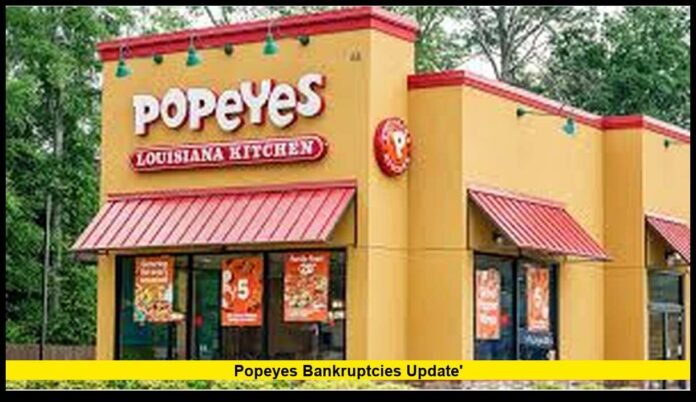

popeyes bankruptcies update continues to draw national attention after a major Popeyes franchise operator entered Chapter 11 bankruptcy protection and began shutting down several restaurants across the southeastern United States. The development has raised concerns among customers, employees, and restaurant industry observers who are closely watching how the situation will affect the well-known fried chicken brand.
The bankruptcy case centers on Sailormen Inc., a longtime Popeyes franchise operator based in Miami. The company previously managed more than one hundred Popeyes locations across Florida and Georgia. Financial struggles, rising operating costs, and mounting debt forced the operator to seek court protection while it restructures its business and attempts to stabilize restaurant operations.
While some restaurants have closed as part of the restructuring effort, many locations continue to operate during the bankruptcy process. The situation highlights the challenges that large franchise operators sometimes face even when a national restaurant brand remains popular.
A Major Franchise Operator Enters Chapter 11
The current situation began when Sailormen Inc. filed for Chapter 11 bankruptcy protection in January 2026. The filing took place in federal bankruptcy court in Florida, where the company sought legal protection from creditors while reorganizing its finances.
Chapter 11 bankruptcy allows companies to continue operating while they restructure debts and renegotiate contracts. Instead of immediately shutting down the business, the process provides time to develop a financial recovery plan.
Sailormen has been associated with the Popeyes brand for decades. The operator built a large network of restaurants across parts of the southeastern United States and became one of the largest franchise groups connected to the chain.
Before the bankruptcy filing, the company controlled more than 130 Popeyes restaurants across two states:
- Florida
- Georgia
Running such a large restaurant network required significant financial commitments, including leases, payroll expenses, supply contracts, and loan payments. Over time, these obligations became increasingly difficult to manage.
Debt and Financial Pressure Behind the Filing
Financial documents connected to the bankruptcy case revealed that Sailormen had accumulated over $130 million in liabilities. A large portion of the debt was connected to loans, restaurant leases, and operational costs tied to maintaining dozens of fast-food locations.
The debt burden placed heavy pressure on the company’s finances.
Several factors contributed to the financial strain:
Rising Food Costs
Food prices increased sharply over the past several years, affecting many restaurant operators across the country. Chicken, cooking oil, packaging materials, and other key supplies became more expensive.
For a restaurant chain centered on fried chicken, rising poultry prices directly affect profit margins.
Higher Labor Expenses
The restaurant industry continues to face a competitive labor market. Many locations have raised hourly wages or introduced hiring incentives to attract workers.
Higher labor costs can reduce profitability, particularly when restaurants operate with thin margins.
Increased Interest Rates
Borrowing costs have climbed significantly in recent years. Companies carrying large loans must pay more interest, which can increase financial stress.
Operators with significant debt loads often feel the impact of rising rates more than smaller businesses.
Declining Traffic at Certain Locations
While Popeyes remains a popular brand nationwide, not every individual restaurant performs equally well. Some locations experienced declining customer visits, particularly in areas with heavy competition from other quick-service chains.
Underperforming restaurants can quickly become financial liabilities when lease costs and staffing expenses remain high.
Restaurant Closures Begin During the Bankruptcy Process
One of the most visible developments connected to the bankruptcy has been the closure of several Popeyes locations.
Shortly after filing for Chapter 11 protection, Sailormen began reviewing the performance of its restaurants and determining which locations were financially sustainable.
Court filings indicated that the company planned to close a number of underperforming stores.
Initial Wave of Closures
During the first phase of restructuring, 17 restaurants closed in January 2026. These closures primarily affected locations that were losing money or operating with unsustainable lease agreements.
Closing these restaurants allowed the company to eliminate certain expenses tied to rent, utilities, and staffing.
Additional Closures in Georgia
Later in the process, the company requested permission from the bankruptcy court to terminate leases for several additional locations in Georgia.
Three more restaurants were closed during this stage.
Estimated Total Closures
Based on the restructuring plan, roughly 20 Popeyes restaurants have closed so far as part of the bankruptcy process.
These closures represent a relatively small portion of the overall Popeyes restaurant network in the United States.
Locations Continue Operating Despite Bankruptcy
Despite the closures, the majority of Sailormen-operated restaurants remain open.
Many customers assume that a bankruptcy filing means every location connected to the company will immediately shut down. In reality, Chapter 11 protection allows restaurants to continue serving customers while the business reorganizes.
Most of the operator’s restaurants continue functioning normally.
Employees at these locations are still working, and customers can still order the familiar menu items that have made Popeyes popular across the country.
Restaurants that remain open are considered financially viable and may continue operating under the current operator or potentially be transferred to new franchise owners.
Understanding the Popeyes Franchise Model
To fully understand the popeyes bankruptcies update, it helps to know how franchise restaurant systems operate.
Popeyes restaurants are largely owned by independent franchise operators rather than the corporate company itself. Franchisees sign agreements that allow them to run restaurants using the Popeyes brand, menu, and operating system.
Each franchise group manages its own finances.
This means:
- One franchise operator may struggle financially
- Another franchise group may thrive
- The overall brand can remain healthy
The Sailormen bankruptcy therefore reflects financial difficulties at a single franchise organization rather than the entire Popeyes chain.
Across the United States, Popeyes operates thousands of restaurants, most of which are run by different franchise groups.
The Size of the Popeyes Brand
Popeyes remains one of the largest fried chicken chains in the United States.
The brand has built a strong reputation for its Louisiana-style fried chicken, spicy flavors, and signature chicken sandwich.
Today the restaurant system includes:
| Category | Approximate Number |
|---|---|
| U.S. Locations | About 3,200 |
| Global Locations | More than 5,000 |
| Countries | Dozens worldwide |
The number of restaurants connected to the Sailormen bankruptcy represents only a small percentage of the chain’s overall footprint.
Even with some closures, the majority of Popeyes restaurants across the country continue to operate normally.
Industry Challenges Affecting Fast-Food Chains
The restaurant industry has experienced significant changes over the past several years.
Even major franchise operators have faced financial pressure due to shifting economic conditions.
Inflation
Higher prices for ingredients, packaging materials, and equipment have increased operating costs across the industry.
Supply Chain Disruptions
Supply chain disruptions have occasionally affected the availability of certain ingredients or increased transportation costs.
Workforce Competition
Restaurants continue competing for employees in a tight labor market.
Competition Between Chicken Chains
The chicken restaurant category has become increasingly competitive. Several brands are expanding aggressively across the United States.
This competition can affect sales at individual locations, especially in areas where multiple chicken chains operate within close distance.
Failed Restaurant Sale Attempt
Another factor that contributed to Sailormen’s financial problems was a previously planned restaurant sale.
In 2023, the company attempted to sell 16 Popeyes locations as part of a strategy to reduce debt and streamline operations.
The proposed transaction did not move forward as planned. Without the expected sale proceeds, the company continued carrying debt tied to those restaurants.
The failed transaction placed additional pressure on the company’s finances and limited its ability to restructure before the bankruptcy filing.
Legal Disputes With Lenders
Financial disagreements with lenders also played a role in the bankruptcy situation.
Reports connected to the case indicate that one of the company’s primary lenders sought legal action regarding loan obligations. These disputes added urgency to the company’s need for court protection.
Bankruptcy filings often occur when lenders demand repayment that a company cannot immediately provide.
Chapter 11 protection temporarily pauses certain collection efforts while the court oversees the restructuring process.
What Happens During Chapter 11 Restructuring
The Chapter 11 process includes several important steps designed to help a company reorganize.
Financial Review
The company reviews its assets, debts, and operating costs. This step helps determine which restaurants should remain open.
Lease Decisions
Bankruptcy courts allow companies to reject expensive or unprofitable leases. This option often leads to store closures.
Negotiations With Creditors
The company negotiates with lenders and vendors to restructure payment terms.
Restructuring Plan
Eventually, the business presents a restructuring plan explaining how it will repay debts and operate moving forward.
Once approved by the court, the company can exit bankruptcy protection.
Impact on Restaurant Employees
Restaurant closures affect workers who depend on these jobs for income.
Sailormen previously employed thousands of workers across its restaurant network.
When a restaurant closes, employees may face several possible outcomes:
- Transfer to nearby locations
- Opportunities with other franchise operators
- Temporary unemployment if no nearby positions exist
Some workers are able to move to restaurants that remain open, especially in areas where multiple locations operate close together.
Community Impact of Restaurant Closures
Fast-food restaurants often serve as important businesses in local communities.
When locations close, the effects can extend beyond employees.
Local communities may lose:
- Convenient dining options
- Entry-level job opportunities
- Economic activity tied to nearby businesses
However, closed restaurant locations are sometimes purchased or leased by new operators, which can lead to reopening under the same or different brand.
Possibility of Restaurant Sales
During bankruptcy restructuring, restaurants can be sold to other franchise operators.
This process allows profitable locations to continue operating even if the original owner experiences financial trouble.
Potential outcomes for the remaining Sailormen restaurants include:
- Sale to another Popeyes franchise group
- Continued operation under the current company after restructuring
- Additional closures if some stores remain unprofitable
Restaurant industry analysts often watch these cases closely because franchise transfers can reshape regional markets.
Popeyes Brand Performance Nationwide
Despite the challenges facing one franchise operator, Popeyes remains a strong competitor in the chicken restaurant market.
The brand has experienced strong customer interest in several menu items over the past decade, including its well-known chicken sandwich and signature Louisiana-style fried chicken.
The chain continues to focus on:
- Menu innovation
- improved restaurant operations
- expansion into new markets
Many franchise operators across the country continue to open new locations while others upgrade existing restaurants.
Consumer Reaction to the Closures
News about restaurant closures often spreads quickly on social media.
Customers frequently share posts when their local fast-food locations shut down. In many cases, closures generate confusion about whether the entire brand is experiencing problems.
In the case of Popeyes, the closures tied to one franchise operator do not indicate widespread financial trouble for the chain.
Most locations across the United States remain open and continue serving customers daily.
What Customers Can Expect Going Forward
For customers, the bankruptcy process is unlikely to create noticeable changes at most Popeyes restaurants.
Locations that remain open will continue serving their regular menu items.
Customers can expect the same offerings they associate with the chain, including:
- Fried chicken meals
- Chicken sandwiches
- Cajun-inspired side dishes
- Family meal packages
Restaurant operations generally continue during Chapter 11 cases unless individual locations are closed as part of restructuring.
The Road Ahead for the Franchise Operator
The restructuring process for Sailormen will continue through the bankruptcy court.
During this period, the company must demonstrate that it can stabilize finances and operate sustainably.
Possible outcomes include:
- Successful reorganization and continued operation
- Sale of certain restaurants to new operators
- Additional restructuring steps ordered by the court
Bankruptcy cases involving large restaurant groups can take many months to resolve.
Why This Story Matters in the Restaurant Industry
The popeyes bankruptcies update has drawn widespread attention because it highlights the complex financial challenges facing some franchise operators.
Operating hundreds of restaurants requires significant capital, strong management systems, and stable customer demand.
Even well-known brands can experience localized financial problems when individual operators struggle with debt and operating costs.
Industry observers often view cases like this as examples of how economic conditions affect restaurant businesses.
Closing Thoughts
The popeyes bankruptcies update reflects the financial challenges facing one of the chain’s largest franchise operators. Rising costs, debt obligations, and underperforming locations pushed the company to seek Chapter 11 protection while restructuring its business.
Although several restaurants have closed, many locations remain open and continue serving customers throughout the restructuring process.
The broader Popeyes brand remains a major presence in the American fast-food industry, with thousands of restaurants operating across the country and around the world.
As the bankruptcy case continues, customers and restaurant industry observers will keep watching for further developments. If you have noticed a Popeyes location closing in your area or have thoughts about how these changes may affect the chain, share your perspective and stay informed as the story unfolds.
FAQ
Why did a Popeyes franchise operator file for bankruptcy?
A major franchise operator filed for Chapter 11 protection after accumulating large debts and facing rising operating costs, lease expenses, and declining performance at some locations.
How many Popeyes restaurants have closed so far?
About twenty restaurants have closed during the restructuring process, primarily in Florida and Georgia.
Are all Popeyes restaurants affected by the bankruptcy?
No. The situation involves one franchise operator. Thousands of other Popeyes locations across the United States continue operating normally.
Disclaimer:
This article is provided for informational purposes only. Business conditions and bankruptcy proceedings may change as the legal process continues. Information reflects the status of the situation at the time of publication. Readers should follow official announcements and verified updates for the most current developments.