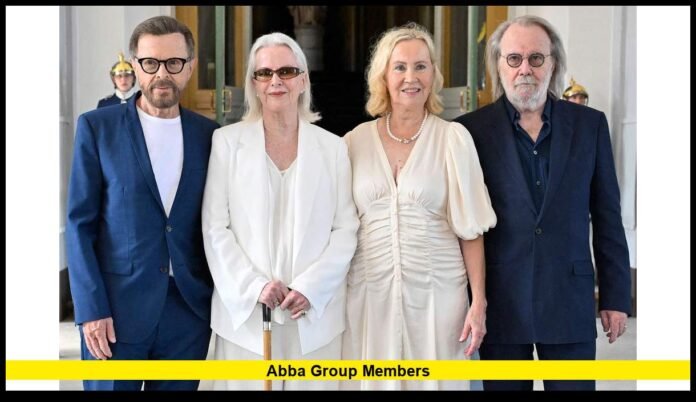

ABBA group members continue to draw global attention in 2026 as fans revisit the music and legacy of one of the most successful pop groups ever created. The band’s four original members — Agnetha Fältskog, Björn Ulvaeus, Benny Andersson, and Anni-Frid Lyngstad — built a catalog of hits that still dominate streaming platforms, films, and stage productions decades after their breakthrough.
Formed in Sweden in 1972, ABBA quickly became an international sensation. Their blend of powerful vocals, polished production, and unforgettable melodies turned them into one of the biggest acts of the 1970s. The group’s songs remain widely played today, proving the lasting influence of the ABBA group members across generations.
Who Are the ABBA Group Members?
The name ABBA comes from the first letters of each member’s first name. The band maintained the same lineup throughout its career.
The four ABBA group members include:
| Member | Role | Birth Year |
|---|---|---|
| Agnetha Fältskog | Lead and backing vocals | 1950 |
| Björn Ulvaeus | Guitar, vocals, songwriter | 1945 |
| Benny Andersson | Keyboards, composer | 1946 |
| Anni-Frid Lyngstad | Lead and backing vocals | 1945 |
The group achieved international fame in 1974 after winning the Eurovision Song Contest with the song “Waterloo.” That moment marked the beginning of ABBA’s global dominance in pop music.
Agnetha Fältskog: A Voice That Defined ABBA
Agnetha Fältskog became one of the most recognizable voices in pop music during the band’s peak years. Her vocals helped shape several of ABBA’s most beloved songs.
Some of the major tracks associated with her voice include:
- Dancing Queen
- The Winner Takes It All
- SOS
- Knowing Me, Knowing You
Before joining ABBA, Agnetha had already established herself as a successful singer in Sweden. After the band stepped away from touring in the early 1980s, she continued releasing solo music.
Despite maintaining a low public profile for many years, her voice remains closely associated with the group’s timeless sound.
Björn Ulvaeus: The Lyricist Behind the Hits
Björn Ulvaeus played multiple roles in the band. He contributed guitar work, vocals, and most importantly, songwriting.
Along with Benny Andersson, he wrote the majority of ABBA’s music. Their partnership produced some of the most recognizable pop songs in history.
Among their most famous compositions are:
- Mamma Mia
- Take a Chance on Me
- Super Trouper
- Fernando
After ABBA’s active years, Björn continued working in music and theater. He helped develop the musical Mamma Mia!, which became a worldwide stage success and later inspired popular films.
His creative work continues to keep ABBA’s music relevant for new audiences.
Benny Andersson: The Musical Architect
Benny Andersson served as ABBA’s keyboardist and principal composer. His musical ideas shaped the group’s distinctive sound.
Before the formation of ABBA, Benny had already gained recognition in Sweden through the band Hep Stars. When he teamed up with Björn Ulvaeus, the pair developed a songwriting partnership that became central to ABBA’s success.
Benny continued composing music after ABBA’s touring era ended. His later projects include orchestral works, musical productions, and solo albums.
Many music critics credit him with helping craft one of the most polished pop sounds of the 1970s.
Anni-Frid Lyngstad: The Other Powerful Voice
Anni-Frid Lyngstad, often known as Frida, provided the second female voice that defined ABBA’s harmonies.
Her vocal style brought emotional depth to several well-known tracks.
Some notable songs featuring her lead vocals include:
- Fernando
- Money, Money, Money
Frida also launched a successful solo career after ABBA’s main recording years. One of her early solo releases became a major international hit.
Born in Norway and raised in Sweden, she later became connected to European royalty through marriage. Over the years she has occasionally appeared at events celebrating ABBA’s music.
How the ABBA Group Members Changed Pop Music
The influence of the ABBA group members goes far beyond their chart success. Their work helped shape the sound and structure of modern pop music.
Several key factors contributed to their lasting popularity.
Memorable melodies
Benny Andersson and Björn Ulvaeus wrote songs that combined catchy hooks with emotional storytelling.
Distinctive harmonies
The pairing of Agnetha and Frida created a powerful vocal blend that became instantly recognizable.
Studio innovation
The group used advanced recording techniques for the time, producing layered arrangements that sounded rich and polished.
Universal themes
ABBA songs often focused on relationships, happiness, and heartbreak, themes that connect easily with listeners.
These elements helped the group reach audiences across Europe, North America, and many other parts of the world.
ABBA’s Continuing Popularity
Interest in ABBA has remained strong long after the band stopped performing together. Their music continues to attract new fans through streaming platforms, movies, and stage productions.
One of the most modern projects connected to the band is ABBA Voyage, a concert experience that uses digital avatars to recreate performances by the group.
The show combines music, technology, and visual effects to bring the band’s songs back to the stage in a unique way.
Even decades after their original success, ABBA’s songs continue to appear on playlists, radio stations, and film soundtracks worldwide.
The Lasting Legacy of the ABBA Group Members
The story of the ABBA group members is one of creativity, collaboration, and global success. Few bands have maintained such a strong presence in popular culture for so many decades.
Their music remains instantly recognizable, and songs like “Dancing Queen” continue to be celebrated around the world.
ABBA’s achievements helped redefine pop music and inspired countless artists who followed.
More than fifty years after the group formed, fans still celebrate the music of ABBA — and the legacy of the ABBA group members continues to grow with every new generation of listeners.