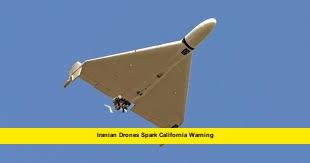

The issue of iranian drones has taken on new urgency in the United States after federal authorities alerted law enforcement in California about a potential threat linked to escalating tensions with Iran. The warning raised concerns about a possible Iran attack scenario targeting the West Coast, prompting increased monitoring and security coordination across several agencies.
U.S. officials circulated a security bulletin to law enforcement agencies in California outlining intelligence that Iran had explored the possibility of using drones in a retaliatory strike connected to the ongoing conflict involving the United States and its allies. The alert quickly gained attention as local and state officials evaluated what such a warning could mean for security in one of the country’s most populated regions.
After the alert became public, authorities emphasized that there is currently no indication of an imminent attack. Still, the situation underscores how modern drone warfare has reshaped security planning both abroad and at home.
If you want timely coverage of major U.S. security developments and global conflict updates, follow along for continuing reports as this story evolves.
Why Authorities Issued the California Drone Warning
The security bulletin reportedly highlighted the possibility that Iranian forces or affiliated groups could attempt a surprise drone launch against targets along the U.S. West Coast.
Officials warned that drones could potentially be launched from vessels positioned offshore. This type of tactic would allow attackers to operate outside traditional launch sites and approach the coastline with limited warning.
Law enforcement agencies across California reviewed preparedness plans after receiving the alert. The warning was distributed among police departments and security agencies to ensure they remain aware of potential threats tied to geopolitical tensions.
State officials also acknowledged the report publicly. California leaders noted they have been monitoring the evolving situation and maintaining communication with federal authorities about security measures.
State Officials Respond to the Situation
California leadership moved quickly to reassure residents while still taking the security alert seriously.
Officials stated that state emergency management systems had already been activated earlier in the conflict, allowing agencies to coordinate intelligence sharing and emergency response if needed.
Local law enforcement agencies also confirmed they had been briefed about the potential threat and were working closely with federal partners. While no specific locations were identified as targets, authorities emphasized that major cities, ports, and critical infrastructure often receive the highest levels of monitoring when such warnings arise.
Security planning also extended to large public gatherings and major events across California. Organizers and local officials evaluated security protocols in light of the bulletin to ensure proper precautions.
Iran’s Expanding Use of Drone Warfare
The growing attention on iranian drones reflects the increasing role these weapons play in modern conflicts.
Iran has invested heavily in drone technology over the past decade. Many of its systems are relatively inexpensive but capable of long-range travel and precision strikes. These characteristics make drones attractive tools in asymmetric warfare, where lower-cost weapons challenge advanced military defenses.
Recent conflicts across the Middle East have shown how widely these drones can be deployed. Iranian-linked strikes have targeted military facilities, ports, and infrastructure in multiple countries during escalating regional tensions.
In several cases, attack drones have been launched in coordinated waves alongside missiles, complicating defense efforts. Some operations have involved hundreds of unmanned aircraft and projectiles over short periods.
The expanding use of drones has forced governments around the world to rethink defense strategies. Air defense systems originally designed for large missiles or aircraft often struggle against swarms of small unmanned systems.
How Drone Threats Are Changing Homeland Security Planning
Security experts say the warning issued to California agencies reflects a broader shift in how national security planners approach potential threats.
Traditional defense strategies focused heavily on missiles, aircraft, or large-scale military attacks. Drone technology introduces new variables because unmanned systems can be smaller, harder to detect, and launched from unconventional locations.
For coastal regions like California, that means officials must consider scenarios involving offshore launches, modified civilian vessels, or covert operations.
The United States has already invested heavily in counter-drone technologies designed to detect and neutralize unmanned aircraft before they reach sensitive locations. These systems include radar tracking, electronic jamming, and interceptor drones.
Law enforcement agencies have also begun incorporating drone detection systems around major airports, military bases, and large public venues.
Officials Stress Preparedness but Urge Calm
Despite the attention surrounding the alert, federal and state officials have stressed that the warning was precautionary.
Security bulletins like the one circulated to California agencies are often designed to ensure law enforcement remains vigilant during periods of heightened geopolitical tension.
Authorities say intelligence sharing between federal and local agencies remains critical in responding quickly if new information emerges.
The situation also highlights how international conflicts can have security implications far beyond the battlefield. When global tensions escalate, homeland security agencies often increase monitoring to prevent potential retaliatory actions.
For residents across California and the broader United States, officials say awareness and preparedness remain the key priorities as geopolitical tensions continue to unfold.
Stay with us for continuing updates as the story develops and share your thoughts in the comments below.