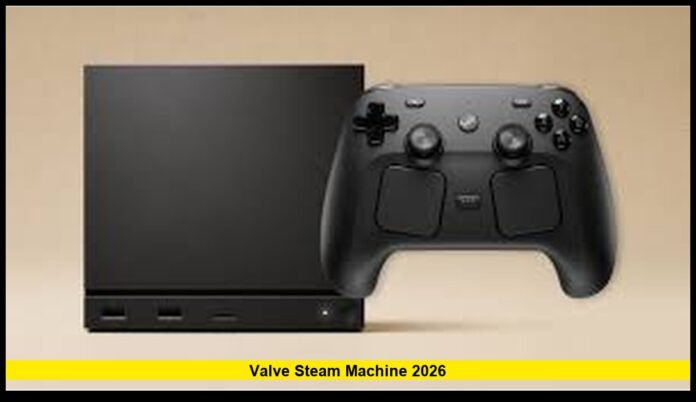

Valve Steam Machine remains one of the most ambitious attempts to bring PC gaming into the living room through console-style hardware. Valve Corporation introduced the concept in 2013 as part of a broader effort to expand the reach of its Steam platform beyond traditional desktop computers. The initiative included dedicated gaming hardware, a custom operating system, and a redesigned controller intended to make PC games easier to play on televisions.
Although the original Steam Machine ecosystem never achieved widespread adoption, it played an important role in shaping Valve’s hardware strategy. Many of the ideas introduced during the project influenced later developments in PC gaming technology, including the creation of the Steam Deck handheld gaming system and continued improvements to SteamOS.
Understanding the rise and evolution of the Steam Machine helps explain how Valve continues to approach gaming hardware today.
The Background of Valve Corporation
Valve Corporation is a major player in the global video game industry. The company was founded in 1996 by Gabe Newell and Mike Harrington, both former Microsoft employees. Valve quickly gained attention after releasing the groundbreaking first-person shooter Half-Life in 1998.
Over the following years, Valve expanded its influence through both game development and digital distribution.
Major Valve titles include:
- Half-Life series
- Counter-Strike franchise
- Portal series
- Team Fortress 2
- Dota 2
However, the company’s biggest contribution to gaming may be Steam, its digital storefront and platform for PC games.
Launched in 2003, Steam became the largest digital distribution service for PC gaming. Millions of players around the world purchase and download games through the platform each year.
With such a large user base, Valve began exploring ways to expand Steam beyond traditional PC setups.
The Vision Behind Steam Machines
Valve introduced the Steam Machine concept in September 2013. The company revealed a strategy built around three core components designed to transform living-room gaming.
These components included:
- SteamOS operating system
- Steam Controller
- Steam Machine hardware devices
The goal was simple. Valve wanted players to enjoy PC games on televisions with the convenience typically associated with consoles.
At the time, consoles such as the PlayStation 4 and Xbox One dominated living-room gaming. Meanwhile, most PC gamers played at desks using keyboards and mice.
Valve believed many players wanted the flexibility of PC gaming combined with the comfort of a couch and large screen.
Steam Machines attempted to deliver that experience.
How Steam Machine Hardware Worked
Unlike traditional consoles, Steam Machines were not manufactured as a single standardized device.
Valve created a hardware platform that third-party manufacturers could adopt. Multiple companies released their own versions of the system, each with different hardware specifications.
Manufacturers included:
- Alienware
- ASUS
- Gigabyte
- Zotac
- Falcon Northwest
These companies designed compact gaming PCs intended for living-room setups.
Typical hardware configurations included:
- Intel Core processors
- Dedicated NVIDIA or AMD graphics cards
- Solid-state storage drives
- HDMI output for televisions
- USB ports for controllers and accessories
Performance varied depending on the model.
Some systems targeted entry-level gaming, while others matched the capabilities of high-performance desktop PCs.
SteamOS: A Linux-Based Gaming Platform
SteamOS served as the operating system powering Steam Machines.
Valve built the system on the Linux operating system to create an open platform optimized for gaming.
SteamOS included several features tailored specifically for living-room play.
Key capabilities included:
- Direct integration with the Steam store and library
- Big Picture Mode interface designed for television displays
- Support for game controllers
- Local network game streaming from Windows PCs
Big Picture Mode provided a simplified user interface that players could navigate using controllers rather than keyboards.
The design allowed users to browse games, install updates, and launch titles from a couch-friendly environment.
Game Compatibility Challenges
When Steam Machines launched, one major obstacle quickly appeared: limited Linux game support.
Many popular PC games were designed primarily for Windows operating systems.
Although some developers released Linux versions of their titles, the total number remained relatively small compared with the entire Steam catalog.
Valve attempted to address this limitation through a feature called in-home streaming.
This feature allowed users to run games on a Windows PC and stream them to a Steam Machine connected to a television.
While effective in some setups, the feature required two devices and a strong home network.
For many players, this setup reduced the convenience that the system originally promised.
The Steam Controller Design
Alongside the Steam Machine hardware, Valve introduced the Steam Controller.
The controller featured a unique design intended to bridge the gap between console controls and traditional PC input methods.
Instead of two analog sticks, the controller used two circular trackpads.
These trackpads allowed players to control games with mouse-like precision.
Other notable features included:
- Dual trackpads with haptic feedback
- Motion sensors for gyroscopic control
- Fully customizable button layouts
- Software configuration through Steam
The controller allowed users to map keyboard and mouse functions to controller buttons.
This flexibility meant players could enjoy games traditionally designed for PC controls while sitting on a couch.
However, the design required time to learn.
Some gamers appreciated the customization options, while others preferred traditional analog sticks.
Official Launch of Steam Machines
Steam Machines officially reached the market in November 2015.
Multiple hardware manufacturers released systems simultaneously.
Prices varied depending on the hardware configuration.
Entry-level models cost around $450, while high-end versions exceeded $1,000.
This pricing strategy created a wide range of options for buyers.
However, it also made the product category harder to understand compared with standard consoles.
Console buyers typically expect a single device with consistent specifications.
Steam Machines offered multiple performance tiers instead.
Consumer Reception
Initial interest in Steam Machines remained strong among PC gaming enthusiasts.
Many players appreciated the idea of bringing their Steam library into the living room.
However, several factors limited widespread adoption.
Key challenges included:
- Limited native Linux game compatibility
- Higher prices compared with consoles
- Confusing hardware variations
- Learning curve associated with the Steam Controller
Console competitors also offered exclusive games and simpler setup experiences.
As a result, Steam Machines struggled to attract mainstream buyers.
Decline of the Steam Machine Initiative
Within a few years of launch, sales of Steam Machine devices slowed significantly.
Manufacturers gradually stopped producing new models.
By 2018, Valve removed the dedicated Steam Machines hardware section from the Steam storefront.
The Steam Controller also ended production in 2019.
Although Valve never issued a formal cancellation announcement, the original ecosystem effectively faded from the market.
Despite this outcome, the project provided valuable insights for Valve’s future hardware efforts.
Influence on Valve’s Later Hardware Projects
The lessons learned during the Steam Machine experiment shaped the company’s approach to future gaming devices.
Valve gained experience in several areas:
- Hardware design for gaming environments
- Operating system optimization
- Controller innovation
- Linux gaming compatibility
These insights eventually contributed to the development of Valve’s next major hardware product.
Steam Deck and the Evolution of Valve Hardware
Valve introduced the Steam Deck handheld gaming system in 2021, with the device launching in February 2022.
The Steam Deck functions as a portable gaming PC capable of running thousands of titles from the Steam library.
Unlike the Steam Machine ecosystem, the Steam Deck uses a single standardized hardware design developed directly by Valve.
Key hardware features include:
- Custom AMD processor combining CPU and GPU
- 7-inch touchscreen display
- Integrated joysticks and trackpads
- Built-in storage options
- Portable handheld design
The device runs a newer version of SteamOS and supports a compatibility layer called Proton.
Proton allows many Windows games to run on Linux systems.
This technology significantly expanded the number of playable games compared with earlier SteamOS versions.
SteamOS Continues to Evolve
SteamOS remains an important part of Valve’s hardware strategy.
The operating system has undergone major improvements since the early Steam Machine era.
Modern versions provide better performance and broader compatibility with PC games.
Major improvements include:
- Enhanced Linux gaming support
- Proton compatibility technology
- Improved controller integration
- Faster system performance
SteamOS now powers the Steam Deck and continues receiving updates from Valve’s development team.
These improvements demonstrate how the company continues building on ideas first explored during the Steam Machine project.
The Lasting Impact on PC Gaming
Even though Steam Machines did not become a mainstream console competitor, the initiative left a lasting mark on the gaming industry.
Several trends trace their roots back to the project.
These include:
- Increased interest in living-room PC gaming
- Growth of Linux gaming support
- Expanded controller customization tools
- Development of portable PC gaming devices
Valve’s experimentation encouraged developers to consider new platforms and play styles.
The company also demonstrated that PC gaming hardware could exist beyond traditional desktop towers.
Why Gamers Still Discuss the Steam Machine
Interest in the valve steam machine project continues within gaming communities.
Many players view the initiative as an important step in Valve’s hardware evolution.
Although the original devices never reached widespread adoption, they introduced ideas that later became more successful.
Concepts such as controller-friendly interfaces, Linux-based gaming platforms, and flexible hardware ecosystems remain relevant in today’s gaming landscape.
Valve’s willingness to experiment with new technologies helped push the boundaries of what PC gaming hardware could become.
What do you think about Valve’s attempt to bring PC gaming into the living room with Steam Machines? Share your thoughts and stay connected for more updates on gaming technology and hardware innovation.