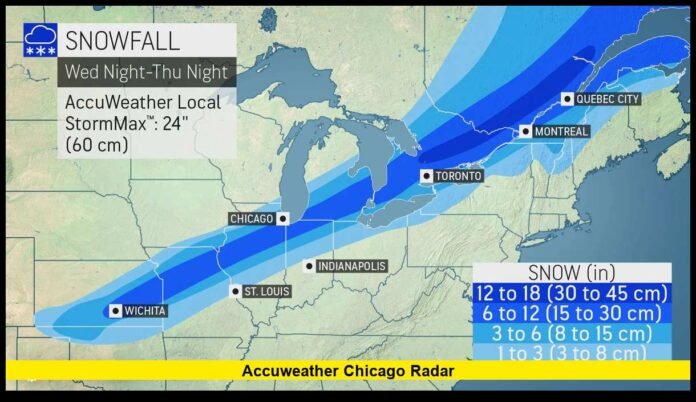

AccuWeather Chicago radar continues to help residents track real-time weather conditions across the Windy City, offering live visibility of precipitation, storm movement, and short-term weather changes. As Chicago moves through early spring, weather conditions remain variable with chilly temperatures, gusty winds, and occasional light precipitation. The radar system allows users to monitor rain, snow, or mixed precipitation as it moves across the metropolitan area and surrounding counties.
For Chicago residents, accurate radar tracking is essential. Weather conditions can change rapidly near Lake Michigan, and real-time radar helps people prepare for sudden shifts that could affect travel, outdoor plans, and daily commutes.
How AccuWeather Radar Tracks Chicago Weather
Radar technology provides a visual map of current precipitation across Chicago and nearby regions. It shows where rain or snow is occurring, how intense it is, and the direction storms are moving.
The radar works through Doppler weather technology that scans the atmosphere and measures precipitation particles. The system processes these signals to create a constantly updating map of current weather activity.
Important information displayed on radar includes:
- Precipitation intensity, from light showers to heavy storms
- Storm movement direction, helping users see where weather is heading
- Coverage across the Chicago metro area, including suburbs
- Short-term weather trends over the previous few hours
This information updates frequently, making it possible for residents to watch storms move in real time.
Typical Weather Conditions in Chicago This Time of Year
March weather in Chicago often reflects a transition between winter and spring. Cold air still moves through the Midwest, while occasional warmer air brings rain instead of snow.
Recent weather patterns around the Chicago region commonly include:
- Daytime temperatures ranging from the mid-30s to low-40s Fahrenheit
- Nighttime temperatures dropping into the 20s or low-30s
- Windy conditions across the lakeshore and urban areas
- Intermittent flurries or light rain showers
These shifting conditions make radar tracking especially useful, as precipitation type and intensity can change quickly during the day.
Why Chicago Residents Rely on Weather Radar
Chicago is one of the most weather-sensitive major cities in the United States. Rapid changes in temperature and precipitation frequently occur due to the city’s location near Lake Michigan.
Residents rely on radar monitoring for several important reasons:
- Daily commuting: Snow or rain can quickly impact highways and public transit.
- Lake-effect weather: Cold air moving across Lake Michigan can trigger sudden snow bands.
- Storm monitoring: Thunderstorms can develop quickly during warmer months.
- Travel planning: Weather conditions affect flights at major Chicago airports.
Because of these factors, checking radar updates has become part of the daily routine for many Chicago residents.
Technology Behind the Radar System
The radar technology used in modern weather monitoring relies on pulses of microwave energy transmitted into the atmosphere. When those signals encounter precipitation particles, they reflect back to the radar receiver.
Meteorologists analyze the returning signals to determine several key weather measurements.
| Radar Feature | Purpose |
|---|---|
| Reflectivity | Measures precipitation strength |
| Velocity | Shows storm direction and speed |
| Dual-polarization | Identifies rain, snow, or sleet |
| Forecast modeling | Predicts storm movement |
These features allow radar maps to display accurate and detailed weather patterns across Chicago.
Short-Term Weather Predictions Using Radar
Another key feature of radar technology is short-term forecasting. Weather models analyze radar data to estimate how precipitation will move during the next hour or two.
This capability helps answer common questions for residents such as:
- When will rain begin in my neighborhood?
- How long will snowfall continue?
- Will the storm move north or south of the city?
These quick predictions are especially useful for commuters, construction crews, and anyone planning outdoor activities.
Monitoring Snowfall and Winter Weather
Even as spring approaches, Chicago can still experience winter weather events. Snow showers and lake-effect snow remain possible during early March.
Radar systems help track these winter patterns by showing where snow is developing and how quickly it is moving.
Common radar-tracked winter events include:
- Lake-effect snow bands forming along the Lake Michigan shoreline
- Passing snow showers moving across northern Illinois
- Mixed precipitation events during temperature transitions
Because these systems can form quickly, radar monitoring is important for drivers and travelers.
Regional Coverage of the Chicago Radar Map
The radar view covers not only the city itself but also a large portion of northeastern Illinois and nearby regions.
Areas commonly included in the radar coverage are:
- Cook County
- DuPage County
- Lake County
- Will County
- Kane County
- Northwest Indiana
This wide regional coverage helps viewers understand how storms develop before reaching Chicago.
How Radar Helps With Everyday Planning
For many Chicago residents, checking weather radar has become a daily habit before leaving home. Real-time radar provides immediate insight into changing conditions across the area.
People often use radar for:
- Checking the morning commute forecast
- Planning outdoor activities or events
- Tracking approaching storms
- Monitoring airport travel conditions
Because the Chicago region has one of the busiest transportation networks in the country, accurate weather monitoring is especially important.
Seasonal Weather Patterns Visible on Radar
Radar images reveal how Chicago’s weather patterns shift throughout the year.
Winter
- Snowstorms and heavy snow bands
- Lake-effect snowfall
- Arctic cold fronts
Spring
- Passing rain systems
- Occasional late-season snow
- Increasing thunderstorm activity
Summer
- Thunderstorms and heavy rainfall
- Severe weather outbreaks
- Heat-driven storm development
Fall
- Cool rain systems
- Strong cold fronts
- Early frost events
Each season produces distinct radar patterns across the Chicago region.
Advances in Weather Radar Technology
Weather forecasting technology continues to improve each year. Radar systems now combine atmospheric data, satellite observations, and advanced modeling to provide more precise forecasts.
Future improvements may include:
- Higher-resolution radar images
- Faster update speeds for storm tracking
- More accurate precipitation classification
- Enhanced severe weather alerts
These developments will make weather monitoring even more reliable for cities like Chicago.
Conclusion
Real-time weather tracking plays an essential role in daily life across the Chicago region. With constantly changing weather conditions and lake-influenced storms, radar monitoring provides a reliable way to stay informed.
The AccuWeather Chicago radar offers a clear view of precipitation, storm movement, and developing weather systems, helping residents make informed decisions throughout the day.
Are you seeing changing weather in Chicago today? Share your observations and stay updated as radar conditions continue to evolve across the city.