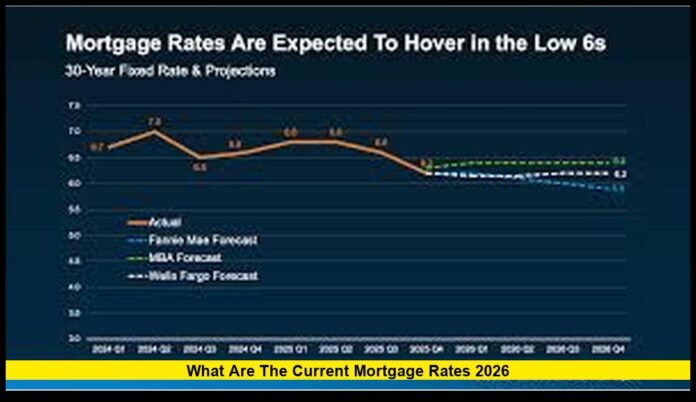

What are the current mortgage rates is a question many homebuyers and homeowners across the United States continue to ask as the housing market adjusts to changing economic conditions. As of March 2026, average mortgage rates in the U.S. remain in the mid-6% range for 30-year fixed mortgages, while 15-year fixed mortgage rates are generally in the low-to-mid 6% range, depending on lender terms and borrower qualifications.
Mortgage rates influence nearly every aspect of the housing market. They affect monthly payments, purchasing power, refinancing activity, and overall housing demand. Because interest rates fluctuate regularly, prospective buyers and current homeowners monitor them closely when planning financial decisions.
This article provides a detailed overview of the latest mortgage rate averages, how rates are determined, and what borrowers should know when applying for a home loan in the United States today.
Current Mortgage Rate Averages in 2026
Mortgage rates change daily as lenders respond to financial market movements. However, national averages provide a helpful snapshot of borrowing conditions.
Average Mortgage Rates in the U.S. (March 2026)
| Loan Type | Average Interest Rate |
|---|---|
| 30-Year Fixed Mortgage | Mid-6% range |
| 15-Year Fixed Mortgage | Low-to-mid 6% range |
| 5/1 Adjustable-Rate Mortgage | Mid-5% to low-6% range |
Actual mortgage rates vary widely depending on borrower qualifications and lender policies.
Factors that can influence the final rate offered include:
- Credit score
- Loan amount
- Down payment percentage
- Debt-to-income ratio
- Property location
Even small differences in these factors can change the interest rate offered to borrowers.
Why Mortgage Rates Matter for Homebuyers
Mortgage rates directly determine how much borrowers pay each month on a home loan.
Higher interest rates increase monthly payments and total interest costs.
Lower rates make homeownership more affordable and can expand the number of homes buyers can afford.
For example, a modest rate difference can significantly affect loan costs over time.
A buyer who secures a lower rate may save tens of thousands of dollars over the life of a 30-year mortgage.
Because of this impact, many buyers closely track market trends before locking in a rate.
Recent Mortgage Rate Trends
Mortgage rates have experienced significant changes over the past several years.
During the early 2020s, rates fell to historically low levels as the economy responded to global financial disruptions.
Later increases in inflation pushed borrowing costs higher.
Mortgage Rate Timeline
| Year | Average 30-Year Mortgage Rate |
|---|---|
| 2021 | Around 3% |
| 2022 | Approximately 5%–7% |
| 2023 | Often above 7% |
| 2024 | Mostly mid-6% to near 7% |
| 2025–2026 | Generally mid-6% range |
The jump from pandemic-era lows dramatically changed housing affordability.
Buyers who once qualified for larger loans now face higher monthly payments.
How Mortgage Rates Are Determined
Mortgage rates reflect several economic factors.
Financial markets constantly influence lending costs.
Key drivers include:
- Federal Reserve monetary policy
- Inflation levels
- Bond market activity
- Economic growth trends
- Investor demand for mortgage-backed securities
Mortgage lenders track the 10-year U.S. Treasury yield, which often moves in a similar direction as mortgage rates.
When Treasury yields increase, mortgage rates usually rise.
When yields decline, mortgage rates often fall.
Federal Reserve Influence
The Federal Reserve plays a major role in shaping interest rate conditions in the United States.
Although the Fed does not directly set mortgage rates, its decisions affect the cost of borrowing across financial markets.
The central bank adjusts the federal funds rate, which is the benchmark rate for short-term lending.
When the Federal Reserve raises this rate to combat inflation, borrowing costs across the economy typically increase.
Mortgage lenders adjust rates in response to these financial conditions.
As a result, home loan rates tend to rise during periods of tighter monetary policy.
Impact of Inflation on Mortgage Rates
Inflation remains one of the strongest influences on mortgage rate movements.
When prices rise rapidly across the economy, lenders demand higher interest rates to protect the value of future payments.
Higher inflation usually leads to higher mortgage rates.
Lower inflation often allows rates to stabilize or decline.
Because inflation data releases influence financial markets, mortgage rates may change soon after new economic reports are published.
Monthly Payment Examples
Mortgage interest rates significantly influence the cost of homeownership.
To illustrate the impact, consider a typical home loan example.
Monthly Payment Estimates for a $400,000 Loan
| Interest Rate | Estimated Monthly Payment |
|---|---|
| 3% | About $1,686 |
| 5% | About $2,147 |
| 6.5% | About $2,528 |
| 7% | About $2,661 |
These examples demonstrate why buyers carefully monitor interest rate trends.
Even a half-percentage change can noticeably alter monthly payments.
Fixed-Rate vs Adjustable-Rate Mortgages
Homebuyers typically choose between two main types of mortgages.
Each option carries different advantages depending on financial goals.
Fixed-Rate Mortgages
Fixed-rate mortgages maintain the same interest rate throughout the loan term.
Common options include:
- 30-year fixed mortgage
- 15-year fixed mortgage
Benefits include predictable payments and long-term financial stability.
Most American homeowners prefer fixed-rate loans.
Adjustable-Rate Mortgages
Adjustable-rate mortgages begin with a lower introductory rate.
After the initial period ends, the rate adjusts periodically.
Examples include:
- 5/1 ARM
- 7/1 ARM
These loans may benefit buyers who expect to move or refinance within several years.
However, payments may increase if market interest rates rise.
Regional Differences in Mortgage Rates
Mortgage rates vary slightly across the United States.
Local housing markets and lender competition influence these variations.
Regions with strong housing demand may experience slightly different lending conditions.
Other factors that affect regional mortgage pricing include:
- Property values
- State regulations
- Insurance costs
- Loan availability
Buyers often receive better offers by comparing rates from several lenders.
Factors That Affect Individual Mortgage Rates
Borrowers rarely receive the same interest rate offered in national averages.
Personal financial details strongly influence the final rate.
Credit Score
Credit scores play a major role in mortgage pricing.
Higher scores signal lower risk to lenders.
Borrowers with credit scores above 740 often qualify for the best rates.
Down Payment
Larger down payments reduce lender risk.
Borrowers who provide 20% down payments often receive better loan terms.
Debt-to-Income Ratio
Lenders analyze the percentage of income used to pay existing debts.
Lower debt levels improve loan eligibility and rate offers.
Loan Type
Government-backed loans may offer different rates compared with conventional mortgages.
Common Mortgage Programs in the U.S.
Several mortgage programs help Americans purchase homes.
Each program offers different eligibility requirements.
Popular Loan Types
| Loan Type | Description |
|---|---|
| Conventional Loan | Standard mortgage offered by private lenders |
| FHA Loan | Government-backed loan for buyers with lower credit scores |
| VA Loan | Available for eligible military service members and veterans |
| USDA Loan | Designed for rural homebuyers with qualifying income |
These programs expand access to homeownership across different income levels.
Refinancing and Mortgage Rates
Many homeowners consider refinancing when interest rates decline.
Refinancing replaces an existing mortgage with a new loan.
Common reasons homeowners refinance include:
- Reducing monthly payments
- Switching loan types
- Shortening loan terms
- Accessing home equity
When mortgage rates fall significantly, refinancing activity often increases.
Homeowners can save money if the new interest rate is lower than their existing mortgage.
How Mortgage Rates Affect the Housing Market
Interest rates play a central role in housing demand.
When borrowing costs rise, affordability decreases.
This often leads to slower home sales.
Lower mortgage rates usually encourage more buyers to enter the market.
Key housing market indicators influenced by interest rates include:
- Home sales volume
- Housing inventory levels
- Home price growth
- Mortgage application activity
Housing affordability remains a major concern for many American households.
Tips for Securing a Better Mortgage Rate
Homebuyers can improve their chances of receiving favorable loan terms.
Financial preparation before applying for a mortgage is important.
Helpful steps include:
- Improving credit scores
- Paying down debt
- Saving for a larger down payment
- Comparing multiple lenders
- Locking interest rates during favorable conditions
Mortgage rate locks allow borrowers to secure a rate for a set period while finalizing their loan.
This protects buyers from sudden rate increases before closing.
Outlook for Mortgage Rates
Mortgage rate trends depend largely on economic conditions.
Several factors will continue influencing borrowing costs in the coming months.
Important indicators include:
- Inflation levels
- Federal Reserve policy decisions
- Employment data
- Financial market trends
If inflation slows, mortgage rates could gradually decline.
If inflation remains elevated, borrowing costs may remain higher for longer.
Homebuyers will continue monitoring economic signals closely.
Why Mortgage Rate Awareness Is Important
Understanding mortgage rate trends helps buyers make informed financial decisions.
Interest rates affect long-term homeownership costs.
Borrowers who monitor market conditions can choose the right time to purchase or refinance.
Tracking the answer to what are the current mortgage rates helps buyers evaluate affordability and plan their home purchase strategies.
Housing Market Conditions in 2026
The U.S. housing market continues adjusting to the higher interest rate environment.
While mortgage rates remain above the historic lows seen earlier in the decade, housing demand remains strong in many regions.
Limited housing supply in several cities continues supporting home prices.
Buyers must balance affordability concerns with long-term housing needs.
Monitoring mortgage rates remains one of the most important steps for anyone planning to purchase a home.
Are you planning to buy a home this year? Share your thoughts about mortgage rates and how they affect your homebuying plans.