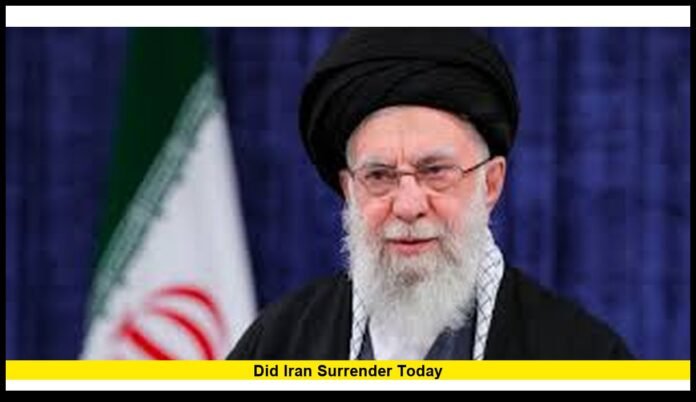

Did Iran surrender today is a question circulating widely online as people search for real-time updates about tensions involving Iran. As of March 7, 2026, there is no verified information confirming that Iran has surrendered in any military conflict or international confrontation. No official statement from the Iranian government, military authorities, or international organizations indicates a surrender by Iran today.
The sudden rise in searches appears linked to social media posts and speculation spreading across online platforms. Despite the surge in online discussion, confirmed global news updates and official government communications have not reported any surrender by Iran.
Understanding the situation requires examining how rumors spread during international tensions and reviewing the current structure of Iran’s political and military leadership.
Why People Are Searching “Did Iran Surrender Today”
The search term did iran surrender today gained traction after posts circulated online suggesting major developments in Middle East tensions. These posts quickly triggered widespread curiosity.
In times of geopolitical uncertainty, online speculation can move faster than verified information. When people see viral posts suggesting dramatic changes in international relations, they often turn to search engines to confirm whether the claims are accurate.
Several factors contributed to the spike in searches:
- Viral social media posts about geopolitical tensions
- Misinterpretation of political or diplomatic statements
- Confusion surrounding military activity in the Middle East
- Rapid sharing of unverified screenshots or videos
These factors can cause large numbers of users to search for answers simultaneously.
Iran’s Current Political Leadership
Understanding whether Iran could “surrender” requires knowing how the country’s government operates.
Iran’s leadership structure includes both elected officials and religious authorities.
Key positions include:
- Supreme Leader: Ayatollah Ali Khamenei
- President: Masoud Pezeshkian (elected in 2024)
The Supreme Leader holds the highest authority in Iran. This role controls major decisions involving military strategy, national security, and foreign policy.
The president leads the executive branch and manages day-to-day government operations.
Because of this structure, major decisions involving war or surrender would require actions from the highest levels of leadership.
Iran’s Military Structure
Iran maintains a large and complex military system.
The country’s defense forces include two main components:
Islamic Republic of Iran Army (Artesh)
This branch handles conventional military operations including ground forces, naval units, and air defense.
Islamic Revolutionary Guard Corps (IRGC)
The IRGC operates alongside the regular military and plays a major role in national security and regional operations.
These forces oversee several responsibilities:
- National defense
- Strategic missile programs
- Regional military activities
- Protection of Iran’s borders
A national surrender would involve decisions affecting all of these institutions.
As of today, no official military announcement suggests such a development.
Understanding What “Surrender” Means in International Relations
The word surrender carries a very specific meaning in global politics.
A surrender typically occurs when one side in a conflict formally agrees to stop fighting and accept the terms imposed by an opposing force.
Historically, surrender involves:
- Formal agreements signed by military or political leaders
- Public announcements by governments involved in the conflict
- International acknowledgment by other countries or organizations
Examples in history include Germany’s surrender in World War II and Japan’s surrender in 1945.
These events were clearly documented and officially confirmed by governments and international institutions.
No similar event involving Iran has been announced today.
Iran’s Role in Regional Politics
Iran plays a significant role in Middle East geopolitics.
The country influences regional dynamics through diplomacy, economic policy, and security strategies.
Key areas where Iran maintains influence include:
- The Persian Gulf region
- Regional political alliances
- Energy markets and oil production
- Diplomatic negotiations involving global powers
Because of this influence, rumors about Iran surrendering can quickly attract international attention.
However, verified developments involving major geopolitical changes usually appear through official government channels.
Why Rumors Spread During Global Tensions
Information spreads quickly during times of political uncertainty.
Several digital trends often lead to viral rumors:
Fast social media sharing
Users repost information quickly without verifying accuracy.
Misleading headlines
Posts sometimes use dramatic language to attract attention.
Confusion around military activity
Routine military movements or political statements may be misinterpreted.
Algorithm-driven trends
Online platforms amplify topics that generate strong reactions.
When thousands of users share a rumor at the same time, search traffic can increase dramatically.
How Governments Announce Major Military Decisions
When a country takes a major step such as surrendering or signing a ceasefire agreement, the announcement usually follows a formal process.
Typical communication channels include:
- Official government press statements
- Military briefings
- International diplomatic announcements
- Statements delivered by national leaders
Such announcements often appear simultaneously across global news organizations.
In the case of Iran today, no confirmed statement from government officials indicates a surrender.
Iran’s Diplomatic and Strategic Position
Iran remains an influential country in international politics.
Its government participates in diplomatic negotiations involving regional security, energy markets, and nuclear policy.
The country also maintains relationships with several regional and global partners.
Diplomatic discussions involving Iran often focus on issues such as:
- Nuclear agreements
- Economic sanctions
- Regional security concerns
- Trade relationships
These negotiations continue through diplomatic channels rather than military surrender.
How Global News Develops in Real Time
In today’s digital environment, information about international events spreads quickly.
However, verified news often follows a different timeline.
Professional reporting requires:
- Confirmation from government officials
- Statements from diplomatic representatives
- Verification from multiple independent sources
This process ensures that major claims receive confirmation before becoming widely reported facts.
When a dramatic claim appears online without confirmation, it often turns out to be speculation rather than reality.
The Importance of Verified Information
Geopolitical rumors can create confusion and anxiety.
Readers seeking accurate updates should focus on verified information released by official institutions.
Helpful steps include:
- Checking government statements
- Reviewing announcements from international organizations
- Avoiding viral posts without confirmed details
These steps help ensure that information about global events remains accurate and reliable.
Current Status as of Today
As of March 7, 2026, there is no verified evidence that Iran has surrendered today.
No official statements from Iranian authorities, military leaders, or international diplomatic organizations confirm such a development.
The surge in searches about did iran surrender today appears to stem from online speculation rather than confirmed geopolitical events.
Global political developments involving Iran continue to evolve through diplomacy, international negotiations, and regional discussions.
Have you seen the viral posts about Iran today? Share your thoughts and stay informed by following verified global updates.